Education and Training

The Education and Training Programme assists capacity building among NACA members through the exchange and sharing of knowledge and skills between members. Activities may take the form of training courses, study visits and personnel exchange. The programme also supports the training components of the other thematic programmes and serves as an outreach arm of NACA. Regular training activities include three to four courses each year on various topics of regional priority in aquaculture development, such as:

  • Broodstock management in aquaculture.
  • Aquaculture business management.
  • Marine finfish seed production.
  • Aquaculture governance and planning.
  • Management for sustainable aquaculture development.

Key activities

Key activities of the programme include:

  • Identifying training needs for aquaculture development in NACA members.
  • Identifying and organising relevant expertise and capacities to meet the training needs.
  • Developing training modules and materials.
  • Facilitating routine education and training activities of NACA.
  • Facilitating and coordinating exchange programmes among members and with other regions.

Creative Commons Attribution.
Related

Subject tags

A collection of subject tags relating to technical matters.

In this collection

NACA Newsletter, Vol. XXXIX, October-December 2024

In this issue:

  • Training Programme on Safeguarding Artemia Resources for Aquaculture held in Rome.
  • First International Artemia Aquaculture Consortium Conference and Members' Meeting, Ostend, Belgium.
  • Inception workshop: Knowledge brokering for nature-based solutions in aquaculture transformation.
  • Reported Aquatic Animal Diseases in the Asia-Pacific Region during the First Quarter of 2024.
  • 14th Asian fisheries and Aquaculture Forum, India.
  • PhD scholarships: Shanghai Ocean University PhD Programme 2025.

NACA Newsletter, Vol. XXXIX, July-September 2024

In this issue:

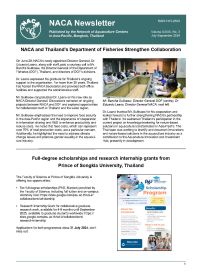
  • NACA and Thailand's Department of Fisheries Strengthen Collaboration.
  • Full-degree scholarships and research internship grants from Prince of Songkla University, Thailand.
  • Manual on Artemia production and use.
  • The Grass Carp Aquaculture Manual.
  • Pacific oyster farming: A practical manual.
  • The State of World Fisheries and Aquaculture 2024: Blue Transformation in action.
  • Safeguarding salt lake brine shrimp (Artemia) resources for aquaculture: A training project.
  • Reported Aquatic Animal Diseases in the Asia-Pacific Region during the Fourth Quarter of 2023.
  • First International Artemia Aquaculture Consortium Conference, 9 September (hybrid event).

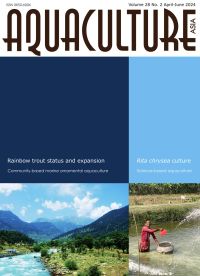
Aquaculture Asia Magazine, April-June 2024

In this issue:

  • Scientific aquaculture to promote better livelihoods for Scheduled Caste farmers.
  • Rainbow trout in Jammu and Kashmir: Present status and strategies for expansion.
  • Community participation in marine ornamental aquaculture: An integral approach on livelihood empowerment of islander women and conservation of reef ecosystems at the Lakshadweep Islands, India.
  • Training programmes organised by West Bengal Fisheries Department in South 24 Parganas in the beginning of 2024.
  • Exploring the possibility of captive production of a near threatened catfish, Rita chrysea for Indian aquaculture.
  • NACA Newsletter.

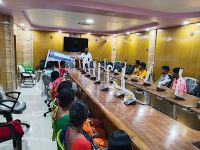
Training programmes organised by West Bengal Fisheries Department in South 24 Parganas in the beginning of 2024

Fisheries and aquaculture are crucial sources and contributors of nutrient-rich food, income, and livelihoods for many people in West Bengal and across India, creating valuable rural employment opportunities and fostering integrated rural development. Efforts are being made by the Fisheries Department to disseminate scientific knowledge about improved techniques of fish culture to fish farmers (progressive farmers, small and marginal farmers) by imparting hands-on training to them. The aim is to increase fish production through various means like bringing more water bodies under scientific fish culture and ensuring access to nutritionally balanced fish feed and high-quality fry and fingerling-stage fish for fish farmers. Training serves as an important mechanism for the transfer of technology and improving human skills regarding the developmental process This article describes recent short-term training programmes by the West Bengal Department of Fisheries for fish farmers that were  organised in almost all districts of the state, including South 24 Parganas. 

Thai Fish Project: A path towards a sustainable aquaculture

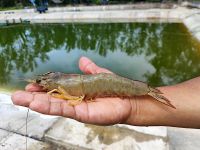
The Thai Fish Project began in 2019, and involves around 200 research members and multiple institutions in Thailand and Japan. The project aims to promote domestication and wise use of two Thai native aquatic species, namely the Asian sea bass Lates calcarifer and banana shrimp Penaeus merguiensis through increasing productivity, reducing the impact of infectious diseases, and preserving genetic resources. The project also encompasses several specific research topics to ensure that it comprehensively addresses the concerns on safeguarding the food security and enhancing the environmental sustainability as much as possible. This article describes the main research activities, outputs and future expectations of the Thai Fish Project.

NACA Newsletter, Vol. XXXVIII, October-December 2023

In this issue:

Kingdom of Saudi Arabia joins NACA; Applications for the position of Director General, NACA; NACA awarded the Aziz-Ul Haq Rural Development Medal; Training Course on Risk Analysis in the Aquaculture Value Chain held in Bangkok; Free FAO publication: Genetic management of Indian major carps; 7th International Symposium on Cage Aquaculture in Asia; PhD scholarships: Shanghai Ocean University PhD Programme 2024; WAS Journal Special Issue: Global Conference on Aquaculture Millennium +20 Thematic Reviews; Seminar on Artemia Research and Production: Videos; Reported aquatic animal diseases in the Asia-Pacific Region during the first quarter of 2023.

WAS Journal Special Issue: Global Conference on Aquaculture Millennium +20 Thematic Reviews

Eight thematic reviews prepared as preparation for the Global Conference on Aquaculture Millennium +20 (GCA +20) have been published in a Special Issue of the Journal of the World Aquaculture Society "Aquaculture for Food and Sustainable Development". A group of experts prepared advanced working drafts of each thematic review and the key findings from each theme were presented and discussed by expert panels during the GCA +20. Participants were then invited to provide their feedback and perspectives on the reviews and their key messages for consideration in finalisation of the papers. The reviews are available for free download.

Fully sponsored Training Course on Science and Technology for Coastal Ecological Aquaculture and Biotechnology, China

Don’t miss this opportunity! Only ten places are left. The Yantai Institute of Coastal Zone Research will sponsor international applicants to attend an in-person Training Course on Science and Technology for Coastal Ecological Aquaculture and Biotechnology in Qingdao, China, from 23 April to 7 May. Enrollments close soon, do not delay. Please see the enclosed application form and information sheet for more details.

Augmenting entrepreneurial attitude among tribal women of Jharkhand, India

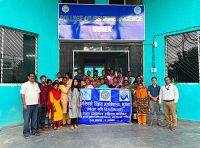
Today, tribal people comprise 8.6 percent of the Indian population and are one of the most disadvantaged sections of society. Many tribal groups in different parts of the country depend on natural resources for their livelihoods, to which their access has been progressively eroded. With financial support from ICAR-CIFT the College of Fisheries, Gumla, undertook seven training programmes for tribal women from economically marginalised tribal communities in the preparation and marketing of value-added fisheries products. The training encouraged women to develop small businesses building on their micro-entrepreneurship.

NACA Newsletter, Vol. XXXVIII, January-March 2023

In this issue:

High-level meeting on aquaculture transformation in the Asia-Pacific region; Developing a regional strategy for aquatic organism health: Progressive management pathways; Job opportunity - health management and husbandry researcher; 2022 China-ASEAN International Forum on Sustainable Development of Fisheries and Aquaculture Under the Blue Transformation Strategy; A new progressive management pathway for improving seaweed biosecurity; Indian delegates visit Thailand for training and industry exposure; PhD scholarships: Shanghai Ocean University PhD Programme 2023; Reported aquatic animal diseases in the Asia-Pacific region during the second quarter of 2022.

FAO/NACA workshop to developing a regional strategy for aquatic organism health using progressive management pathways

On 28-29 November FAO and NACA collaborated on a virtual workshop to develop a regional strategy for aquatic organism health, using a progressive management pathway for improving aquaculture biosecurity. The workshop was held under the auspices of the project “Responsible use of fisheries and aquaculture resources for sustainable development component 3: Biosecurity and health management”. The workshop involved 31 experts from 16 countries, including national focal points, FAO and NACA. The objectives of the workshop were to: Present and analyse country responses to a self-assessment survey on biosecurity and health management capacity and performance; to provide guuidance to country participants on conducting a SWOT analysis; and to prepare a detailed plan for Phase II of the initiative.

High-level meeting on aquaculture transformation in Asia and the Pacific region

As a follow on from the September FAO/NACA workshop on aquaculture transformation, FAO and NACA convened a high-level meeting to discuss the issue and the outcome of the previous consultation with policy makers. The meeting was held virtually from 22-23 November and was attended by 79 senior officials from 25 countries and international organisations, with observers from industry and international NGOs. Specific objectives of the high-level meeting were to: Engage senior policy makers and business leaders in the process of defining regional targets, action areas and initiatives for aquaculture transformation in the region by 2030, identify strategies and mechanisms to stimulate innovation and investment, and to recommend follow up actions and commitments.

Indian delegates visit Thailand for training and industry exposure

NACA welcomed five delegates from India on an aquaculture training and exposure visit from 31 October to 4 November. The visit began with a discussion at the NACA Secretariat on Thai mariculture, the recently established International Artemia Aquaculture Consortium, and better management practices concerning hatchery production and use of live feeds. The delegates left Bangkok the next day to visit seabass cage and pond culture and a shrimp nursery in the Chachengsao area and Bangprakong River. The following day they travelled to the Rayong Coastal Aquaculture Center and visited local farm sites before overnighting in Chantaburi. On the final day they visited the Kung Krabae Bay Royal Development Study Center and mangrove walk; and a freshwater fish farm to observe intensive carp and pangasius culture.

PhD scholarships: Shanghai Ocean University PhD Programme 2023

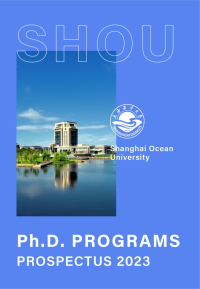
Shanghai Ocean University (SOU) is offering full scholarship PhD programmes in a wide range of marine sciences 2023. Disciplines include: Aquaculture, biology, fishing science, fisheries resources, marine science, food science and engineering, fishery economics and management, and marine engineering and information. The scholarships cover tuition, accommodation, medical insurance and include a monthly stipend.

Applications are due 1 February 2023. For details of the programmes, eligibility criteria, required documentation and application procedures, please download the prospectus. Postdoc positions are available for excellent graduates and full-time faculty positions are available for excellent international postdocs.

Free: 2022 Lancang-Mekong Rice-Fish Training Programme, 5-7 November (online)

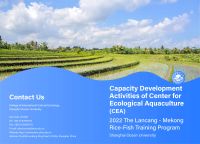
The Shanghai Ocean University Center for Ecological Aquaculture “Lancang-Mekong Rice-Fish” Training Program aims to help establish locally-adapted rice-fish models in Lancang-Mekong countries through collaboration to mitigate poverty, provide food security, meet the nutritional demands of local people, and educate local experts. 

The center will offer the training programme as an online course from 5-7 November. The course is free and will cover practical farming systems for the Lancang-Mekong region.

PhDs: Fully funded opportunities at the International Max Planck Research School for Molecular Life Sciences

The International Max Planck Research School for Molecular Life Sciences (IMPRS-LS) is a PhD program that brings together two renowned Munich-based Max Planck Institutes as well as two leading German universities, the LMU and TUM, to deliver first-class doctoral training to some of the world‘s most promising young scientists.

Applications are now open for fully funded PhD programmes with IMPRS-LS. The closing date is 15 November 2022, with accepted candidates commencing research project between March and October 2023.

For more information please download the attached announcement, or refer to IMPRS-LS website for eligibility criteria and online applications.

Free registration: 2022 China-ASEAN International Forum on "Sustainable Development of Fisheries and Aquaculture Under the Blue Transformation Strategy”

Ocean University of China and partners will convene the forum from 20 to 22 November 2022. The forum will cover the following: Topic 1: International talent cultivation and training;Topic 2: Science and technology innovation; Topic 3: Industrial synergy. The forum will host discussions about the implementation of the “Blue Transformation” strategy, further expansion of the space for fisheries and aquaculture, and ways of improving the production capacity of aquatic products, with the purpose of facilitating the achievement of the UN Sustainable Development Goals. Participation is free but registration is required. Registration closes on 22 October.

NACA Newsletter, Vol. XXXVII, October-December 2022

In this issue:

Training Course on Mariculture Technologies in Asia-Pacific; FAO/NACA Virtual Workshop on Aquaculture Transformation in Asia and the Pacific Region; Belt & Road Forum for International Freshwater Fishery Industry Innovation; 8th Global Conference on Gender in Aquaculture and Fisheries, 21-23 November; Reported Aquatic Animal Diseases in the Asia-Pacific Region during the First Quarter of 2022; International Training Course on Biology and Pathology of the Penaeid Shrimp 2022; Angkasa Putra inaugurated as first President of the South-East Asian Fisheries and Aquaculture Student Association; Artemia webinars: Video recordings of technical presentations available.

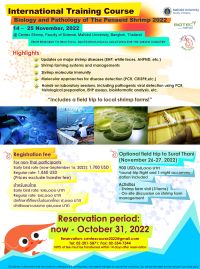
International Training Course on Biology and Pathology of the Penaeid Shrimp 2022, 14-25 November 2022, Thailand

Highlights of the course include: Updates on major shrimp diseases including EHP, white faeces, and AHPND; shrimp farming systems and management; Shrimp molecular immunity; molecular approaches for disease detection including PCR and CRISPR; hands-on laboratory sessions, including pathogenic viral detection using PCR, histological preparations, EHP assays and bioinformatic analysis, and an optional field trip to local shrimp farms in Surat Thani.

The course will be held at Centex Shrimp, Faculty of Science, Mahidol University in Bangkok, Thailand. This is a paid training course. Reservations will close on 31 October. For more information, please download the flyer.

Register now: Free Training Course on Mariculture Technologies in Asia-Pacific

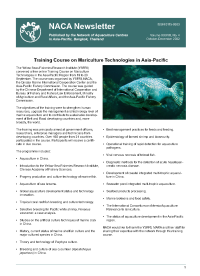
The Yellow Seas Fisheries Research Institute (YSFRI) will convene a free online Training Course on Mariculture Technologies in the Asia-Pacific Region from 19 to 23 September (please note the change of date). The course is organised by YSFRI, NACA, the Qindao Marine International Cooperation Center and the Asia-Pacific Fishery Commission. The training course will cover: Theory and technology for producing high-quality seed; New mariculture modes and technology; Nutrient regulation and feeding technology; Disease prevention and control technologies; Product processing and utilisation technologies. Applications close 5 September.