NACA member governments are: Australia, Bangladesh, Cambodia, China, Hong Kong SAR, India, Indonesia, I.R. Iran, Kingdom of Saudi Arabia, Korea (DPR), Lao PDR, Malaysia, Maldives, Myanmar, Nepal, Pakistan, Philippines, Sri Lanka, Thailand and Vietnam.
Dynamics of small-scale aquaculture development in India: A review; Green water technology as an essential support to larval rearing of hilsa shad; Collection of freshwater molluscs and sale of meat by women in Purba Medinipur, West Bengal, India; A success story of ornamental fish farming as a tool for alternative livelihood of tribal women in Keonjhar District, Odisha, India; Recent trends in seed production of stinging catfish, Heteropneustes fossilis, in India; NACA Newsletter.
Hatchery production of stinging catfish (Heteropneustes fossilis) seed is increasing as it is a good fish species favoured by consumers due to its high protein and lower fat content. Stinging catfish naturally breeds in the monsoon season, and is found gravid in the wild during July-September. In captivity it can be successfully produced using either induced or natural breeding techniques. This article summarises what is known about stinging catfish biology, and methods for its captive breeding, rearing of larvae and fry, feeding strategies and health concerns, to aid production of seed of this valuable catfish.
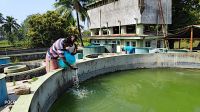
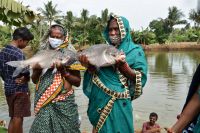
In Odisha, India, ornamental fish farming, culture and seed production are being utilised by self help groups to provide livelihoods for poor people in rural communities. The objective of self help groups is to sustainably increase the income of poor families to bring them above the poverty line. This is being achieved through a process of social mobilisation, training and capacity building, and provision of some necessary facilities. This article documents the evolution of ornamental fish farming by the Pragati Self Help Group in Bhatunia Village.
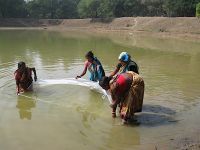
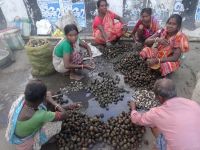
The common freshwater snail Bellamya bengalensis, golden apple snail Pila globosa and freshwater pearl mussel Lamellidens marginalis are naturally found in West Bengal. These molluscs are also an important source of protein for poor rural communities, and are also gaining popularity in middle and high income suburban areas for their nutritional and traditional medicinal values. They also represent a significant source of employment and income generation for women from Scheduled Tribes and Scheduled Castes. This article documents the collection, preparation, trade and use of freshwater molluscs in Paschim Medinipur and Purba Medinipur districts of West Bengal.
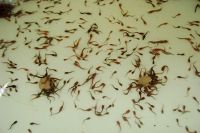
Green water technology is a technique that promotes phytoplankton to grow profusely, and includes several methods by which desirable microalgae are produced for the purpose of rearing larval fish and crustaceans. Naturally occurring phytoplankton, which serve as feed for fish and crustacean larvae, are grown and proliferate under a controlled system. This article describes the use of greenwater and co-feeding techniques in the rearing of hilsa, Tenualosa ilisha, principally making use of Chlorella and rotifers.
Development of small-scale aquaculture has dominated development discourse because of its potential to fight malnutrition and poverty, to ensure food security and enhance the socio-economic condition of people living at the bottom of the pyramid. Aquaculture has contributed to strengthening livelihoods and food security in southeast Asian countries, contributing to the livelihood of the poor farmers through improved food supply, income and employment.
With the implementation of the new aquatic animal disease reporting in the Asia Pacific region from January 2021, and in lieu of the published QAAD Reports (last issue published was 4th quarter of 2020), NACA is publishing reported aquatic animal diseases submitted by countries in the Asia-Pacific region. This report covers the fourth quarter of 2021 and the original and updated reports can be accessed from the QAAD page.
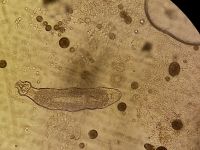
The aquatic environment contains many opportunistic pathogens and fish are frequently infected by a range of parasites, bacteria, viruses, and fungi. In most incidences of disease, the involvement of two or more pathogens are often seen, which in turn complicates diagnosis and treatment. Here we present a few case studies on mixed infections in aquaculture systems, which may become more common in future due to changing climatic patterns and associated adverse impacts on water quality. Mixed infections seem to be a big challenge to diagnostic laboratories and health specialists in terms of providing a correct diagnosis and treatment.
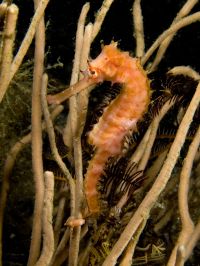
Seahorses are charismatic livebearers that come under the genus Hippocampus spp. Seahorses are widely distributed in tropical and temperate waters (mostly in the Indo-Pacific region) and different species can tolerate a salinity range of 6-35 ppt.
Seahorses are highly in demand for traditional medicines and curio trade purposes in the dried form and live ones are popular in the marine ornamental aquarium trade. As a result, they are vulnerable to overfishing. Since over-exploitation of these charismatic species has resulted in a drastic reduction in their natural populations, aquaculture of seahorses on a commercial scale may help to reduce pressure on wild stocks. This article provides an overview of seahorse aquaculture in India including research, the production cycle, production systems, and disease issues.
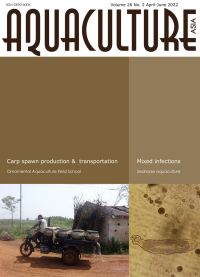
For the last five decades or so, West Bengal has been the leading state in India for the production of production and supply of major carp fry, underpinning the success of freshwater fish culture. This article describes the structure of the hatchery industry in Ramsagar, West Bengal, production practices and systems, packing, transport and links to major seed markets both within the state and elsewhere in India. Market price, broodstock management and natural breeding methods are also discussed.
The Farmer Field School approach is promoted by FAO as an alternative technology dissemination mechanism to the top-down extension methods in south-east Asian countries. In order to utilise the potential of the farmer field school approach for aquaculture, ICAR-CIFA has piloted Aquaculture Field Schools (AFS) in several states in India. AFS are schools without walls to improve the decision-making capacity of the farmers and facilitate cross-learning opportunities. It is a participatory extension methodology whereby fish farmers are allowed to choose the methods of aquaculture production through discovery-based approaches.
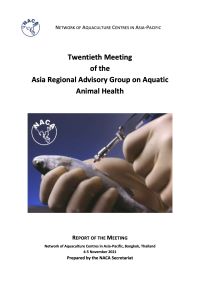
This report summaries the proceedings of the 20th meeting of the Regional Advisory Group on Aquatic Animal Health, held 4-5 November 2021. The meeting discussed: Progress on NACA’s Asia Regional Aquatic Animal Health Program; updates from the OIE Aquatic Animal Health Standards Commission; aquaculture biosecurity; Progressive Management Pathway for Improving Aquaculture Biosecurity activities relevant to Asia; a systematic approach for quantifying biosecurity measures in aquaculture; aquatic animal health strategy; updates on the OIE Regional Collaboration Framework on Aquatic Animal Health; and updates on the QAAD Reporting and Disease List.
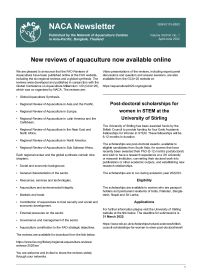
New reviews of aquaculture now available online; Post-doctoral scholarships for women in STEM at the University of Stirling; Research breakthrough seen to curb shortage of "poor man's fish"; Free online aquaculture courses; Fishing for life 2022: South and South-East Asian Conference on Small Scale Fisheries and Aquaculture; Reported Aquatic Animal Diseases in the Asia-Pacific Region during the Third Quarter of 2021; Shrimp 2022: INFOFISH World Shrimp Trade Conference and Exhibition; Tuskfish CMS v2.0.3 available.
The University of Stirling has been awarded funds by the British Council to provide funding for four Early Academic Fellowships for Women in STEM. These fellowships will be 6-12 months in duration. The scholarships are available to women who are passport holders and permanent residents of India, Pakistan, Bangladesh, Nepal and Sri Lanka. For further information please visit the University of Stirling website. The deadline for submissions is 31 March 2022.
Exploration of canal resources as a potential source for fish production in the Indian Sundarbans; Expansion of new host range of isopod Tachaea spongillicola infestation to fish species could pose a risk to aquaculture food industry in southeast Asian countries; Aspects of air-breathing fish farming practiced at Mathurapur-II Block, West Bengal, India; Magical role of live foods in boosting spawn survival of climbing perch: A success in the farmer’s field; NACA Newsletter.
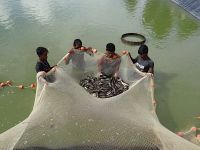
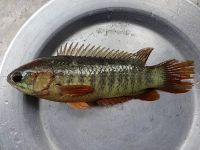
Climbing perch inhabit water bodies ranging from fresh to brackish waters across a wide range of environments, and are widely distributed throughout south and southeast Asia through to southern China. In India it is prized both as a foodfish and as a traditional medicinal food. This article describes the induced breeding of climbing perch and the interaction of scientists and farmers to improve survival of larvae and fry in through the use of live feeds (rotifer) in small-scale hatcheries in India.
Climbing perch Anabas testudineus is a high-priced fish, nutritious and economically profitable for small- to medium-scale fish farmers, who can obtain fry from local paddy fields and low-lying inundated areas in late summer, monsoon and post-monsoon periods. Climbing perch is a facultative air-breathing fish that is able to move between water bodies by undertaking short migrations overland. This article describes techniques for climbing perch and major carp aquaculture, including use of biofloc systems, preparation of live feeds including mealworms, and some concerns regarding the hybridisation of native Indian strain of A. testudineus with an imported Vietnamese strain.
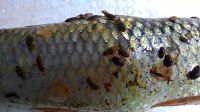
Our article in the journal Aquaculture highlighted the first record of the isopod Tachaea spongillicola infesting wild fish species of aquaculture importance, particularly of carps. T. spongillicola was first recorded in freshwater sponges, 114 years ago and later recorded infesting freshwater prawns. Our recent study has further recorded infestation of this isopod in wild fish species. The expansion of host range from freshwater sponges to freshwater prawns and now to freshwater fish could pose a risk to aquatic industries in the years to come. We hypothesise that climate change could be a major factor contributing towards the expansion of the host range of parasites.
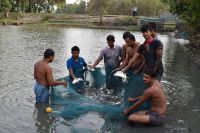
Fisheries is next to agriculture in offering employment opportunities for poor rural communities in Sundarbans. With around 17 million hectares of canals in India, there is considerable potential to generate jobs and improve the food security of rural populations if canals can be used for aquaculture production. This study explored the feasibility of aquaculture as a secondary use of canal infrastructure through use of net barrier partitions, installed and managed by local communities.