NACA member governments are: Australia, Bangladesh, Cambodia, China, Hong Kong SAR, India, Indonesia, I.R. Iran, Kingdom of Saudi Arabia, Korea (DPR), Lao PDR, Malaysia, Maldives, Myanmar, Nepal, Pakistan, Philippines, Sri Lanka, Thailand and Vietnam.
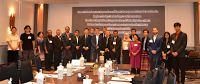
In 2023, FAO and NACA initiated a consultation process on aquaculture effluent management in Asia and the Pacific in collaboration with NACA member governments. Experts across the region gathered information to assess the state of governance, advancements in technology and innovation in aquaculture effluent management. The consultative process culminated in an expert workshop, convened from 14 to 15 November, funded by FAO, to share views and national experiences on aquaculture effluent management.
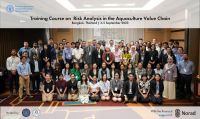
Risk analysis is an essential component of a national aquatic organism health strategy. Now widely applied in many fields, risk analysis provides a science-based framework for evaluating hazards, determining the likelihood and extent of potential harms, mitigating risks and guiding policy decisions. Combining risk and value chain analysis provides a risk-based and people-centred approach to managing disease risks and planning control measures for aquaculture systems. FAO organised a training course on Risk Analysis in the Value Chain from 3-5 September in Bangkok, Thailand, in partnership with NACA, INFOFISH, Thailand Department of Fisheries and the ASEAN Network of Aquatic Animal Health Centres. Financial support was provided by the Norwegian Agency for Development Cooperation and Thailand Department of Fisheries.
Ocean University of China and partners will convene the forum from 20 to 22 November 2022. The forum will cover the following: Topic 1: International talent cultivation and training;Topic 2: Science and technology innovation; Topic 3: Industrial synergy. The forum will host discussions about the implementation of the “Blue Transformation” strategy, further expansion of the space for fisheries and aquaculture, and ways of improving the production capacity of aquatic products, with the purpose of facilitating the achievement of the UN Sustainable Development Goals. Participation is free but registration is required. Registration closes on 22 October.
A free virtual seminar series will be held from 13-17 December, hosted by the Freshwater Fisheries Research Center, Chinese Academy of Fisheries Sciences, in partnership with NACA and the Chinese Ministry of Agriculture and Rural Affairs. The seminar will be held via Zoom. It will give participants a background in aquatic resource conservation practices, recommend options for sustainable aquaculture farming systems with potential for intensification with intervention strategies, and build a communication and experience exchange platform for information dissemination and future collaboration. Participation is free. Registration closes 10 December.
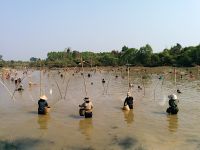
Join us on 31 May for a free webinar on Culture-based fisheries for rural development, with leading experts from the Asian region. Culture-based fisheries (CBF) are practices to enhance fish stocks in waters that don't have enough natural recruitment to sustain a fishery. CBF practices are usually applied in small water bodies such as village dams and irrigation reservoirs. Fish growth is driven by the natural productivity of the waters, foraging on natural food supplies. The simplicity and low capital requirements of CBF make it easy for farming communities to learn and adopt.
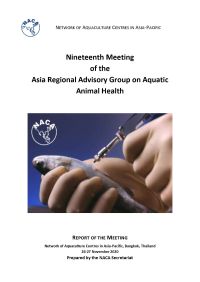
This report summarises the proceedings of the 19th meeting of the Advisory Group, held 26-27 November 2020 via video conference. The group's role includes reviewing disease trends and emerging threats in the region, identifying developments in global aquatic disease issues and standards, evaluating the Quarterly Aquatic Animal Disease Reporting Programme and providing guidance on regional strategies to improve aquatic animal health management.
Fifty fellowships are available for young scientists and researchers under the ASEAN-India Research Training Fellowship Scheme (AIRTF), to study at Indian academic and R&D institutions. The fellowships are for a period of up to six months and include travel and financial support. The fellowships are intended to build capacity among young ASEAN researchers in science and technology and to further strengthen the bond between India and ASEAN member states.
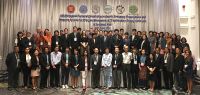
The ASEAN Regional Consultation on Aquatic Emergency Preparedness and Response Systems for Effective Management of Transboundary Disease Outbreaks in Southeast Asia was held in Bangkok, 20-22 August. The objective of the consultation was to bring together ASEAN member states and technical experts to discuss the current status of emergency animal disease preparedness and response systems, and to identify gaps and opportunities for regional cooperation in management of transboundary disease.
The EURASTiP Exchange Programme provides opportunities for industry, researchers and educators from Europe and south-east Asia to connect and gain new perspectives while sharing innvovative ideas to help develop long term partnerships. Bursaries of up to €3,000 per exchange are available (subject to eligibility criteria) to support international innovation and collaboration. The deadline for applications is 20 September 2018. For more information on how to apply please see the EURASTiP website.
22 March 2018 | Network of Aquaculture Centres in Asia-Pacific | 3289 Downloads | .pdf | 3.45 MB
This report summarises the proceedings of the 16th meeting of the Advisory Group, held 26-27 August 2017 in Bali, Indonesia. The group's role includes reviewing disease trends and emerging threats in the region, identifying developments in global aquatic disease issues and standards, evaluating the Quarterly Aquatic Animal Disease Reporting Programme and providing guidance on regional strategies to improve aquatic animal health management. The meeting included discussion on Tilapia Lake Virus (TiLV) and developments in antimicrobial resistance.
The first ever Regional Training Course on Culture-based Fisheries in Inland Waters was held at Nha Trang University from 30 October to 8 November. The objective of the course was to provide participants with the skills to assist local communities to plan and manage culture-based fisheries. These practices are an example of a relatively simple and low cost technology that can deliver nutritional and economic benefits to rural communities, which often have few livelihood options.
IDRC and the National University of Singapore (NUS) are offering fellowships for Southeast Asian entrepreneurs, leaders in business, government, and civil society who want to better understand Southeast Asian value chains. The four-day program from 19-22 March 2018 will give participants a useful toolkit of ideas to take full advantage of a connected ASEAN Economic Community. Women leaders and participants from Cambodia, Indonesia, Laos, Malaysia, Myanmar, the Philippines, Thailand, Timor-Leste, and Vietnam are especially encouraged to apply.
20 May 2017 | H.T. Dong, T. Rattanarojpong and S. Senapin | 5234 Downloads | .pdf | 375.4 KB
Recently, we released a warning of TiLV in Thailand and an improved RT-PCR detection methodology. The Fish Health Platform in Centex, BIOTEC/Mahidol University has also obtained positive test results for TiLV in other Asian countries where it has not yet been reported. Many countries have been translocating tilapia fry/fingerlings prior to and even after the description of TiLV. We have prepared a map listing countries with confirmed reports of TiLV infections and 43 other countries that we believe have imported infected fish.
Around 73% of total fisheries production originated from aquaculture including fish culture in ponds, community fish culture in oxbow lakes and irrigation weirs, rice-fish culture and cage culture. Commercial feed is typically only used in pond culture. In other production systems some supplementary feeding may be conducted using local materials. Integrated fish farming with livestock is also practiced using various species of carp, barbs, catfish, gourami and snakeheads. Existing local feed factories have considerable spare capacity.
19 January 2017 | Cherdsak Virapat, Simon Wilkinson and Doris Soto | 4282 Downloads | .pdf | 1.68 MB
These are the proceedings of a consultation on the existence and effectiveness of environmental monitoring systems for fisheries and aquaculture in the Lower Mekong basin. The document provides a baseline assessment of environmental monitoring systems in Cambodia, Thailand and Vietnam and the report of a workshop to discuss the assessments findings and future steps towards an improved environmental monitoring and early warning system that will contribute to climate change adaptation in fisheries and aquaculture in the area.
4 February 2016 | Ingram, B.A., Chanthavong, K., Nanthalath, T. and De Silva, S.S. | 4352 Downloads | .pdf | 9.67 MB
The objective of this manual was to provide basic guidelines for the hatchery production of Pa Phia (Labeo chrysophekadion) fingerlings. It includes information on managing and spawning broodstock, genetic guidelines, egg incubation, hatching larviculture and fry rearing. Although the guidelines were specifically developed for production of Pa Phia at government hatcheries in the Lao PDR, they may be applied to other, related, species and could be adopted and commercialised by the private sector hatcheries
This Code of Practice is prepared to promote or ensure compliance to World Trade Organisation-Sanitary and Phytosanitary measures for the movement of live aquatic organisms in the Lower Mekong Basin. The goals of the Code are to achieve environmental protection and management, biodiversity conservation as well as prevention of spread of disease epizootics. Most of the points listed in this Code are based on the inputs of MRC Member Countries.
Changes to the magazine and website. Status of alien fish species farming and it's implications for Andhra Pradesh, India. Bridging the research-extension-farmer-input and market linkage gap in coastal aquaculture through application of ICT. Bio-remediation of domestic sewerage recycled in aquaculture: A Central Institute of Freshwater Aquaculture model. Role of family farming in marine and coastal ecosystem management in India. Conservation of fish genetic resources: An introduction to the state fishes of India.