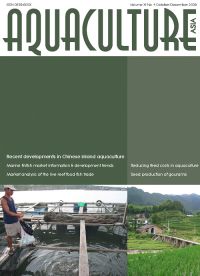
Peter Edwards writes on rural aquaculture: Recent developments in Chinese inland aquaculture. Reducing feed costs in aquaculture: Is the use of mixed feeding schedules the answer for semi-intensive practices? Seed production technology of ornamental gouramis Colisa fasciata and C. lalia under captive conditions. Marine finfish market information and aquaculture development trends in selected locations in Indonesia and Malaysia. Market analysis of the live reef food fish trade.
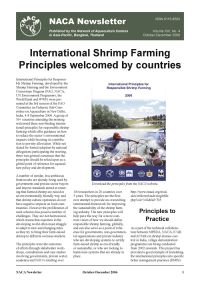
International shrimp farming principles welcomed by countries. Discussions on the establishment of a "Mahseer R&D Centre". Microsatellite DNA markers for mahseer are now available. First study on genetic variation of the critically endangered Mekong giant catfish. IMNV found in Asia-Pacific. Thailand and US to jointly install tsunami wave sensors. Co-management in aquaculture explored at APFIC Forum. Virus may control Australia's feral carp problem. A milestone in India's sustainable shrimp farming efforts. Fish introduction in India: Status, challenges and potentials. 8th Asian Fisheries Forum. STREAM Update. Website management training to support Thai Post-tsunami Rehabilitation website.
24 September 20061434 Downloads | .pdf | 147.83 KB
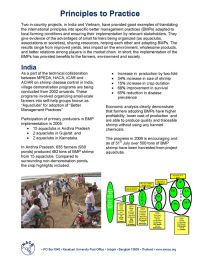
Two in-country projects, in India and Vietnam, have provided good examples of translating the International Principles on Responsible Shrimp Farming into specific better management practices (BMPs) adapted to local farming conditions and ensuring their implementation by relevant stakeholders. The results range from improved yields, less impact on the environment, wholesome products, and better relations among players in the market chain. In short, the implementation of the BMPs has provided benefits to the farmers, environment and society.
28 August 2006Nguyen Song Ha and Edward Smith | 2103 Downloads | .pdf | 772.08 KB
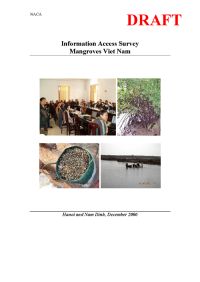
Viet Nam's mangrove forests have been severely impacted by human interventions, with a reduction in forestation from 408,000 ha in 1943 to a low of 150,000 ha in 2000. This study provides an overview of the information needs and communication issues surrounding people living in mangrove regions of Viet Nam. It is hoped that this study will help to raise the awareness of issues surrounding mangrove environments and improve the accessibility to information, for all stakeholders.
22 August 2006Song Ha Nguyen, Mai Tran Ngoc, Edward Smith, Aniza Suspita and Graham Haylor | 3835 Downloads | .pdf | 458.72 KB
The practical application of livelihoods approaches is still relatively new in development work and guidance is much sought by field teams. The concept aims to build a comprehensive picture of how people within communities live, rather than approaching development planning from a sectoral perspective such as agriculture, forestry or fisheries, to assist in planning interventions that will benefit present and future generations. This document discusses the concepts of livelihoods and sustainable livelihoods analyses with these objectives in mind.