Integrated taxonomy, conservation and sustainable development: Multiple facets of biodiversity Teena Jayakumar, T.K, T.T. Ajith Kumar, Mahender Singh, Vindhya Mohindra, Rajeev K. Singh, Rajesh Dayal, J.K. Jena and Kuldeep K. Lal
A note on 100th birth anniversary of the late Dr Hiralal Chaudhuri Subrato Ghosh
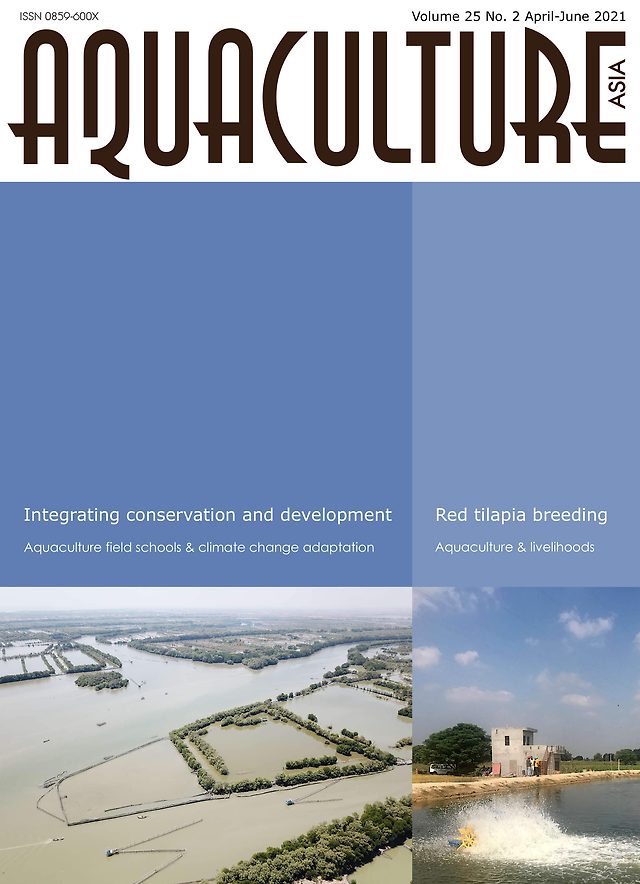
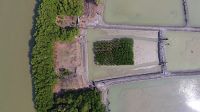
Aquaculture field schools supporting mangroves for climate change adaptation of Indonesian milkfish-shrimp farmers Woro Yuniati, Ratna Fadillah, Sri Rejeki, Lestari Widowati, Restiana Ariyati, Apri Astra, and Roel Bosma
An insight to red tilapia breeding and culture: A farmer advisory Somu Sunder Lingam, R., Stephen Sampath Kumar, J., Chidambaram, P., Aanand, S. Velmurugan, P. and Bhosle Rameshwar Venkatrao
Aquaculture for livelihoods and food security in North-western India Meera D. Ansal and Asha Dhawan
Aquaculture Asia Magazine is an autonomous publication that gives farmers and scientists in developing countries a voice. Stories concern the small-scale aquaculture prevalent in the region and the circumstances of farmers trying to make ends meet in an increasingly globalised world. We accept articles on any aspect of aquaculture and the related processing, marketing, economic, environmental and social issues. An RSS feed is available if you wish to stay informed of new issues.
8 July 2021 | Meera D. Ansal and Asha Dhawan | 1593 Downloads | .pdf | 3.93 MB
In the north-western states of India there is great scope for aquaculture to generate employment opportunities, improve the socio-economic status of farming communities, furnish additional food and nutritional security and boost the national economy. This article describes the present state of Indian aquaculture and prospects for increasing production through diversification, use of village/community ponds and inland saline aquaculture of shrimp and other species, along with major concerns and action plans.
29 June 2021 | Somu Sunder Lingam, R., Stephen Sampath Kumar, J., Chidambaram, P., Aanand, S. Velmurugan, P. and Bhosle Rameshwar Venkatrao | 6109 Downloads | .pdf | 2.21 MB
The aquaculture of red tilapia is proving to be highly successful due to its attractive colour, faster growth rate and good market demand. Expansion of the industry will depend on adequate supply of quality seed. This article describes the status of red tilapia aquaculture and good practices in broodstock management and nursery rearing using hapa systems and all-male seed production techniques, including hapa installation, breeding, egg collection and related issues.
28 June 2021 | Woro Yuniati, Ratna Fadillah, Sri Rejeki, Lestari Widowati, Restiana Ariyati, Apri Astra, Roel Bosma | 1829 Downloads | .pdf | 3.33 MB
Over the last five decades, over 30 million people along Java’s north coast have experienced subsidence and subsequent soil erosion. In 2015, Building with Nature Indonesia (BwNI-Demak) started a coastal protection project in 10 communities of nine coastal villages of Demak regency. The protection measures introduced included the use of permeable structures (dams) that successfully capture sediment and support natural recovery of mangroves, and aquaculture field schools, to train small-scale farmers on good aquaculture practices such as low external inputs sustainable aquaculture, associated mangrove aquaculture and multi-trophic srhimp aquaculture.
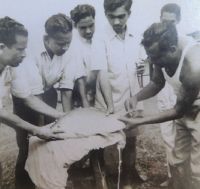
The year 2021 is the one-hundredth anniversary of the birth of the ‘Father of Induced Fish Breeding in India’, the late Dr Hiralal Chaudhuri, DSc, former Senior Fishery Scientist at the ICAR-Central Inland Fisheries Research Institute, Barrackpore, India and Ex-Chief Technical Advisor in Aquaculture, FAO/UNDP at Lao PDR. In his honour, National Fish Farmers’ Day is celebrated annually on 10 July, to acknowledge the contribution made by professional fish farmers and breeders to India’s economy, food supply and production of table-sized major carps and other important inland food fishes.
28 April 2021 | Teena Jayakumar, T.K, T.T. Ajith Kumar, Mahender Singh, Vindhya Mohindra, Rajeev K. Singh, Rajesh Dayal, J.K. Jena and Kuldeep K. Lal | 2377 Downloads | .pdf | 528.3 KB
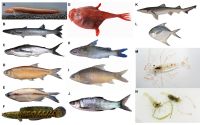
Focussed explorations from the ICAR-National Bureau of Fish Genetic Resources (NBFGR), an organisation mandated for cataloguing of genetic resources of India include surveys of various ecosystems ranging from fauna of deep sea to the high-altitude regions of the Himalaya, falling under diverse biogeographic zones and unexplored regions of the country, including North-eastern India, Western Ghats, Lakshadweep and the Andaman and Nicobar Islands. This article describes the results of these efforts, which include discovery of 14 new fish species and six new distribution records between 2015 to 2020.