Freshwater finfish

Information relating to aquaculture of freshwater finfish.

Creative Commons Attribution.

Related

Species / commodity tags

Major farmed commodity or species groups.

In this collection

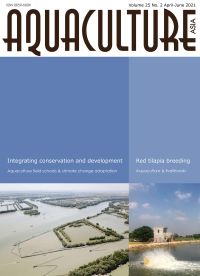
Aquaculture Asia Magazine, April-June 2021

In this issue:

Integrated taxonomy, conservation and sustainable development: Multiple facets of biodiversity; A note on 100th birth anniversary of the late Dr Hiralal Chaudhuri; Aquaculture field schools supporting mangroves for climate change adaptation of Indonesian milkfish-shrimp farmers; An insight to red tilapia breeding and culture: A farmer advisory; Aquaculture for livelihoods and food security in North-western India; NACA Newsletter.

Aquaculture for livelihoods and food security in North-western India

In the north-western states of India there is great scope for aquaculture to generate employment opportunities, improve the socio-economic status of farming communities, furnish additional food and nutritional security and boost the national economy. This article describes the present state of Indian aquaculture and prospects for increasing production through diversification, use of village/community ponds and inland saline aquaculture of shrimp and other species, along with major concerns and action plans.

An insight to red tilapia breeding and culture: A a farmer advisory

The aquaculture of red tilapia is proving to be highly successful due to its attractive colour, faster growth rate and good market demand. Expansion of the industry will depend on adequate supply of quality seed. This article describes the status of red tilapia aquaculture and good practices in broodstock management and nursery rearing using hapa systems and all-male seed production techniques, including hapa installation, breeding, egg collection and related issues.

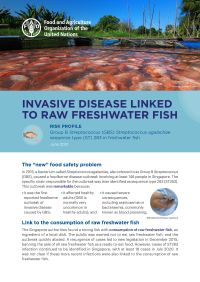
Invasive disease linked to raw freshwater fish: Group B Streptococcus

In 2015, a bacterium called Streptococcus agalactiae, also referred to as Group B Streptococcus (GBS), caused a foodborne disease outbreak involving at least 146 people in Singapore, associated with the consumption of raw freshwater fish. The specific strain responsible for the outbreak was later identified as sequence type 283 (ST283). Invasive GBS ST283 disease is also found in other countries in and around Southeast Asia. FAO has published a fact sheet and a risk profile for GBS ST283, which are available for free download. These documents provide guidance on risk reduction, and practical recommendations for food safety competent authorities.

Quarterly Aquatic Animal Disease Report, October-December 2020

The 88th edition of the Quarterly Aquatic Animal Disease Report contains information from thirteen governments. The foreword provides an announcement on the new format for the Aquatic Animal Disease Report from January 2021 onwards.

Webinar: Culture-based fisheries for rural development

Join us on 31 May for a free webinar on Culture-based fisheries for rural development, with leading experts from the Asian region. Culture-based fisheries (CBF) are practices to enhance fish stocks in waters that don't have enough natural recruitment to sustain a fishery. CBF practices are usually applied in small water bodies such as village dams and irrigation reservoirs. Fish growth is driven by the natural productivity of the waters, foraging on natural food supplies. The simplicity and low capital requirements of CBF make it easy for farming communities to learn and adopt.

A note on 100th birth anniversary of the late Dr Hiralal Chaudhuri

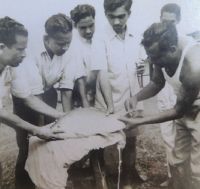
The year 2021 is the one-hundredth anniversary of the birth of the ‘Father of Induced Fish Breeding in India’, the late Dr Hiralal Chaudhuri, DSc, former Senior Fishery Scientist at the ICAR-Central Inland Fisheries Research Institute, Barrackpore, India and Ex-Chief Technical Advisor in Aquaculture, FAO/UNDP at Lao PDR. In his honour, National Fish Farmers’ Day is celebrated annually on 10 July, to acknowledge the contribution made by professional fish farmers and breeders to India’s economy, food supply and production of table-sized major carps and other important inland food fishes.
Integrated taxonomy, conservation and sustainable development: Multiple facets of biodiversity

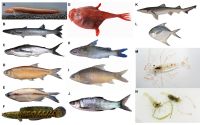
Focussed explorations from the ICAR-National Bureau of Fish Genetic Resources (NBFGR), an organisation mandated for cataloguing of genetic resources of India include surveys of various ecosystems ranging from fauna of deep sea to the high-altitude regions of the Himalaya, falling under diverse biogeographic zones and unexplored regions of the country, including North-eastern India, Western Ghats, Lakshadweep and the Andaman and Nicobar Islands. This article describes the results of these efforts, which include discovery of 14 new fish species and six new distribution records between 2015 to 2020.

Webinar: Pathogen Free: non-infectious Diseases and Disorders of Aquatic Animals

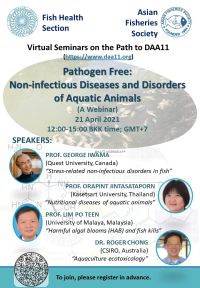
The Fish Health Section of the Asian Fisheries Society will convene a webinar via Zoom on 21 April, from 12:00 to 15:00 Bangkok time (GMT +7). Topics include: Stress-related non-infectious disorders in fish (Prof. George Iwama, Quest University, Canada); Nutritional diseases of aquatic animals (Prof. Orapint Jintasataporn, Kasetsart University, Thailand); Harmful algal blooms and fish kills (Prof. Lim Po Teen, University of Malaya); and Aquaculture ecotoxicology (Dr Roger Chong, CSIRO Australia). Participation is free, but registration is required.

NACA Newsletter, Vol. XXXVI, April-June 2021

In this issue:

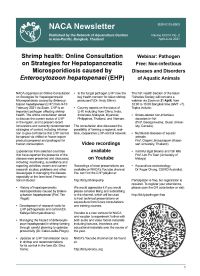
Shrimp health: Online Consultation on Strategies for Hepatopancreatic Microsporidiosis caused by Enterocytozoon hepatopenaei (EHP); Webinar: Pathogen Free: Non-infectious Diseases and Disorders of Aquatic Animals; Quarterly Aquatic Animal Disease Report, July-September 2020; Register for the Global Conference on Aquaculture Millennium +20; Scholarship opportunity: Lancang-Mekong Rice-Fish Programme; International Artemia Aquaculture Consortium.

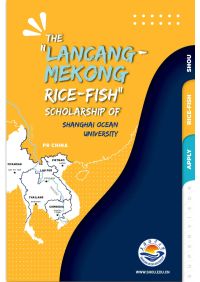
Scholarships: "Lancang-Mekong Rice-Fish" Program

Shanghai Ocean University is offering master and PhD scholarships for aquaculture and hydrobiology-related majors interested in studying rice-fish farming in the Lancang Mekong River area. The scholarship programme is open to nationals of Myanmar, Cambodia, Lao PDR, Thailand and Vietnam who are less than 35 years old and have a bachelor degree with good academic record. The scholarships include full tuition fee waiver, accommodation, living allowance and medical insurance. Applications close 30 May 2021.

Report of the Nineteenth Meeting of the Asia Regional Advisory Group on Aquatic Animal Health

This report summarises the proceedings of the 19th meeting of the Advisory Group, held 26-27 November 2020 via video conference. The group's role includes reviewing disease trends and emerging threats in the region, identifying developments in global aquatic disease issues and standards, evaluating the Quarterly Aquatic Animal Disease Reporting Programme and providing guidance on regional strategies to improve aquatic animal health management.

Quarterly Aquatic animal Disease Report, July-September 2020

The 87th edition of the Quarterly Aquatic Animal Disease Report contains information from fifteen governments. The foreword discusses the 19th Meeting of the Asia Regional Advisory Group on Aquatic Animal Health, held 26-27 November 2020.

Aquaculture Asia Magazine, January-March 2021

In this issue:

Exotic trout fisheries resources and potentialities in Uttarakhand; Scenario of captive production of Clarias magur in India; Strategies to reduce feed cost by improving gut health and nutrient utilisation of fish in aquaculture; Fish pituitary gland collection and supply as a vocation in West Bengal, India; Coral trout Plectropomus leopardus aquaculture research and fingerling production in Indonesia; Smartphone app improving smallholder shrimp farming practices in Bangladesh; NACA Newsletter.

Fish pituitary gland collection and supply as a vocation in West Bengal, India

In retail fish markets in Kolkata city proper, suburbs and neighbouring districts, pituitary glands are collected as a profession from the heads of mature fish. The preserved glands are used to induce breeding via hypophysation in carp hatcheries throughout West Bengal, playing an important role in the availability of carp seed to support aquaculture operations. This article describes the livelihoods of pituitary gland collectors and traders in West Bengal, India.

Scenario of captive production of Clarias magur in India

Clarias magur, locally known as magur, is a well-preferred medium sized catfish among Indian consumers. Difficulties such as shortages of effective inducing agents and the erratic response to induced breeding, low survival in different life stages, slow growth, and lack of effective feeds have been a bottleneck for the wider adoption of this fish by farmers. There has been considerable research to simplify the technology and disseminate it among farmers over the last decade. This article summarises these attempts and describes the present level of its technology practiced in India.

Exotic trout fisheries resources and potentialities in Uttarakhand

Commercial trout farming in Uttarakhand has advanced progressively during the last decade and has become a profitable occupation among the rural masses especially in the colder regimes where no other fish farming has possibilities. The rainbow trout here plays the most dominant role as a commercially important candidate species for culture in this hill locked Himalayan state of India. This article describes the current status of trout fisheries resources and trout aquaculture in Uttarakhand, and their potential further development.

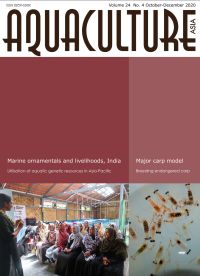
Aquaculture Asia Magazine, October-December 2020

In this issue:

Framework for participatory linkage of marine ornamentals germplasm conservation to livelihoods: Is community aquaculture an inclusive option? Induced breeding of farm-bred and pond-raised critically endangered peninsular carp, Hypselobarbus pulchellus; A way forward for utilisation of aquatic genetic resources in Asia-Pacific: Synthesis from deliberations during the Regional Workshop on Underutilized Fish and Marine Genetic Resources and their Amelioration 2019; Cast nets: The dominant active fishing gear in the Kashmir Valley; Moyna model of major carp farming in Purba Medinipur District, West Bengal, India; NACA Newsletter.

Induced breeding of farm-bred and pond-raised critically endangered peninsular carp, Hypselobarbus pulchellus

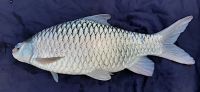
Hypselobarbus pulchellus is endemic to the peninsular rivers of India, mainly the Krishna, Godavari, Tungabhadra, Sita and Tunga. It once formed a major fishery of the Tungabhadra reservoir but has declined to the status of a critically endangered species. H. pulchellus is a bentho-pelagic species which inhabits the deeper part of large streams and rivers along the base of ghats. It is the only indigenous fish that consumes aquatic weeds and submerged grasses, and could play a role in controlling aquatic vegetation in reservoirs, tanks and irrigation canals. Capable of attaining 8 kg, H. pulchellus would make a welcome addition to pond culture practices of India, especially for composite fish culture. This article gives an overview of the breeding and seed production technologies developed by ICAR-CIFA for farm-bred and pond-raised H. pulchelllus.

Moyna model of major carp farming in Purba Medinipur District, West Bengal, India

The ‘Moyna Model’ is accepted as an example for freshwater fish culture throughout West Bengal. Moyna is a great example of the freshwater fish culture revolution in West Bengal and a new horizon for culture of the major carps. Moyna fish farmers have adapted the procedures of Andhra farmers incorporating their own blend of experience, skill and technology. This article describes the history and development of major carp culture practices in Moyna, challenges faced by the industry including groundwater exploitation, and documents the experience of some progressive farmers.