Freshwater finfish

Information relating to aquaculture of freshwater finfish.

Creative Commons Attribution.

Related

Species / commodity tags

Major farmed commodity or species groups.

In this collection

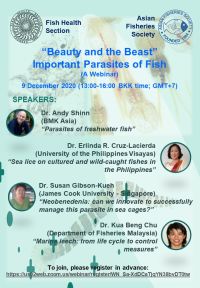
Webinar: Beauty and the Beast: Important Parasites of Fish

A free webinar on important parasites of marine and freshwater fish will be held on 9 December 2020, from 13:00-16:00 Bangkok time (GMT + 7). Topics include: Parasites of freshwater fish; Sea lice problem in marine fish aquaculture in the Philippines; Neobenedenia: Can we innovate to successfully manage this parasite in sea cages?; and Marine leech: From life cycle to control measures. Participation is free for all but registration is required.

Quarterly Aquatic Animal Disease Report, April-June 2020

The 86th edition of the Quarterly Aquatic Animal Disease Report contains information from fifteen governments. The foreword provides a discussion of a webinar on decapod iridescent virus 1 (DIV1), held on 20 August 2020.

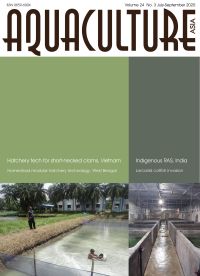
Aquaculture Asia Magazine, July-September 2020

In this issue:

Hatchery techniques for the seed production of short-necked clams (Paphia undulata) in Nha Trang, Vietnam; Lovesome chum of the aquarium are wreaking havoc in East Kolkata Wetlands, India; Concept of indigenous recirculatory aquaculture system executed in West Bengal, India and other places; Homestead modular hatchery technology of brackishwater catfish, Mystus gulio: A potential alternate livelihood option for small and marginal farmers of Sunderban; NACA Newsletter.

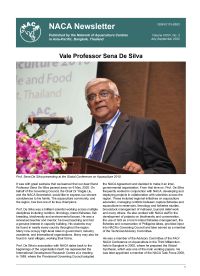
NACA Newsletter, Vol. XXXV No. 3, July-September 2020

In this issue:

Vale Professor Sena De Silva; the State of World Fisheries and Aquaculture 2020; Viral covert mortality disease (VCMD): Disease card; Disease advisory: Decapod iridescent virus 1 (DIV1): An emerging threat to the shrimp industry; Infection with decapod iridescent virus 1 (DIV1): Disease card; Proceedings of the Regional Workshop on Underutilized Fish and Marine Genetic Resources and their Amelioration; Latest special issue of Gender, Technology & Development examines new learnings on women and fisheries; Development of a global information system for farmed types of aquatic genetic resources; Quarterly Aquatic Animal Disease Report, October-December 2019.

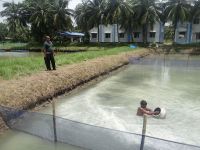
Homestead modular hatchery technology of brackishwater catfish, Mystus gulio: A potential alternate livelihood option for small and marginal farmers of Sunderban

The catfish Mystus gulio is a small indigenous euryhaline fish found in fresh and brackishwater environments of the Sunderban delta of Bangladesh and India. A fast-growing species with high nutritional value, market demand and hardy nature, M. gulio is a desirable candidate for aquaculture in Asia. It is co-cultured with other brackishwater species in paddy fields, but expansion of culture in pond systems has been held back because of a shortage of seed. This article reports on induced breeding techniques and the development of a farmer-friendly modular hatchery and farming system suitable for use at the homestead level or by small-scale operators.

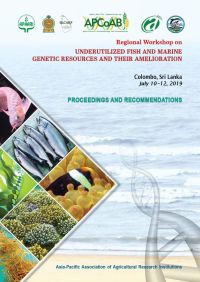
Regional Workshop on Underutilized Fish and Marine Genetic Resources and their Amelioration – Proceedings and Recommendations

The workshop was held from 10-12 July 2019, Colombo, Sri Lanka. The objectives of the workshop were to i) assess the current status of underutilised aquatic genetic resources at the regional level and to assess R&D status of priority species with potential for use in food and agriculture; ii) discuss knowledge gaps and regional priorities concerning underutilised genetic resources and create awareness on their role and value for diversification of food supplies and livelihoods; and iii) formulate strategies for strengthening the institutional framework for management and conservation of genetic resources at the regional level.

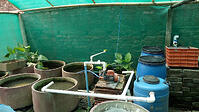
Concept of indigenous recirculatory aquaculture systems executed in West Bengal, India and other places

In pursuit of modernising fish culture practices, novel recirculatory aquaculture systems (RAS) have been introduced in semi-urban areas of West Bengal and other parts of India. While quite a few progressive fish farmers in India have adopted advanced, intensive and imported RAS systems featuring huge plant, other farmers have developed small and indigenous RAS systems that require comparatively low investment. This article discusses the design, principles, state-of-the-art and associated practical aspects of indigenous RAS technology as currently practiced in West Bengal and other places.

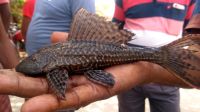
Lovesome chum of the aquarium are wreaking havoc in the East Kolkata Wetlands, India

Loricariid catfish species of the genus Pterygoplichthys, known in the aquarium trade as 'plecos' and 'algae eaters', have extensively invaded and proliferated in the East Kolkata Wetlands in West Bengal. Loricariids have capacity to alter the ecosystem and biodiversity of invasion sites, by physically altering the invaded habitats and by competing with native animals for food and space. The aquarium trade pathway is the most significant source of loricariid introductions globally. This article discusses the invasion of loricariid catfish in the East Kolkata Wetlands, and the environmental and economic impact on local fishers.

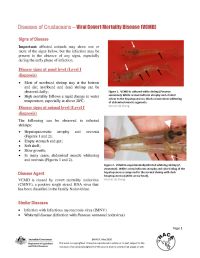
Viral covert mortality disease (VCMD): Disease card

This disease advisory describes the history, known host range, clinical signs and PCR detection methods for viral covert mortality disease (VCMD). Crustaceans currently known to be susceptible to VCMD include Penaeus vannamei, P. chinensis, P. japonicus, P. monodon, Macrobrachium rosenbergii, Procambarus clarkii, Exopalaemon carinicauda, Ocypode cordimanus, Diogenes edwardsii, Corophium sinense, Parathemisto gaudichaud and Tubuca arcuate. Fish species including Mugilogobius abei, Carassius auratus, and Paralichthys olivaceus may also be susceptible to the virus.
Quarterly Aquatic Animal Disease Report, October-December 2019

The 84th edition of the Quarterly Aquatic Animal Disease Report contains information from eleven governments. The foreword discusses meetings of the ad hoc Steering Committee of the Regional Collaboration Framework on Aquatic Animal Health in Asia and the Pacific.

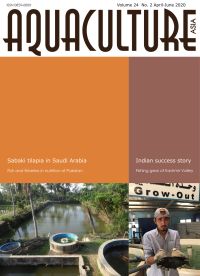
Aquaculture Asia Magazine, April-June 2020

In this issue:

Potential new species in the Kingdom of Saudi Arabia: Sabaki tilapia (Oreochromis spilurus); Role of fish & fisheries in national nutrition of Pakistan; Success story of first fish farmer in India to be awarded ‘Padma Shri’; Insights into the fishing gear and ichthyofauna of major lentic water bodies of Kashmir Valley; NACA Newsletter.

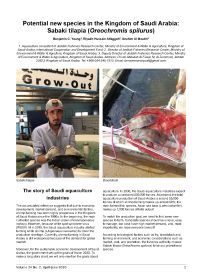
Potential new species in the Kingdom of Saudi Arabia: Sabaki tilapia (Oreochromis spilurus)

For the sustainable economic development of Saudi Arabia, the government set up the goals of Vision 2030. In 2030, the Saudi aquaculture industries expect to produce a combined 600,000 tonnes. At present, the total aquaculture production of Saudi Arabia is around 55,000 tonnes. To match the production goal, we need to find some new species to farm. Candidate species should be unique, easy to manage, low cost and have high market demand. The fisheries authority has chosen Sabaki tilapia (Oreochromis spilurus) to be our promotional species. This article describes efforts to establish Sabaki tilapia aquaculture operations in the Kingdom of Saudi Arabia.

Role of fish and fisheries in national nutrition of Pakistan

The fisheries sector of Pakistan comprises over 290,000 square kilometres of marine waters and 8.6 million hectares of inland water resources including the world’s largest irrigation system and favourable climatic conditions for aquaculture development. Despite these promising circumstances Pakistan stands thirty-third in world fisheries production. This article considers the true fish production potential of Pakistan and makes a comparison with other regional countries that produce more despite having less water resources, e.g. Bangladesh. Considering the ground reality and gaps in fisheries statistics collection, assessment and reporting, the possibility that fish production and consumption are under reported is explored.

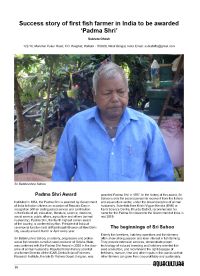
Success story of first fish farmer in India to be awarded ‘Padma Shri’

Instituted in 1954, the Padma Shri is awarded by the Government of India to Indian citizens on occasion of Republic Day in recognition of their distinguished service and contribution. Sri Batakrushna Sahoo, an elderly, progressive fish breeder and seed producer of Odisha State, was conferred with the Padma Shri Award in 2020 in the discipline of animal husbandry. He is only the second person to receive it from the fishery and aquaculture sector. This article documents Sr Sahoo’s beginnings, early entry into fish seed production, his success and role in educating others over the years.

Report of the Eighteenth Meeting of the Asia Regional Advisory Group on Aquatic Animal Health

This report was prepared by the 18th Asia Regional Advisory Group on Aquatic Animal Health (AG) that met at Bangkok, Thailand on 18-19 November 2019. The group discussed OIE standards and global issues, review of regional disease status, reports on the aquatic animal health programmes of partner agencies, and disease reporting.

Aquaculture Asia Magazine, January-March 2020

In this issue:

Mahseer sanctuaries of Meghalaya: A conservation and recreational perspective; Impacts of climate change on aquaculture in Vietnam: A review of local knowledge; Simple means of water aeration adopted by progressive fish breeders in West Bengal, India; Breeding striped snakehead (Channa striata) using the concrete tank method in the Cangkringan Area, Special Region of Yogyakarta; NACA Newsletter.

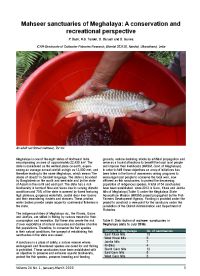
Mahseer sanctuaries of Meghalaya: A conservation and recreational perspective

This article presents available information regarding the present status of chocolate mahseer and the conservation measures been undertaken in the East Garo Hills of Meghalaya. A total of 54 sanctuaries have been established since 2012 in Garo, Khasi and Jaintia hills under the Meghalaya State Aquaculture Mission project of the Fish Farmers Development Agency. The sanctuaries have been established with the objective to preserve and enhance aquatic biodiversity, protect indigenous fish species, preserve breeding and feeding grounds, and serve as tourist attractions to provide livelihood opportunities.

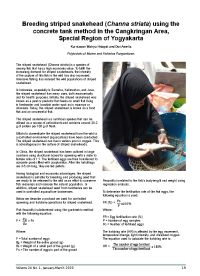
Breeding striped snakehead (Channa striata) using the concrete tank method in the Cangkringan Area, Special Region of Yogyakarta

The striped snakehead (Channa striata) is a species of swamp fish that has a high economic value. Intensive fishing has reduced the wild populations. Hatchery production of this species has the potential for both commercial aquaculture supportive breeding programmes to conserve fish resources and increase the natural population. Below we describe a protocol we used for controlled spawning and hatchery operations for striped snakehead.

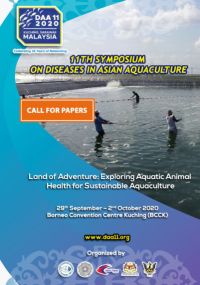
11th Symposium on Diseases in Asian Aquaculture, Kuching, Malaysia

The 11th Symposium on Diseases in Asian Aquaculture (DAA11) marks 30 years since the Fish Health Section - Asean Fisheries Society (FHS-AFS) establishment and it will be celebrated in Malaysia. Local hosts, the Department of Fisheries Malaysia (DOF) under the Ministry of Agriculture and Agro-based Industry together with the Ministry of Modernisation of Agriculture, Native Land and Regional Development Sarawak (MANRED) will be organising the event in cooperation with the FHS-AFS.

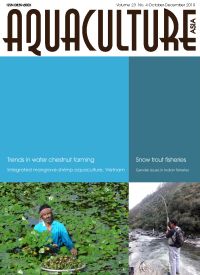
Aquaculture Asia Magazine, October-December 2019

In this issue:

Trends in water chestnut Trapa bispinosa farming in West Bengal, India; Improving livelihoods and increasing coastal resilience: A look at integrated mangrove-shrimp aquaculture in Vietnam; Snow trout fisheries in Arunachal Pradesh of the Eastern Himalayas; Gender issues in the fisheries sector of India; NACA Newsletter.