Inland aquaculture

Information relating to inland aquaculture practices.

Creative Commons Attribution.

Related

Subject tags

A collection of subject tags relating to technical matters.

In this collection

The emergence of the cheapest farmed freshwater food fish in the Philippines

In the context of aquaculture technological extension, this paper and accompanying presentation reveal how the government and key UN partners, initiated the farming and breeding of Asian and Indian major carps in the country between 1965 up to late 1970s. Emphasis is given on bighead carp Aristichthys nobilis, which as per 2011 and 2012 official agricultural statistics, ranked 3rd in freshwater aquaculture (17,464 MT) and 6th on inland capture fisheries output (12,119 MT).

Small-scale freshwater aquaculture in Nepal

Modern aquaculture practices in Nepal started around the 1950s). Since then, aquaculture has contributed about 1% of GDP. The national average production from pond aquaculture is about 3.6 million tons/ha. However, the range of fish production varies from about few hundred kilograms to 7.0 million tons/hectare depending upon different farming and management system. Aquatic resources located at different altitudes can offer potential for different fisheries and aquaculture activities in Nepal.

Small-scale aquaculture extension in Cote d'Ivoire

Promoting small-scale freshwater fish farming in Côte d’Ivoire was done in two stages. First was awareness and establishment stage (1974-1990) implemented by dense and diverse state support. The second was the professional stage (1992-2002) executed by specific regional projects. Activities targeted small-scale fish farming including promotion of quality amenities, reproducible by the promoters; marketing; and the promotion of research and development focused on the needs of stakeholders.

Small scale aquaculture development in Malawi

Fisheries resources play a very important role in Malawi’s national economy, in terms of food and nutritional security of the population. It contributes about 60-70% of annual animal protein supply of the nation. In fact, fish is the readily available source of animal proteins consumed in small amounts among Malawian daily meals, thereby nutritionally supplementing essential amino acids in their diet. Fisheries provides source of employment to over 300,000 people through fishing and associated activities.

Status of small-scale aquaculture in Zambia

The largest percentage of aquaculture production in Zambia comes from small-scale fish farmers. This is mainly because there are many small scale fish farmers compared to other categories. In comparison to small-scale fish farmers, there are very few commercial or large-scale fish farmers. This situation suggests that one of the ways for effectively increasing aquaculture production is to improve fishpond productivity and commercialization of aquaculture production systems. 

Region-based workshop: Africa

Regional workshop on freshwater extension approaches in Africa, held  at the International Symposium on Small-scale Freshwater Aquaculture Extension.

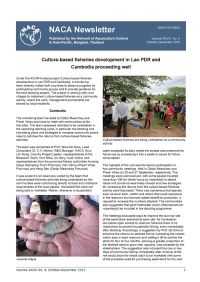
Culture-based fisheries development in Lao PDR and Cambodia proceeding well

Under the ACIAR-funded project Culture-based fisheries development in Lao PDR and Cambodia, a monitoring team recently visited both countries to observe progress by participating community groups and to provide guidance for the next stocking season. The project is working with rural villages to implement culture-based fisheries as a community activity, where the work, management and benefits are shared by local residents.

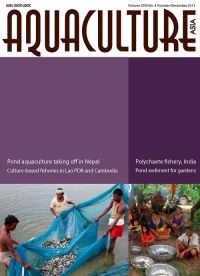
Aquaculture Asia Magazine, October-December 2013

In this issue:

Special session on regional cooperation for improved biosecurity. Pond aquaculture taking off in Nepal. Introduction of culture-based fishery practices in small water bodies in Cambodia: Issues and strategies. A case study on polychaete fishery by the Irular tribal fishing community on the Tamil Nadu coast. Use of pangasius pond sediment for rooftop bag gardening: Potential for rural-urban integrated agriculture-horticulture. Culture-based fisheries exchanges between Lao PDR and Cambodia.

NACA Newsletter, Volume XXVIII, No. 4, October-December 2013

In this issue:

Culture-based fisheries development in Lao PDR and Cambodia proceeding well. National aquatic animal disease surveillance programme launched in India. Report on early mortality syndrome / acute hepatopancreatic necrosis syndrome of shrimp. International Symposium on Small-scale Freshwater Aquaculture Extension, 2-5 December, Bangkok. 'Perfect' food for 'perfect' prawns. Aquaculture without Frontiers Special Session. We asked CSIRO: Gold Coast Tiger Prawns. Understanding the sex of salmon. Overcoming smallholder challenges with biotechnology. Coordinated efforts in aquaculture needed to meet global demand. FAO e-book collection for tablets and e-readers.

Study tour on aquaculture and wet land management for delegation from Assam, India

NACA was pleased to coordinate an aquaculture study tour to Bangladesh, Vietnam and Thailand from 19-26 April for a delegation of twelve fisheries development officials from Assam, India. The delegation included Mr Sri Hemanta Narzary, Commissioner and Secretary for Fisheries; Mr Sri Kailash Chang Damria, State Project Director for the ARIAS Society, Mr Sri Siddhartha Purkayastha, Deputy Directory of Fisheries, and district fisheries development and extension officers.

State of Asian inland aquaculture: Production systems and technology

Peter Edwards provides an overview of the status of Asian inland aquaculture production systems and technology. The account characterises the sector, examines major issues, provides historical perspectives on development of the sector and definitions and examples of both traditional and modern aquaculture. This lecture was presented to a visiting delegation of officials from Iraq.

Region-based workshop: Asia-Pacific

Regional workshop on freshwater extension approaches in the Asia-Pacific region, held  at the International Symposium on Small-scale Freshwater Aquaculture Extension.

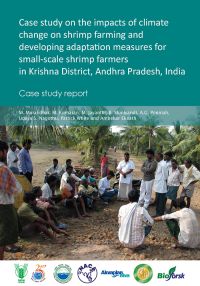
Case study on the impacts of climate change on shrimp farming in Andhra Pradesh, India

Shrimp aquaculture is threatened by climatic changes that affect infrastructure and livelihoods of farmers. Ecological changes, inundation of low-lying lands and saline intrusions into freshwater regions are likely to cause substantial dislocation of communities and disruption of farming systems. The focus of the present study report is on mapping the small scale farmer’s perceptions and attitudes towards climate change impacts and their adaptive capacities to address the impacts in Krishna District, Andhra Pradesh, India.

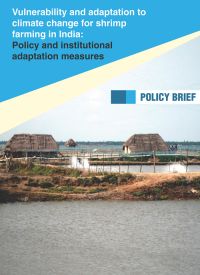
Policy brief: Vulnerability and adaptation to climate change for shrimp farming in India

This brief summarises the results from the interdisciplinary and multi stakeholder participatory study conducted within the Aquaclimate Project in Krishna District, Andhra Pradesh, India looking at the impacts of climate change on shrimp farming. The brief further provides guidelines for development of policy measures to address the climate change impacts on small scale shrimp farming.

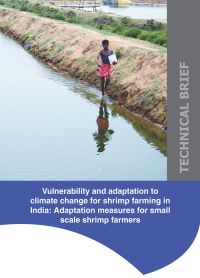
Technical brief: Vulnerability and adaptation to climate change for shrimp farming in India

This technical brief summarises the results from the interdisciplinary and multi stakeholder participatory study conducted within the Aquaclimate project in Krishna District, Andhra Pradesh, India, looking at the impacts of climate change and adaptation measures in the shrimp farming sector. The brief further provides guidelines for adaptation measure that can be undertaken by the farmers together with the institutional, policy and science and technology support for improving their adaptive capacity to cope with future climate change.

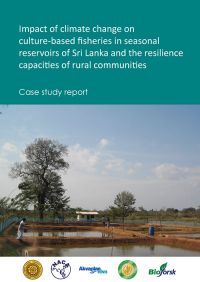
Impact of climate change on culture-based fisheries in seasonal reservoirs, Sri Lanka

The present study identifies changes in reservoir filling patterns and water retention period of seasonal reservoirs in Sri Lanka in five administrative districts from 1960 to 2010. Results reveal that there is high drawdown in the recent past in seasonal reservoirs compared to the 1960s, and a forward shifting pattern of drawdown due to altered rainfall patterns. These changes have affected the culture season and the duration of the culture period of stocked fingerlings in the reservoirs.

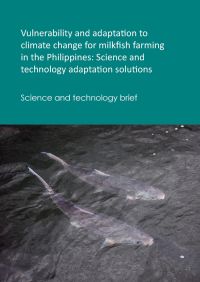
Science brief: Vulnerability and adaptation to climate change for milkfish farming in the Philippines

This brief summarises the results from the interdisciplinary study conducted within the AQUACLIMATE project in Iloilo province in the Philippines, looking at the impacts of climate change on small scale milkfish farming. The brief provides guidelines for academics, researchers and technologists to support farmers for adaptation measures to address the climate change impacts on small scale milkfish farming.

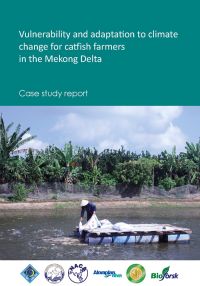
Case study: Vulnerability and adaptation to climate change for catfish farmers in the Mekong Delta

The catfish industry in the Mekong Delta faces several risks and challenges including disease, environmental issues, fluctuating price, higher quality requirement of the product, and climate changes, including salt water intrusion. The different production zones were found to be different in terms of their climate change impacts, productivity, culture system and socio-economic characteristics. This study examines farmers perceptions of climate change, scientific and policy support requirements and potential adaptation strategies to sustain the industry.
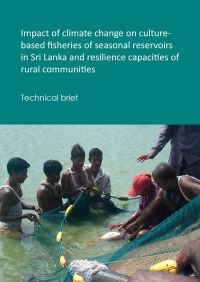
Technical brief: Impact of climate change on culture-based fisheries in seasonal reservoirs, Sri Lanka

This brief summarises the results from the interdisciplinary study conducted within the Aquaclimate project in Sri Lanka looking at the impacts of climate change on culture based fisheries. The brief further provides guidelines for farmers seeking to address the climate change impacts on culture-based fisheries in Sri Lanka.

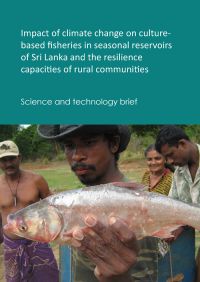
Science brief: Impact of climate change on culture-based fisheries in seasonal reservoirs, Sri Lanka

This brief summarises the results from the interdisciplinary study conducted within the Aquaclimate project in Sri Lanka looking at the impacts of climate change on culture based fisheries. The brief further provides guidelines for academia, researchers and technologists to support farmers for adaptation measures to address the climate change impacts on CBF in Sri Lanka.