Livelihoods, gender and social issues

Aquaculture livelihoods and social issues in rural communities.

Creative Commons Attribution.

Related

Subject tags

A collection of subject tags relating to technical matters.

In this collection

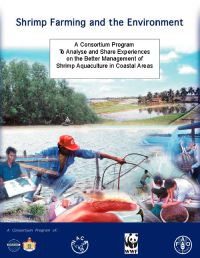
Thematic review on coastal wetland habitats and shrimp aquaculture

This review documents the status of shrimp aquaculture in relation to mangrove forest ecosystems. The environmental, social and economic impacts of shrimp farming are discussed, with examples covering both the negative and positive aspects of the sector. The review considers interventions and other activities to improve the sustainability of shrimp farming in the context of coastal zone management and the protection of mangrove ecosystems. The effectiveness of these interventions is considered in the light of experience based on case studies.

The integration of mangrove and shrimp farming: A case study on the Caribbean coast of Colombia

Shrimp aquaculture has been accused of threatening mangrove forests worldwide. Mangrove and shrimp ponds are known to have mutually supportive functions. Mangrove wetlands can treat effluents from shrimp ponds effectively by removing suspended solids and nutrients. This activity can be expected, in turn, to enhance mangrove productivity. This report describes an integrated mangrove wetland–shrimp farm operating in Colombia since 1996. At this site, shrimp farm effluent is recirculated through an 120 ha mangrove area.

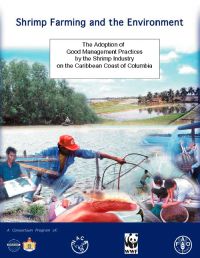
The adoption of good management practices by the shrimp industry on the Caribbean coast of Colombia

This report discusses the recent history of shrimp aquaculture along the Caribbean coast of Colombia, with a focus on effective management practices that have been implemented since the mid-1990s. While the primary reason for using different practices has been preventing outbreaks of shrimp diseases, many such practices provide environmental benefits as well. Examples include reducing the use of water and ensuring that effluent entering natural water bodies is at least as clean as the intake water.

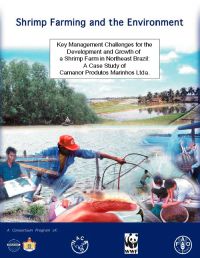
Key management challenges for the development and growth of a shrimp farm in northeast Brazil: A case study of Camanor Produtos Marinhos Ltda.

This case study discusses the main lessons for management practices learned at the shrimp farm Camanor, in Rio Grande do Norte, Brazil. Since it was founded in 1982, the farm has yielded data that allow the lessons and insights to be drawn. This case documents the most important lessons learned by Camanor during the past 18 years. The most important challenges before the shrimp aquaculture industry involve developing better practices and implementing industry wide standards that are more sustainable.

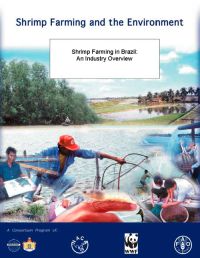
Shrimp farming in Brazil: An industry overview

The purpose of this study is to assess the development of the shrimp farming industry in Brazil, identifying past obstacles and key incentives for its expansion. The shrimp industry has taken longer to develop in Brazil than in other countries. Despite favorable conditions, it is only recently that successful efforts are consolidating. This report analyzes the main factors that have inhibited the development of the industry and describes the sector's current characteristics.

STREAM Journal Volume 4, No. 2, April-June 2005

In this issue: Changes in Jabarrah. Palu Hijau in the Banggai Islands  - using knowledge for change. Three stories from Nepal. Me and my work. Livelihoods approaches - skills learned, applied and shared. About the STREAM Journal. About STREAM. This edition is also available in Ilonggo and Vietnamese.

NACA Newsletter Volume XX, No. 2, April-June 2005

In this issue:

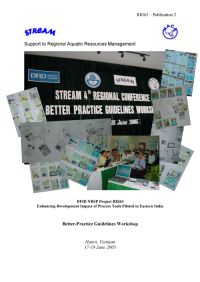
Cash for work, Aceh. HRH Chulabhorn opens new molecular genetics laboratory, Thailand. Aquatic epidemiology training. STREAM Regional Conference and BMP Workshop. Dr Modadugu V. Gupta awarded the 2005 World Food Prize. Study program on marine aquaculture and seafood markets in southern China, 2005. The third Regional Grouper Hatchery Production Training Course.

STREAM Journal Volume 4, No. 1, January-March 2005

In this issue: Young people taking bolder steps. Providing a venue for voices to be heard. Rehabilitation of a bundu pond - STREAM's initiative and DOF's action. Coastal resources utilisation and conservation issues in Cox's Bazar, Bangladesh. People, fish and reefs - a livelihoods learning curve. Understanding the marine ornamental trade and its impact on the livelihoods of poor stakeholders in the Philippines. About the STREAM Journal. About STREAM. This edition is also available in Ilonggo and Vietnamese.

Aquaculture Asia Magazine, January-March 2005

In this issue:

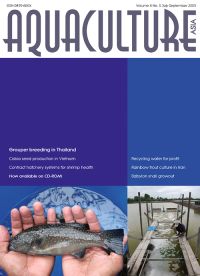
Freshwater prawn culture in China and its market prospects. Demise of wastewater-fed duckweed-based aquaculture in Bangladesh. Freshwater finfish biodiversity - an Asian perspective. Her farm is destroyed, how can we help? Women oyster vendors in Eastern Thailand. Farm-level feeds and feeding practices for marine finfish. ACIAR grouper grow-out feeds and CSIRO research. Feed development and application for juvenile grouper. Grouper growout feeds. Silver pomfret culture technology.

NACA Newsletter Volume XX, No. 1, January-March 2005

In this issue:

Tsunami: The long road to recovery. Special Program in Response to the Tsunami. Rebuilding cage aquaculture and eco-tourism at Koh Yao Noi, Thailand. Cash for work, Aceh Indonesia. Assessment of tsunami impacts in Thailand and Indonesia. Consortium to Restore Shattered Livelihoods in Tsunami-devastated Nations. Regional Workshop on Rehabilitation of Fisheries and Aquaculture in Coastal Communities of tsunami affected countries in Asia. Outcomes of Governing Council 16. New grouper feed and marine finfish hatchery guides. Towards a framework for a pro-poor regional strategy for sustainable aquatic resources management in Asia-Pacific. Artificial propagation of indigenous fish species in Sarawak, Malaysia. Inauguration of the National Advisory Committee on Aquatic Animal Health of Viet Nam. Supporting Viet Nam to make an informed decision towards Penaeus vannamei farming. Health group calls for improved surveillance and reporting. Training and study tours in Q1 2005-05-25. TVR 'Ramu' Pillay (1921-2005).

Report on indigenous participation in aquaculture - the Pacific experience, Sydney, Australia, 27-28 September 2004

The workshop Indigenous Participation in Aquaculture – the Pacific Experience was held as a day-and-a-half session in the Australasian Aquaculture 2004, Sydney, 27–28 September 2004. The workshop promoted exchange of information and experiences between researchers, government representatives and industry involved in aquaculture development in the Pacific. The workshop recognised the increasing interest in aquaculture as an industry that can provide benefits for indigenous communities in Australia as well as the Pacific Islands.

Aquaculture Development Beyond 2000: The Bangkok Declaration and Strategy

The main output of the International Conference on Aquaculture in the Third Millennium. The Declaration summarises the key impediments and opportunities in aquaculture development that are likely to arise over the next 20 years and provides strategic policy guidance for sustainable aquaculture development. The Declaration was adopted by conference participants in a plenary session.

Workshop on Livelihoods Approaches and Analysis, 6-10 September 2004, Yunnan, China

This is the report of the “Yunnan DOA/NACA-STREAM/FAO Workshop on Livelihoods Approaches and Analysis” that was conducted in Mengzi, Yunnan from 6-10 September 2004. The purpose of the workshop was to develop and document mechanisms for training in livelihoods approaches and analysis, and to build national capacity to conduct livelihoods analysis. The workshop in Yunnan was the first STREAM event in China, with colleagues coming to participate from throughout the province.

STREAM Journal Volume 3, No. 4, October-December 2004

In this issue: Pasoso Project - local livelihoods and turtle conservation in a small island MPA in central Sulawesi, Indonesia. Fisheries development in Lao PDR. The jankar system for sustainable livelihoods: Lessons from the BRFP. Alternative livelihoods for landlocked areas in BFAR Region 6. Lessons learned and future replication from Trao Reef locally managed marine reserve. About the STREAM Journal. About STREAM. This edition is also available in Ilonggo.

Aquaculture Asia Magazine, October-December 2004

In this issue:

Captive breeding of vulnerable Indian carp Cirrhinus reba for conservation. Conservation of the Asiatic catfish Clarias batrachus through artificial propagation. A perspective on breeding and genetics of walking catfish in Thailand. Decline of wastewater-fed aquaculture in Hanoi. Artificial propagation of indigenous Tor species in Malaysia. Aquaculture of spotted babylon Babylonia areolata. First successful hatchery production of Napoleon wrasse Cheilinus undulatus. Trade and market trends in the live reef fish trade.

Presentation on STREAM Vietnam's experience

Established in early 2002, STREAM Vietnam has so far attained a number of good experiences and lessons in using participatory approaches for its work. The Country Office has been able to link to a wide range of stakeholders, and is working hard to build close relationships amongst them, so that institutional entities can better support the livelihoods of poor aquatic resources users, and support disadvantaged groups of people to improve their living standards by themselves.

Adopting a STREAM approach for inland fisheries management

This paper advocates strategies, processes and practices that enable: livelihoods approaches rather than resource-based approaches, ‘direct’ institutional and policy development, rather than ‘project demonstrations’, and support for regional, national and local communications. It was presented at the Symposium on Participatory approaches in reservoir fisheries management: Issues, challenges and policy, October 4-6th 2004 at the Culture Club Resort, Dambulla, Sri Lanka hosted by the National Aquaculture Development Authority in collaboration with FAO..

STREAM Journal Volume 3, No. 3, July-September 2004

In this issue: What do we need to learn about to understand how people live? Taking steps to making livelihoods work. Reflections on the India-Nepal workshop. Reflections on the role of livelihoods approaches and analysis in Lao PDR. After the workshop on livelihood approaches and analysis. The relevance of livelihoods approaches in Yunnan, China. About the STREAM Journal. About STREAM. This edition is also available in Ilonggo, Khmer and Urdu.

Workshop on Livelihoods Approaches and Analysis, 11-15 May 2004, Myanmar

The purpose of the workshop was to develop and document mechanisms for training in livelihoods approaches and analysis, and to build national capacity to conduct livelihoods studies. The workshop in Yangon was the fourth in a series, the first of which was held in Iloilo City, Philippines, in November 2003, the second in Ranchi, India, in February 2004, and the third in Vientiane, Lao PDR in March 2004. A subsequent workshop will take place in Yunnan, China.

Philippines country strategy paper

In 2002, the Philippines Government signed a Partnership Agreement with the NACA-STREAM Initiative. The initial focal point for STREAM work is Western Visayas, including the Sapian Bay and Banate Bay areas where BFAR Region 6, the STREAM country host, has on-going engagements, and also areas within Regions 6 and 7 where marine ornamentals collection and trading occur. The key disadvantaged groups for whom aquatic resources are a source of livelihood are the primary stakeholders for the initiative.