Nutrition and feeding

Information relating to nutrition and feeding in aquaculture.

Creative Commons Attribution.

Related

Subject tags

A collection of subject tags relating to technical matters.

In this collection

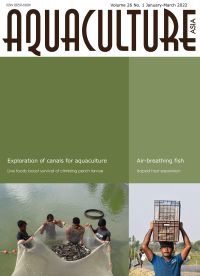
Aquaculture Asia Magazine, January-March 2022

In this issue:

Exploration of canal resources as a potential source for fish production in the Indian Sundarbans; Expansion of new host range of isopod Tachaea spongillicola infestation to fish species could pose a risk to aquaculture food industry in southeast Asian countries; Aspects of air-breathing fish farming practiced at Mathurapur-II Block, West Bengal, India; Magical role of live foods in boosting spawn survival of climbing perch: A success in the farmer’s field; NACA Newsletter.

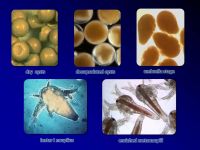
Magical role of live foods in boosting spawn survival of climbing perch: A success in the farmer’s field

Climbing perch inhabit water bodies ranging from fresh to brackish waters across a wide range of environments, and are widely distributed throughout south and southeast Asia through to southern China. In India it is prized both as a foodfish and as a traditional medicinal food. This article describes the induced breeding of climbing perch and the interaction of scientists and farmers to improve survival of larvae and fry in through the use of live feeds (rotifer) in small-scale hatcheries in India.

NACA Newsletter, Vol. XXXVI, October-December 2021

In this issue:

Global Conference on Aquaculture Millennium +20;  Workshop on SDG-aligned Artemia aquaculture;  Professor Sena De Silva Memorial Oration, 8 October 2021; Apply now: Training Course on Mariculture Technology in Asia-Pacific; New project on “Blue transformation in aquaculture”; Webinar on Status of Artemia cyst use in fish and crustacean hatcheries.

Apply now: Training Course on Mariculture Technology in Asia-Pacific

A free training course on mariculture technologies will be offered online via Zoom from 18 October to 5 November, by the Yellow Sea Fisheries Research Institute (YSFRI), People’s Republic of China. The course will cover genetics and breeding of mariculture species; large-scale propagation; disease control and prevention; nutrition research and feed development; technology for different farming models; equipment research, engineering and construction of farming facilities; quality and safety inspection technology for aquatic products. Space is limited, applications close 11 October.

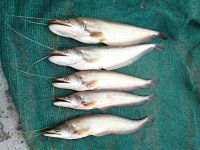
Some facts on cannibalism in Wallago attu and its management during captive seed production

Wallago attu is a large catfish reaching 45 kg found in the Indian subcontinent, Thailand, Vietnam, Cambodia and Indonesia. Early attempts at captive production encountered high losses due to cannibalism during early life stages. This article discusses the causative factors governing cannibalism in this catfish, including rapid transfer from live to commercial feed, size differences during stocking, seasonal changes, feeding at long intervals, high density rearing, feed distribution, feeding method and size of feed, and management strategies for minimising losses during the seed rearing period.
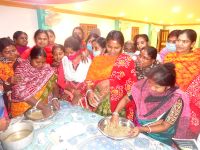
Imparting skill on formulated fish feed preparation to women’s self-help groups in villages – an experience

Preparation of locally made floating pelleted fish feed can be a profitable and sustainable income generating entrepreneurial activity for women's self-help groups in rural areas. Using such feed can also help small-scale marginal fish farmers to improve production and reduce their operating costs. This article describes initiatives to train women's self-help groups in formulated feed production in West Bengal, India.

Global Conference on Aquaculture Millennium +20

The GCA +20 was successfully held as a hybrid event from 22-25 September, with physical participation at the venue in Shanghai, China, and international participation via video conference. A total of 1,728 people participated in the event, of which 500 were physically present in Shanghai. A key output from the GCA +20, the Shanghai Declaration is a call to action that highlights the principles and strategic pathways to maximise the contribution of sustainable aquaculture in achieving the Sustainable Development Goals, with a special focus on “Leaving no one behind”.

Join us for the SDG-aligned Artemia Aquaculture Workshop, 22 September

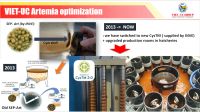
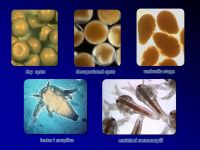
Join us online at the SDG-aligned Artemia Aquaculture Workshop, which will be held on 22 September, via Zoom. With the expansion of hatchery production, the demand for Artemia cysts has continued to increase and annual consumption is now estimated at 3,500 – 4,000 tonnes, underpinning the production of over 10 million tonnes of high-value aquaculture species. Approximately 90 percent of the current Artemia production is harvested from inland salt lakes. The purpose of the Artemia workshop is to explore needs and opportunities for a new international initiative to guarantee a more sustainable provision of Artemia, both from natural sources and from controlled extractive Artemia farming integrated with salt production and other fish/crustacean aquaculture. View programme | register

Videos from the webinar Status of the use of Artemia cysts in fish and crustacean hatcheries

Videos from our recent webinar Status of the use of Artemia cysts in fish and crustacean hatcheries around the world are now available on NACA's Youtube channel. Please consider subscribing for more technical aquaculture content!

Videos from the webinar on Culture-based fisheries for rural development

Video recordings of technical presentations from the webinar on Culture-based fisheries for rural development (31 May 2021) are now available on Youtube. Presentations cover technical constraints, the socio-economic and impact on communities, micro-nutrient security, monitoring and evaluation, improving water quality through stocking selected species, biodiversity considerations, and success stories.

Please visit NACA's Youtube channel to access the videos. Our Youtube channel is brand new, please consider subscribing for more technical aquaculture videos!

Professor Sena De Silva Memorial Oration, 8 October 2021

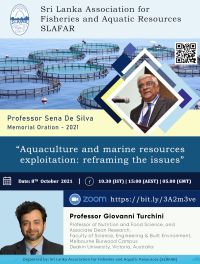
Join us on 8 October 2021 for the Professor Sena De Silva Memorial Oration. The topic for the oration is "Aquaculture and marine resources exploitation: reframing the issues", presented by Professor Govanni Turchini of Deakin University and organised by the Sri Lanka Association for Fisheries and Aquatic Resources. The oration will be held at 05:00 GMT (15:00 AEST) via Zoom. To participate, please use the following link: Professor Sena De Silva Memorial Oration 2021.

Webinar: Status of Artemia cyst use in fish and crustacean hatcheries

Join us on 2 September at 12 noon GMT for a free webinar on the Status of the use of Artemia cysts in fish and crustacean hatcheries around the world. The webinar is facilitated by the International Artemia Aquaculture Consortium (under formation). The webinar will document differences in practices used by fish and crustacean hatcheries in the use of Artemia cysts for the preparation of live feeds. Speakers include technical experts using Artemia in the production of shrimp, freshwater prawn, mud and mitten crabs, seabass, sabream and other marine fish from Bangladesh, Brazil, China, Ecuador, Greece, India, Spain, and Thailand. Participation is free but registration is required.

Webinar: Pathogen Free: non-infectious Diseases and Disorders of Aquatic Animals

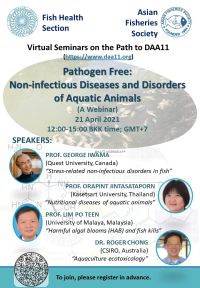
The Fish Health Section of the Asian Fisheries Society will convene a webinar via Zoom on 21 April, from 12:00 to 15:00 Bangkok time (GMT +7). Topics include: Stress-related non-infectious disorders in fish (Prof. George Iwama, Quest University, Canada); Nutritional diseases of aquatic animals (Prof. Orapint Jintasataporn, Kasetsart University, Thailand); Harmful algal blooms and fish kills (Prof. Lim Po Teen, University of Malaya); and Aquaculture ecotoxicology (Dr Roger Chong, CSIRO Australia). Participation is free, but registration is required.

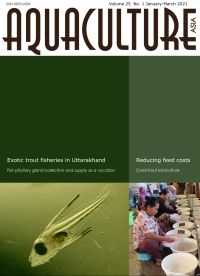
Aquaculture Asia Magazine, January-March 2021

In this issue:

Exotic trout fisheries resources and potentialities in Uttarakhand; Scenario of captive production of Clarias magur in India; Strategies to reduce feed cost by improving gut health and nutrient utilisation of fish in aquaculture; Fish pituitary gland collection and supply as a vocation in West Bengal, India; Coral trout Plectropomus leopardus aquaculture research and fingerling production in Indonesia; Smartphone app improving smallholder shrimp farming practices in Bangladesh; NACA Newsletter.

Coral trout Plectropomus leopardus aquaculture research and fingerling production in Indonesia

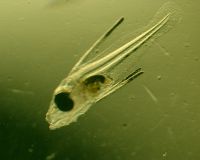
Coral trout Plectropomus leopardus is an emerging exported grouper commodity in Indonesia. The demand for coral trout fingerlings has been increasing and the value of this species is the highest among groupers. However, the rearing of coral trout larvae is notoriously more ‘difficult’ than other groupers. This article describes research on coral trout larval rearing protocols conducted by the Institute for Mariculture Research and Fisheries Extension, which has achieved a survival rate of 12%.

Strategies to reduce feed cost by improving gut health and nutrient utilisation of fish in aquaculture

Feed is an important input that involves nearly 60% of the total production cost in commercial aquaculture. Hence, nutritionally balanced and cost-effective diets play a large role in deciding the return from an aquaculture venture. Nutritionists are searching for alternative ingredients and approaches to offset the use of fishmeal in aquaculture feeds. This article discusses strategies to reduce feed cost by promoting gut health and nutrient utlilisation, including: Use of probiotics and prebiotics,  supplementation with exogenous enzymes, essential nutrients and chemoattractants, and use of other feed additives such as acidifiers to improve digestibility and mycotoxin binders.

Free online Training on Mariculture Technologies for the Asia-Pacific Region

The Yellow Sea Fisheries Research Institute, Chinese Academy of Fisheries Sciences and NACA are organising a free online training course on mariculture technologies, to be held from 21-25 September 2020. The programme will cover breeding, disease control and prevention, nutrition and feed research, breeding model construction, farm technology development, engineering, quality, safety and inspection technology for aquatic products. The course is open to government officials, researchers, enterprise managers and technicians from developing countries. The deadline for applications is 19 September 2020.

Aquaculture Asia Magazine, April-June 2020

In this issue:

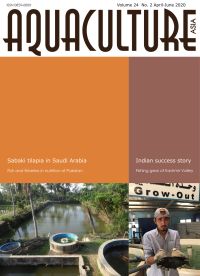
Potential new species in the Kingdom of Saudi Arabia: Sabaki tilapia (Oreochromis spilurus); Role of fish & fisheries in national nutrition of Pakistan; Success story of first fish farmer in India to be awarded ‘Padma Shri’; Insights into the fishing gear and ichthyofauna of major lentic water bodies of Kashmir Valley; NACA Newsletter.

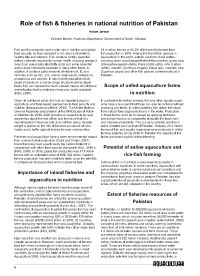
Role of fish and fisheries in national nutrition of Pakistan

The fisheries sector of Pakistan comprises over 290,000 square kilometres of marine waters and 8.6 million hectares of inland water resources including the world’s largest irrigation system and favourable climatic conditions for aquaculture development. Despite these promising circumstances Pakistan stands thirty-third in world fisheries production. This article considers the true fish production potential of Pakistan and makes a comparison with other regional countries that produce more despite having less water resources, e.g. Bangladesh. Considering the ground reality and gaps in fisheries statistics collection, assessment and reporting, the possibility that fish production and consumption are under reported is explored.

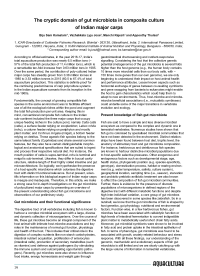
The cryptic domain of gut microbiota in composite culture of Indian major carps

The digestive tract of all vertebrates including fish is known to harbour a complex microbial ecosystem with a large, diverse and dynamic collection of microorganisms. These microbes become an integral component of the host animal with intimate host-microbe associations. In the following study, we employed both bacterial enumeration and culture independent DNA fingerprinting approach to examine the presence of host-specific gut microbiota in Indian major carps related to their occupancy of distinct ecological niches.