Shrimp

Information relating to the aquaculture of marine shrimp.

Creative Commons Attribution.

Related

Species / commodity tags

Major farmed commodity or species groups.

In this collection

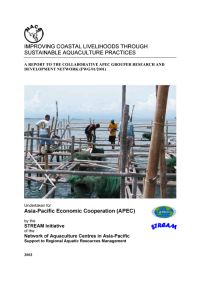
Improving coastal livelihoods through sustainable aquaculture practices: Full report

Wild-harvest fisheries for live reef fish are largely over-exploited or unsustainable. Sustainable aquaculture – such as that of groupers – is one option for meeting increasing demand for reef fish as well as potentially maintaining livelihoods of coastal communities. This report draws upon secondary literature, media sources and four diverse case studies from at-risk reef fisheries, to frame a strategy for encouraging sustainable aquaculture as an alternative to destructive fishing practices. It was commissioned by the APEC Secretariat.

Destructive fishing practices in south Sulawesi Island, East Indonesia, and the role of aquaculture as a potential alternative livelihood

Sulawesi has the largest coral reef area in Indonesia, at the epicenter of worldwide marine biodiversity, but is one of the areas most threatened in Southeast Asia by destructive fishing practices. This case study reviews the potential for aquaculture to provide alternative livelihoods for fishers within the context of an integrated, community-based coastal management plan with involvement of local communities empowered to control and steward their resources so that they can conserve and utilise them sustainably.

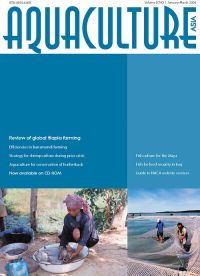
Aquaculture Asia Magazine, January-March 2004

In this issue:

Aquaculture and food security in Iraq. Natural breeding in captivity - conservation of the threatened freshwater featherback Notopterus notopterus. Culture of Penaeus japonicus. Enzymes for sustainable aquaculture. Review of global tilapia farming practices. Fish culture in Yucatan, Mexico. Shrimp farm project planning, preparation and implementation. Coping with low shrimp prices. Efficiencies in barramundi culture. The innovative contributions of women in aquaculture. Marine finfish section. What's new on the web. Aquaculture calendar.

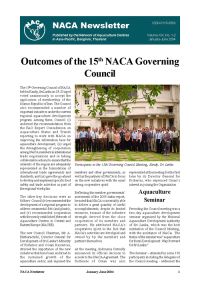
NACA Newsletter Volume XIX, No. 1-2, January-June 2004

In this issue:

Outcomes of the 15th Governing Council. Aquaculture seminar. Council Chair for 2004-2005. Shrimp disease and coastal management - four years. New Import Risk Analysis publications. Reducing the risk of shrimp disease outbreaks in Vietnam. Network of Aquaculture Centres in Central and Eastern Europe. OASIS: The One Stop Aqua Shop Information Service. Other recent STREAM activities. New faces at NACA.

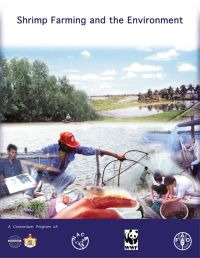
Shrimp Farming and the Environment: Can Shrimp Farming be Undertaken Sustainably?

This report is intended primarily as a discussion paper, to serve as the basis for informed dialogue and policy development to encourage more detailed guidelines following further study and consultation. It seeks, in particular, to answer three commonly posed questions: Is sustainable shrimp farming possible? Can poor coastal communities benefit from it? And, if so, what role can agencies like the World Bank play to ensure that basic minimal requirements to achieve this are met?

Report of the second meeting of the Asia Regional Advisory Group on Aquatic Animal Health, 10-12 November 2003

The Asia Regional Advisory Group on Aquatic Animal Health meets annually to discuss regional health issues including emerging disease threats. This report includes a review of regional disease status circa 2003, global and regional disease reporting arrangements, global issues and standards, progress in implementation of the the Regional Technical Guidelines on Health management for the Responsible Movement of Live Aquatic Animals, identification and designation of regional aquatic animal health resources and regional and international cooperation.

Coastal shrimp aquaculture: Searching for better management practices (abstract)

This case study was carried out in the North and North Central of Vietnam. The study was based on discussions and structured interviews with farmers, extension officers and other stakeholders. The objectives of the study were to describe the current coastal aquaculture practises, the impact on the livelihood of the coastal inhabitants and on the environment, to discuss the current situation in relation to the Code of Conduct for Responsible Fisheries and identify issues where BMPs should be introduced.

A case study on institutional aspects of shrimp aquaculture in Thailand

This case study documents the success and lessons learnt from local co-management approaches involving farmers associations and local government in Thailand. The case study also shows the linkages and relationships of institutions operating at different levels of administration from farm to national levels and their effect on management. The case study provides an analysis of institutional supports and mechanisms needed for successful shrimp farming management via case studies.

Code of good management practices for shrimp aquaculture in Sri Lanka (abstract)

The code development work was undertaken by the NARA in collaboration with the NAQDA, MFNWP, PEA, Shrimp Farmers and Exporters Associations, Shrimp Breeders Association, feed suppliers and manufacturers. This was developed mainly conducting consultations with different stakeholders of the industry and discussed at a forum with the representation of all stakeholders to reach consensus. The code includes technical specifications for the siting, design, construction and operation of shrimp hatcheries and farms.
Case studies in India on the role of small farmer groups and associations in sustainable shrimp aquaculture management (abstract)

The present case studies concentrated on three sites, Kandaleru in Andhra Pradesh, Dhigirpar in West Bengal and Brahmagiri in Orissa. The three sites are markedly differentbut have a common feature that all three mainly are concerned with small farmers groupings. Earlier shrimp farming failures owing to the overexploitation of the ecosystem, by overstocking and consequent high inputs, resulting in degradation of the environment, diseases and eventual collapse, have alerted all shrimp farm groups to be wary.

Case studies of Ecuadorian shrimp farming (abstract)

This case study review shrimp aquaculture development in Ecuador. The prevailing farming systems and practices are described. Most farms are extensive or semi-intensive and the industry is shifting to hatchery-reared PL rather than wild due to unpredictability in wild PL supply and disease outbreaks. A survey of water quality intake and outfall from farms is reported on with suggestions for farm design to reduce nutrient load in outfall is discussed. Health issues and mangrove degredation are discussed. 

Mixed shrimp farming-mangrove forestry models in the Mekong Delta: Termination report

The goal of this project was to optimise the economic yield from mixed shrimp aquaculture-mangrove forestry farming systems in Ca Mau Province, Vietnam, in a sustainable manner. Specific objectives were to investigate factors controlling the yields of shrimp and wood from shrimp farming-mangrove systems, experiment with shrimp pond and mangrove forest management to evaluate different culture options, identify improved practices and assist government to transfer the results of the project to the wider coastal farming community.

Shrimp Farming and the Environment (article prepared for InterCoast #39)

This article describes the international Consortium Programme on Shrimp Farming and the Environment, which was formed based on the recommendations of the World Bank review on shrimp aquaculture and the environment (1998), a 1999 NACA/WWF meeting in Bangkok, Thailand on shrimp management practices, and an FAO Bangkok technical consultation on policies for sustainable shrimp aquaculture (12/1997). The article was prepared for publication in InterCoast Issue #39, Cross Portfolio Learning for Enhancing Integrated Coastal Management.

Shrimp Farming and the Environment

This collection of publications originates from the International Consortium Program on Shrimp Farming and the Environment, which was implemented by the World Bank, the Network of Aquaculture Centres in Asia-Pacific (NACA), the World Wildlife Fund (WWF), the Food and Agriculture Organization of the United Nations (FAO), and the United Nations Environment Programme (UNEP). The consortium supported 35 complementary case studies prepared by more than 100 researchers in more than 20 shrimp farming countries.

Manual of procedures for the implementation of the Asia Regional Technical Guidelines on Health Management for the Responsible Movement of Live Aquatic Animals

The Manual of Procedures for the Implementation of the Asia Regional Technical Guidelines on Health Management for the Responsible Movement of Live Aquatic Animals provides background material and detailed technical procedures to assist countries and territories in the Asia Region in implementing the Asia Regional Technical Guidelines on Health Management for the Responsible Movement of Live Aquatic Animals. The Technical Guidelines were initiated due to increased recognition that disease emergence is often linked to live aquatic animal movements.

Asia Regional Technical Guidelines on Health Management for the Responsible Movement of Live Aquatic Animals

The Asia Regional Technical Guidelines on Health Management for the Responsible Movement of Live Aquatic Animals and their associated implementation plan, the Beijing Consensus and Implementation Strategy provide expert guidance for national and regional efforts in reducing the risks of disease due to trans-boundary movement of live aquatic animals. The Technical Guidelines were initiated due to increased recognition that disease emergence is often linked to live aquatic animal movements and causes significant socio-economic losses.

Economics and Management of Shrimp and Carp Farming in Asia

The sixteen papers in this volume were largely based on the data from a survey of more than 5,000 shrimp and close to 6,000 carp farms in sixteen countries and territories in the Asia-Pacific region. They provide an economic and technical efficiency of production analysis for Asian shrimp and carp farming systems. This survey was conducted under the ADB/NACA regional study and workshop on aquaculture sustainability and the environment (RETA 5534).

Aquaculture Asia Magazine, October-December 2003

In this issue:

Freshwater prawn Macrobrachium nobilii for rural nutrition. Snapshots of a socially responsible farm in Sri Lanka. Introduction of rainbow trout in Nepal. Tilapia seed production in Ho Chi Minh City, Vietnam. Seaweed mariculture - scope and potential in India. Growth enhancement of carp and prawn through dietary suppliementation with salt. Fertilisation and water quality management in small ponds. The "Gher Revolution". Exercising responsibilities to tackle aquatic animal disease. Immunostimulants in aquaculture.

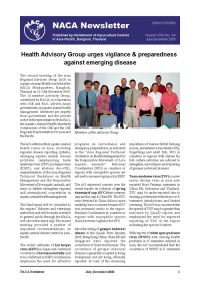
NACA Newsletter Volume XVIII, No. 3-4, July-December 2003

In this issue:

Health Advisory Group urges vigilance and preparedness against emerging disease. New Zealand farmer helps train Asian aquaculturists. Mr Junaidi Che Ayub. Global Aquaculture Discussion Forum, Dhaka, Bangladesh. STREAM Conducts Livelihood Capacity-building in the Philippines, India. MPEDA/NACA shrimp farmer workshop held in Andhra Pradesh, India. Learning by Doing - Fisheries and Adaptive Learning. NACA cooperation expanded to shrimp health management in Vietnam. 150 people trained in Q3-Q4, 2003. International Symposium on Freshwater Prawns Held at Kochi, India. Developing an online aquaculture community for NACA.

Aquaculture Asia Magazine, April-June 2003

In this issue:

Peri-urban aquaculture in Kolkata. Diffusion and adoption of shrimp farming technologies. Aquaculture education in India. Information system on fish germplasm resources in China. Freshwater crustacean aquaculture in China. The role of macronutrients. Innovations by Bengal farmers. Scientific guidelines for freshwater prawn farmers in India. Status of mariculture in Indonesia. Use of probiotics in larval rearing. Problems in shrimp culture during the wet season.