NACA member governments are: Australia, Bangladesh, Cambodia, China, Hong Kong SAR, India, Indonesia, I.R. Iran, Kingdom of Saudi Arabia, Korea (DPR), Lao PDR, Malaysia, Maldives, Myanmar, Nepal, Pakistan, Philippines, Sri Lanka, Thailand and Vietnam.
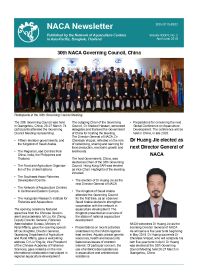
30th NACA Governing Council Meeting, China; Dr Huang Jie elected as the next Director General of NACA; Expert Consultation on Genetically Responsible Aquaculture; Launch of AGRISI: Aquatic Genetic Resource System of India; Aquatic animal epidemiology training course held at NBFGR; Asia-Pacific Laboratory Proficiency Testing Workshop; Proceedings of the FishAdapt Conference; Quarterly Aquatic Animal Disease Report, July-September 2018; Centex Shrimp International Training Course on Biology and Pathology of Penaeid Shrimp; INFOFISH World Shrimp Trade Conference and Exposition.
The 30th Governing Council was held in Guangzhou, China, 26-27 March. 74 participants attended the Governing Council Meeting representing fifteen member governments, with the Kingdom of Saudi Arabia attending as an observer. The host Government, China, was elected as Chair of the 30th Governing Council. Hong Kong SAR was elected as Vice Chair. Key outcomes included the election of Dr Huang Jie as the next Director General of NACA, and preparations for the Global Conference on Aquaculture 2020.
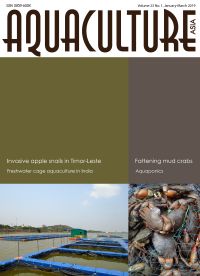
Current status of freshwater cage aquaculture in India; Fattening of mud crab Scylla serrata in estuarine region of south-eastern West Bengal; Aquaponics - sustainable farming method in the fight against hunger; aquatic invasive apple snails (Pomacea spp.) in Timore-Leste - current status, spread and management in rice fields; NACA Newsletter.
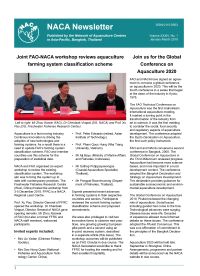
Joint FAO-NACA workshop reviews aquaculture farming system classification scheme; Join us for the Global Conference on Aquaculture 2020; Expert Consultation on Genetically Responsible Aquaculture; Strengthening governance in aquaculture; Pike perch and in-pond raceways; Quarterly Aquatic Animal Disease Report, April-June 2018.
Aquaculture is a fast moving industry. Continous innovation is driving the adoption of new technologies and farming systems. As a result there is a need to update FAO's farming system classification scheme. FAO and member countries use this scheme for the preparation of statistical data. NACA and FAO organised an expert workshop to review the existing classification system. The workshop aim was to bring the system up to date with contemporary practices.
FAO and NACA have signed an agreement to convene a global conference on aquaculture in 2020. This will be the fourth conference in a series that began at the dawn of the industry in Kyoto, 1976. Aquaculture 2020 will be held late in the year in China. Arrangements, programme and partner details will be announced via the NACA website in due course.
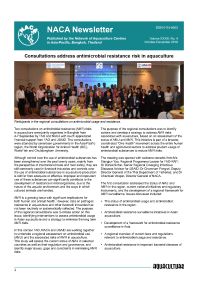
Consultations address antimicrobial resistance risk in aquaculture; ASEAN consultation on emergency aquatic animal disease preparedness and response; Applications for the position of Director General, NACA; Aqua 2018 - #WeRAquaculture; Asian Aquaculture 2018: Celebrating Asian Aquaculture, 3-6 December, Thailand; and Training and Deans' Forum organised in China.
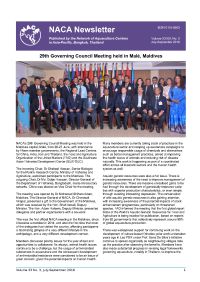
29th Governing Council Meeting held in Malé, Maldives; Proceedings of the Emergency Regional Consultation for Prevention and Management of Tilapia Lake Virus in the Asia-Pacific; NACA signs MOU on cooperation with the Bangladesh Shrimp and Fish Foundation; Aquaculture in China: Success Stories and Modern Trends; Quarterly Aquatic Animal Disease Report; Gender in Aquaculture and Fisheries 2018; International Training Course on the Biology and Pathology of Penaeid Shrimp; ASEAN-India Research Training Fellowships and more.
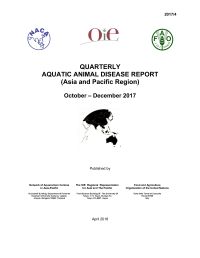
The 76th edition of the Quarterly Aquatic Animal Disease Report contains information from 14 governments. The foreword discusses the outcomes of a Stakeholder Consultation on Progressive Management Pathway to Improve Aquaculture Biosecurity, organised by the Food and Agriculture Organization of the United Nations, Mississippi State University and the World Bank.
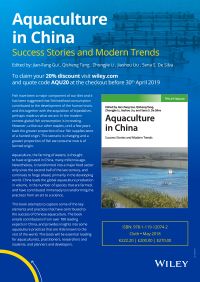
This book, which will be released on 15 May 2018, attempts to capture some of the key elements and practices that have contributed to the success of Chinese aquaculture. The book entails contributions from over 100 leading experts in China, and provides insights into some aquaculture practices that are little known to the rest of the world. This book will be essential reading for aquaculturists, practitioners, researchers and students, and planners and developers. To order the book please use the attached form.
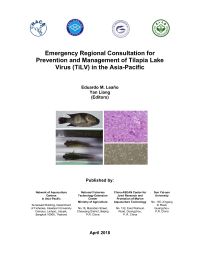
Since 2009, tilapia aquaculture has been threatened by mass die-offs in Israel and Ecuador, caused by a novel Orthomyxo-like (RNA) virus named Tilapia lake virus. An Emergency Regional Consultation for Prevention and Management of Tilapia Lake Virus in the Asia-Pacific was undertaken in September 2017, China, to discuss and plan actions on the overall prevention and management of the disease, and to prevent its further spread. These are the technical proceedings of the workshop.
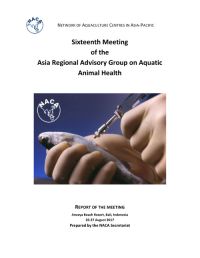
This report summarises the proceedings of the 16th meeting of the Advisory Group, held 26-27 August 2017 in Bali, Indonesia. The group's role includes reviewing disease trends and emerging threats in the region, identifying developments in global aquatic disease issues and standards, evaluating the Quarterly Aquatic Animal Disease Reporting Programme and providing guidance on regional strategies to improve aquatic animal health management. The meeting included discussion on Tilapia Lake Virus (TiLV) and developments in antimicrobial resistance.
This collection contains video recordings of the lectures from the Regional Training Course on Culture-based Fisheries in Inland Waters, held at Nha Trang University, Vietnam. The objective of the course was to provide participants with the skills to assist local communities to plan and manage culture-based fisheries; a relatively simple and low cost technology that can deliver nutritional and economic benefits to rural communities with few livelihood options. The course was sponsored by the United Nations University Fisheries Training Programme.
The first ever Regional Training Course on Culture-based Fisheries in Inland Waters was held at Nha Trang University from 30 October to 8 November. The objective of the course was to provide participants with the skills to assist local communities to plan and manage culture-based fisheries. These practices are an example of a relatively simple and low cost technology that can deliver nutritional and economic benefits to rural communities, which often have few livelihood options.
Since 2009, tilapia aquaculture has been threatened by mass die-offs in Israel and Ecuador, which have been caused by a novel Orthomyxo-like (RNA) virus named Tilapia lake virus. This has been reported as a newly emerging virus that causes syncytial hepatitis of tilapia. An emergency regional consultation was held in Guangzhou, China from 27-28 September 2017 to discuss and plan actions on the overall prevention and management of this disease.
A regional consultation on aquaculture feed production and use in Asia-Pacific was held from 7-9 March 2017. The consultation reviewed the current situation of aquaculture feed production and use, sourcing of ingredients, policy and research needs. This collection contains audio recordings of the technical presentations made by experts, international organisations, the private sector and governments in the region. The report of the consultation is in press and will be made available for download in due course.
The China Aquatic Products Processing and Marketing Alliance will convene Asia Pacific Aquaculture Expo (June 30-July 2, 2017) and Global Aquaculture Summit (June 29-July 1, 2017) in Fuzhou City, China. The Asia Pacific Aquaculture Expo is the only aquaculture themed exhibition in China, covering the whole industry chain from feed, seed, to machinery and products, while the Global Aquaculture Summit is China's top aquaculture conference and enjoys a high level of international participation.
Recently, we released a warning of TiLV in Thailand and an improved RT-PCR detection methodology. The Fish Health Platform in Centex, BIOTEC/Mahidol University has also obtained positive test results for TiLV in other Asian countries where it has not yet been reported. Many countries have been translocating tilapia fry/fingerlings prior to and even after the description of TiLV. We have prepared a map listing countries with confirmed reports of TiLV infections and 43 other countries that we believe have imported infected fish.