NACA member governments are: Australia, Bangladesh, Cambodia, China, Hong Kong SAR, India, Indonesia, I.R. Iran, Kingdom of Saudi Arabia, Korea (DPR), Lao PDR, Malaysia, Maldives, Myanmar, Nepal, Pakistan, Philippines, Sri Lanka, Thailand and Vietnam.
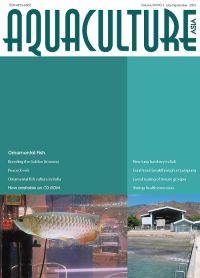
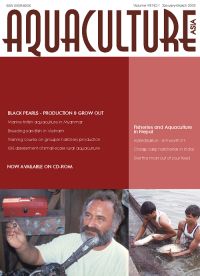
Ornamental fish farming in India. Tilapia for Indian aquaculture? Peri-urban food production in southeast Asia. Socio-economic consequences of shrimp farming in Andhra Pradesh. Breeding techniques for golden arowana Scleropages formosus. Captive breeding of peacock eel Macrognathus aculeatus. Substrate-based aquaculture systems. Extension in shrimp health management - experiences from India. Treatment of disease in freshwater shrimps and crabs in China. Larval rearing techniques for humpback grouper Cromileptes altivelis.
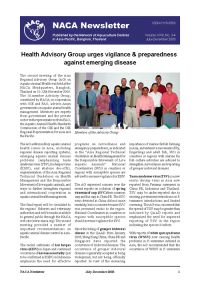
Health Advisory Group urges vigilance and preparedness against emerging disease. New Zealand farmer helps train Asian aquaculturists. Mr Junaidi Che Ayub. Global Aquaculture Discussion Forum, Dhaka, Bangladesh. STREAM Conducts Livelihood Capacity-building in the Philippines, India. MPEDA/NACA shrimp farmer workshop held in Andhra Pradesh, India. Learning by Doing - Fisheries and Adaptive Learning. NACA cooperation expanded to shrimp health management in Vietnam. 150 people trained in Q3-Q4, 2003. International Symposium on Freshwater Prawns Held at Kochi, India. Developing an online aquaculture community for NACA.
The Second STREAM Regional Conference was held in Tagaytay City, Philippines, from 8-10 June 2003 with the participation of 23 people from Australia, Cambodia, India, Nepal, Philippines, Thailand, Vietnam and Yunnan Province of China. Following a regional overview of STREAM’s themes, country partners, donors and funding, and activities, participants visited four “stations” on the themes of livelihoods, institutions, policy development, and communications, working in groups representing National Coordinators, Communications Hub Managers, and Partners. STREAM operations were discussed.
1 May 2003 | Sih Yang Sim | 1713 Downloads | .pdf | 830.7 KB
This report documents a training course that was held at the Research Institute for Mariculture, Bali, Indonesia in May 2003. The course covered both theoretical aspects of grouper husbandry via lectures and practical hands-on work in a grouper hatchery, including broodstock management, tank preparation egg collection, live feed production, health management, harvesting and transport and visits to commmercial grouper and milkfish hatcheries, grow-out facilities, markets and exporters.
This report, the twentieth in the series, contains information about the aquatic animal health status of nineteen states in the Asia-Pacific region. The editorial discusses health risks associated with trans-boundary movement of live aquatic animals and the role of risk analyses.
Peri-urban aquaculture in Kolkata. Diffusion and adoption of shrimp farming technologies. Aquaculture education in India. Information system on fish germplasm resources in China. Freshwater crustacean aquaculture in China. The role of macronutrients. Innovations by Bengal farmers. Scientific guidelines for freshwater prawn farmers in India. Status of mariculture in Indonesia. Use of probiotics in larval rearing. Problems in shrimp culture during the wet season.
Recommendations of the Aquamarkets Consultation 2003. EC-funded project targets seafood trade and poverty. Shrimp disease control and coastal management. Fisheries and Adaptive Learning project. Shrimp aquaculture certification: Request for information & advice on a new web site. Workshop on control and responsible use of alien species. MPEDA/NACA Technical Assistance on Shrimp Health and Coastal Management. Changes to the regional list of aquatic animal diseases. STREAM SAPA Stakeholder Workshop in Hanoi. Regional Training Course on Grouper Hatchery Production. Review on low food chain species for marine fish culture. NACA/Deakin University to visit Indonesia 2-7 April 2003.
In this issue: Learning insights from the Fisheries Resource Management Project. An orientation on the SIAD approach and participatory local development planning. Group-building, production success and the struggle to prevent capture of the resource. Urban agriculture, water reuse and local economies: Case study of coastal riverine settlements of Ondo State, Nigeria. Livelihoods analysis: Actual experience from using PRA. A sustainable livelihoods approach to fisheries development for poverty alleviation in southeastern Vietnam. About the STREAM Journal. About STREAM.
This report, the nineteenth in the series, contains information about the aquatic animal health status of sixteen states in the Asia-Pacific region. The editorial discusses the role of the Quarterly Aquatic Animal Disease Reporting System.
Fertilisation, soil and water quality management. Commercialisation of giant freshwater prawn culture in India. Aquaculture in reservoir-fed canal systems. Production of black-lip pearl oyster Pinctada margaritifera. Hybridisation hassles. Breeding sea cucumber Holothuria scabra in Vietnam. Use of palm kernel meal in feeds. Getting the most out of your feed. Marine finfish aquaculture in Myanmar. Penaeus monodon culture in low-salinity areas. Fisheries and aquaculture in Nepal.
The Asia Regional Advisory Group on Aquatic Animal Health meets annually to discuss regional health issues including emerging disease threats. This report includes a review of regional disease status circa 2002, global and regional disease reporting arrangements, global issues and standards, progress in implementation of the Regional Technical Guidelines on Health management for the Responsible Movement of Live Aquatic Animals, identification and designation of regional aquatic animal health resources and regional and international cooperation.
In this issue: From resource user to resource manager: A significant change story. Significant change with Cambodian provincial livelihoods study teams. The Community Fisheries Development Office: One year on. CFDO open for business! Stakeholders and institutional involvement in aquaculture management and development. Fish seed production for aquaculture in Southeast Cambodia: Decentralisation - the way to go? About the STREAM Journal. About STREAM. This edition is also available in Ilonggo, Khmer, Nepali and Vietnamese.
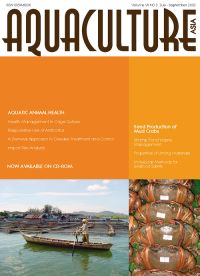
Aquaculture for poverty alleviation and food security. Shrimp pond waste management. Properties of liming materials. Seed production of mud crab Scylla spp. The dilemmas of strain selection. Seed production of the crucifix crab Charybdis feriatus. A general approach to disease treatment and control. Breeding and seed production of mangrove snapper Lutjanus argentimaculatus. Responsible use of antibiotics in shrimp farming. Health management for cultured marine fishes. Molecular methods for rapid detection of pathogens in seafood.
This is the report of the First Regional STREAM Regional Conference, held 19-21 June 2002 in Bangkok, Thailand. The conference was the first opportunity for participants in the STREAM Initiative, launched on 1 December 2001, to come together to discuss the programme. The conference discussed the main activities of STREAM, ways of working, communications strategies, feedback from participating countries and issues to follow up.
1 June 2002 | Graham Haylor, William Savage and S.D. Tripathi | 1602 Downloads | .pdf | 346.1 KB
The “Rural Aquaculture Service Recipients and Implementers Workshop” was held from 9-10 May 2002 in Ranchi, Jharkand. It was among the first activities of the DFID NRSP Research Project R8100 entitled “Investigating Improved Policy on Aquaculture Service Provision to Poor People”. The workshop provided the first opportunity for feedback on the project design from people who live and work in tribal communities in the three states of Jharkhand, Orissa and West Bengal.
1 May 2002 | Graham Haylor, William Savage and S.D. Tripathi | 1695 Downloads | .pdf | 343.49 KB
This document is the Inception Report of the DFID NRSP Research Project R8100 (March 2002 – May 2003), managed by the NACA. The purpose of the project is to identify, test and promote mechanisms for the delivery of improved rural services critical to the development of rural livelihoods, with emphasis on services in support of aquaculture objectives, strengths and constraints of marginalised groups and their complex diverse livelihoods. An inception visit was made from 17-24 March 2002.
In this issue: Efforts of a farmer in fish seed production for self-employment. Remembering: The missing capacity. Measuring the process. Women's fish farmers group in Nawalparasi, Nepal. Periphyton-based aquaculture: A sustainable technology for resource-poor farmers. Unlocking information on the internet: STREAM media monitoring and issue tracking. This edition is also available in Ilonggo, Nepali and Vietnamese.
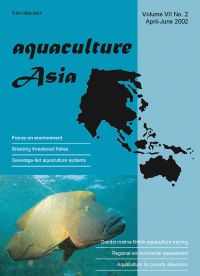
Prawn farm energy audits. Freshwater fish farming and poverty alleviation in Bangladesh. Artificial propagation for conservation of endangered species. Sewerage-fed aquaculture systems of Kolkata. Rice-fish farming in India. The use of lime, gypsum, alum and potassium permanganate in water quality management. Fish gene technology research in China. Low-salinity shrimp farms. Seed production of Clarius batrachus. Supplying good-quality seed for sustainable aquaculture and more.
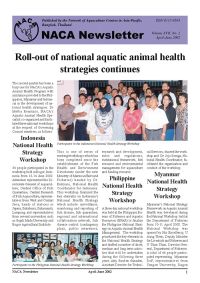
Roll-out of national aquatic animal health strategies continues. STREAM concludes inception phase of 'Improved Policy on Aquaculture Service Provision to Poor People' Project in India. Expert consultation on rapid diagnosis of shrimp viral diseases held in Chennai, India. ACIAR/NACA Workshop on Feeds and Feeding Constraints in Inland Aquaculture: Research and Extension Priorities. NACA supports health management in Indian shrimp farming. Marine Finfish Aquaculture aquaculture programme gears up for workshop. Launch of Trans-Himalayan Coldwater Fisheries Network Website. NACA Organises Emergency Assistance to Indonesia in the Control of a Serious Koi and Common Carp Disease.
The Kathmandu symposium on coldwater fishes made recommendations covering three major themes: (1) distribution and conservation of coldwater fishes; (2) role of coldwater fishes in rural development and poverty alleviation; and (3) coldwater fisheries and aquaculture development. This report presents the the recommendations of the three working groups. The symposium recommended regional cooperation among countries of the Trans-Himalayan region be strengthened for effective sharing and exchange of skills, experiences and technical cooperation.