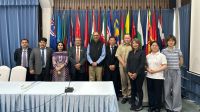
On 28 April 2026, the NACA Secretariat was privileged to welcome Dr. Abhilaksh Likhi, Secretary of the Department of Fisheries, Ministry of Fisheries, Animal Husbandry and Dairying (MOFAHD), Government of India. Dr. Likhi, who led a high-level delegation from the Indian Embassy, visited NACA’s Bangkok headquarters to engage in discussions aimed at deepening the collaborative bonds between India and the regional aquaculture community.
The visit underscored India’s pivotal role as a founding member of NACA. For decades, India has remained a cornerstone of the organisation, contributing significantly through the Indian Council of Agricultural Research (ICAR). During the meeting with NACA Director General Dr. Eduardo Leano, the delegation discussed advancing regional aquaculture development with a specific focus on aquatic disease surveillance and transboundary knowledge exchange, sharing insights on how innovation can further modernise the sector.
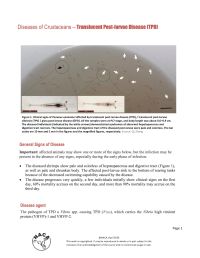
This disease card provides an overview of Translucent Post-larvae Disease (TPD), a highly infectious and lethal disease known (thus far) to infect Penaeus vannamei, P. chinensis and P. japonicus mainly in post-larvae of four to seven days age (PL2~PL7). TPD can cause morbidity of up to 60% in 24 hours after clinical signs and up to 90-100% mortality in severe cases on the second to third day.
This card details the causative agent (a Vibrio spp. carrying the Vibrio high virulent protein VHP-1 and VHVP-2), host range, geographical distribution, epidemiology, prevention and control measures, histopathology, molecular diagnostics, expert contact and references.
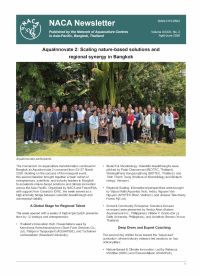
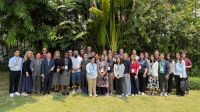
AquaInnovate 2 brought together 12 startups, scientists, and industry leaders in Bangkok from 23-27 March 2026, continuing the momentum to accelerate nature-based solutions and climate innovation across the Asia-Pacific, with financial from Canada's International Development Research Centre.
The week blended intensive learning with practical experience. Entrepreneurs pitched breakthrough ideas in biotechnology, community enterprise, and regional scaling, then refined their business models through expert coaching circles. Field visits to innovative Thai aquaculture sites connected theory with real-world practice, while a high-stakes "Shark Tank" session challenged innovators to defend their ideas before experienced investors and business leaders. A culinary showcase highlighted the importance of engaging buyers and chefs as essential partners in market success - not just scientists and farmers.
The week concluded with the unveiling of the AquaHub Vision, a roadmap for a permanent digital platform to sustain and grow the pan-regional network of aquaculture innovators into 2026 and beyond.
Videos of workshop presentations will be available on this page and NACA's YouTube channel shortly.
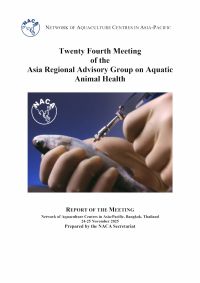
This report summarises the proceedings of the 24th meeting of the Regional Advisory Group on Aquatic Animal Health, held 24-25 November 2025 by video conference. The role of the group is to review trends in disease and emerging threats in the region, identify developments in global disease issues and standards, to evaluate the Quarterly Aquatic Animal Disease Reporting Program and to provide guidance on regional strategies to improve aquatic animal health management.