Genetics and Biodiversity

The Genetics and Biodiversity Programme supports member states to improve scientific knowledge of aquatic genetic resources and to guide strategic planning in their management. The programme addresses both the conservation aspects of genetic resources and their responsible usage in aquaculture to minimise impacts on biodiversity and wild strains and to assist members to meet their obligations under international treaties.

The programme promotes international linkages between member states, capacity building, research programs to develop improved strains of finfish and shellfish, genetic characterisation of existing strains, adoption of new genetic tools and technologies and consortia regional programmes to address common issues, species and strains of value from conservation and/or aquaculture perspectives.

Key activities

Key activities of the programme include:

  • Building capacity in aquatic genetic resource management and application of new molecular technologies, tools and strategies.
  • Characterising aquatic genetic resources to discover species, stocks and valuable genomic resources.
  • Facilitating national and regional programs for domestication, genetic improvement and conservation.
  • Applying conservation aquaculture models to support diversification, fishery enhancement and in-situ conservation of indigenous fish species.
  • Facilitating responsible exchange of germplasm, safe propagation and access-benefit sharing.

Creative Commons Attribution.
Related

Subject tags

A collection of subject tags relating to technical matters.

In this collection

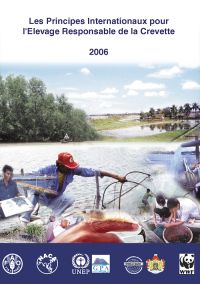
Principes Internationaux pour l'Elevage Responsable de la Crevette

L'élevage de la crevette est l’un des secteurs d'aquaculture le plus en essor dans beaucoup de régions du monde, il est également l’un des plus controversés. L'expansion rapide de ce secteur a généré, certes, des sources de revenus pour plusieurs pays, mais elle a été accompagnée par une préoccupation croissante sur les impacts environnemental et social. Les Principes Internationaux pour l'Elevage Responsable de la Crevette fournissent la base sur laquelle les parties prenantes peuvent collaborer pour un développement plus durable de l'élevage de crevette.

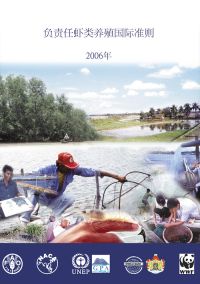
负责任虾类养殖国际准则

在世界许多地方,虾类养殖是水产养殖业增长最快,而且也是最具争 议的部门之一。这一部门的快速发展为许多国家创造了收入,但也伴随着 对环境和社会影响的忧虑。《负责任虾类养殖国际准则》在以更可持续的 方式发展虾类养殖方面为利益相关者之间开展合作提供了基础。《国际准 则》由虾类养殖与环境协作计划制定。该协作包括联合国粮食及农业组织 (粮农组织)、亚太水产养殖中心网、联合国环境规划署保护海洋环境免 受陆上活动污染全球行动纲领协调办公室、世界银行和世界自然基金会。

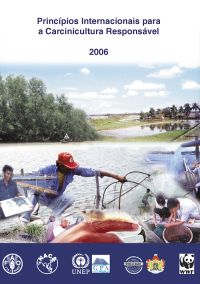
Princípios Internacionais para a Carcinicultura Responsável

O Cultivo de Camarão é um dos setores de mais rápido crescimento na aqüicultura em várias partes do mundo e também o mais controverso. A rápida expansão deste setor possibilitou a geração de renda para muitos países, entretanto, ela tem sido acompanhada por crescentes preocupações sobre seus impactos ambientais e sociais. Os Princípios Internacionais para a Carcinicultura Responsável provêm a base sobre a qual todas as partes interessadas poderão colaborar para um desenvolvimento mais sustentável do cultivo de camarão.

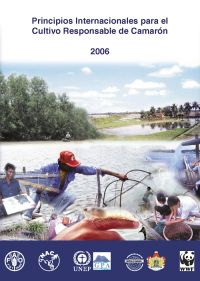
Principios Internacionales para el Cultivo Responsable de Camarón

El cultivo de camarón es uno de los sectores de la acuicultura de más rápido crecimiento y también uno de los más polémicos en muchas partes del mundo. La rápida expansión de este sector generó ingresos para muchos países, pero ha estado acompañada por preocupaciones crecientes relacionadas con sus impactos ambientales y sociales. Los Principios Internacionales para el Cultivo Responsable de Camarón proporcionan las bases sobre las cuales los diversos participantes pueden colaborar en pro de un desarrollo más sostenible de la camaronicultura.

NACA Newsletter Volume XXI, No. 4, October-December 2006

In this issue:

International shrimp farming principles welcomed by countries. Discussions on the establishment of a "Mahseer R&D Centre". Microsatellite DNA markers for mahseer are now available. First study on genetic variation of the critically endangered Mekong giant catfish. IMNV found in Asia-Pacific. Thailand and US to jointly install tsunami wave sensors. Co-management in aquaculture explored at APFIC Forum. Virus may control Australia's feral carp problem. A milestone in India's sustainable shrimp farming efforts. Fish introduction in India: Status, challenges and potentials. 8th Asian Fisheries Forum. STREAM Update. Website management training to support Thai Post-tsunami Rehabilitation website.

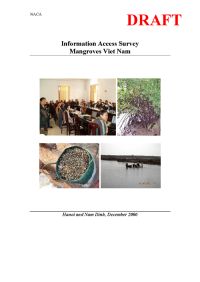
Information access survey on mangroves, Viet Nam

Viet Nam's mangrove forests have been severely impacted by human interventions, with a reduction in forestation from 408,000 ha in 1943 to a low of 150,000 ha in 2000. This study provides an overview of the information needs and communication issues surrounding people living in mangrove regions of Viet Nam. It is hoped that this study will help to raise the awareness of issues surrounding mangrove environments and improve the accessibility to information, for all stakeholders.

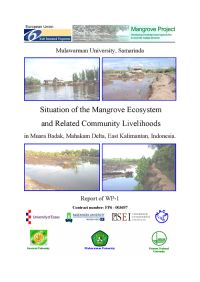
Situation of the mangrove ecosystem and related community livelihoods in Muara Badak, Mahakam Delta, East kalimantan, Indonesia

This reports describes the status of mangrove ecosystems and associated communities in the Mahakam Delta, Indonesia. It describes historical degradation of the mangrove ecosystems for shrimp farming and land speculation. The report describes the livelihoods of the local communities, their usage and connections with the mangrove forests and farming activities, and socio-economic factors impeding the restoration of mangrove habitats, which are in large part related to poverty. Attempts to replant areas are described.

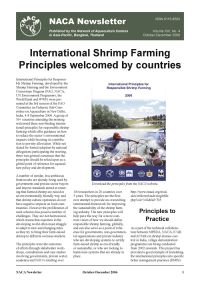
International Principles for Responsible Shrimp Farming

Shrimp farming is one of the fastest growing aquaculture sectors in many parts of the world and also one of the most controversial. Rapid expansion of this sector generated income fo many countries, but has been accompanied by rising concerns over environmental and social impacts. The International Principles for Responsible Shrimp Farming provide the basis upon which stakeholders can collaborate for a more sustainable development of shrimp farming.

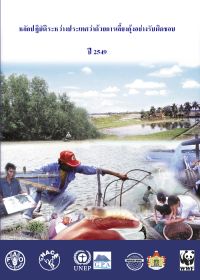
หลักปฏิบัติระหว่างประเทศว่าด้วยการเลี้ยงกุ้งอย่างรับผิดชอบ

Shrimp farming is one of the fastest growing aquaculture sectors in many parts of the world and also one of the most controversial. Rapid expansion of this sector generated income fo many countries, but has been accompanied by rising concerns over environmental and social impacts. The International Principles for Responsible Shrimp Farming provide the basis upon which stakeholders can collaborate for a more sustainable development of shrimp farming.

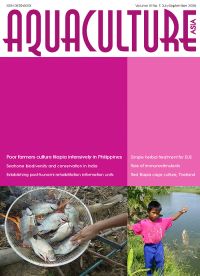
Aquaculture Asia Magazine, July-September 2006

In this issue:

Resources and biodiversity of seahorses and their need for conservation in India. Captive breeding of pangasid catfish Pangasius pangasius. Establishment of post-tsunami rehabilitation information units in Thailand. Poor farmers culture tilapia intensively in ponds in Central Luzon, Philippines. Simple herbal treatment for treatment of EUS in snakehead. DNA vaccination in health management. The role of immunostimulants. Red tilapia cage culture in central Thailand. Quality improvement of farmed fish in Iranian markets.

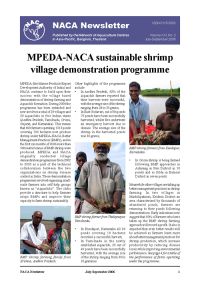
NACA Newsletter Volume XXI, No. 3, July-September 2006

In this issue:

MPEDA-NACA sustainable shrimp village demonstration programme. Inter-calibration of white spot syndrome virus (WSSV) PCR laboratories in India. Shrimp health management training. Rotary International/NACA meeting facility up at Koh Yao Noi. Tsunami-affected farmers train in marine cage aquaculture. Marine finfish aquaculture network at the APAN meeting in Singapore. Aquatic animal health policy workshops build consensus in ASEAN nations. Aquaculture Compendium released. Developments in establishing a conservation plan for the Mekong giant catfish. ROUNDTABLE: Exploring south-south cooperation opportunities in sustainable shrimp farming in West Africa, Conakry (Guinea). Technical missions to Cambodia and Lao PDR.

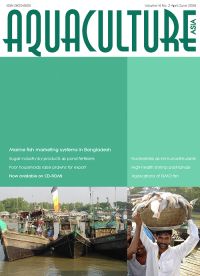
Aquaculture Asia Magazine, April-June 2006

In this issue:

High-health postlarvae a prerequisite for sustainability of the Indian shrimp industry. Broodstock and all-female scampi grow out ponds in south India. Genetically modified fish and potential applications. Rainbow trout farming in hill terraces of Nepal. Sugar industry by-products as plankton boosters and yield enhancers in carp culture. Growth and production of Penaeus monodon in low saline culture systems. Poor households raise prawns for export. Marine fish marketing in Bangladesh.

Workshop on capacity building for situation analysis of mangroves ecosystem and communities

These are the proceedings of two Workshops on Capacity Building for Situation Analysis of Mangroves Ecosystem and Communities, held in Hanoi and Nam Dinh, 4-8 December 2006. The workshop focused on developing the knowledge and skills of the VNU team in Sustainable Livelihoods Analysis through the application of Participatory Rural Appraisal (PRA) techniques. The workshops were funded under the European Union Mangrove Project (2005-2008) in preparation for commencement of field-based activities and situation analysis.

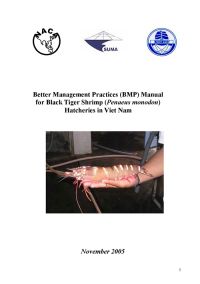
Better management practices manual for black tiger shrimp (Penaeus monodon) hatcheries in Viet Nam

In order to provide practical and effective technical guidance for shrimp hatchery management, it is necessary to establish a set of better management practices (BMPs) which underpin an effective hatchery production system. This document is not a complete manual on the management of P. monodon hatcheries but concentrates on the implementation of BMPs for the hatchery covering all of the critical stages and processes in the production cycle, which are currently believed to be causing problems in Vietnamese hatcheries. 

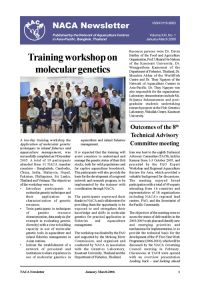
NACA Newsletter Volume XXI, No. 1, January-March 2006

In this issue:

Training workshop on molecular genetics. Outcomes of the 8th Technical Advisory Committee Meeting. Taking the 'grey' out of 'grey literature'. An introduction to the South Iran Aquaculture Research Center. Aquaclubs in India achieve good crops this year, with further challenges ahead. Rebuilding resilience of coastal populations and aquatic resources. Recent activities in STREAM. First international PCR training workshop completed. AusAID funds two aquatic animal health projects. Asia Regional Advisory Group continues to support aquatic animal disease management in the region. Indonesia accedes to the NACA Agreement. Governing Council 17 to set NACA Work Programme 2006-2010. Marine fish culture manuals now available in Thai. Aquaculture Rehabilitation Guide in Aceh, Indonesia. Boat building in the tsunami affected areas of NAD: Fishing vessel quality issues. Australasian Aquaculture 2006, 27 - 30 August, Adelaide. East Asian Seas Congress, 12-16 December 2006, China. Aquafeed Production Workshop, 8 March 2006, Thailand.

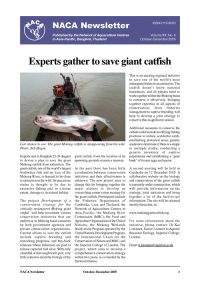
NACA Newsletter Volume XX, No. 4, October-December 2005

In this issue:

Experts gather to save giant catfish. Workshops on dissemination of better practice models for culture-based fisheries. Dr Chris Baldock, 1947-2005. MAHSEER 2006. MOU signing on conservation of Mahseer in Malaysia and Indonesia. Application of molecular genetics in aquaculture and inland fisheries management. New president of Iran Fisheries Organization. Workshop on the fishery management tool 'EnhanceFish'. Regional Mariculture Development Workshop in China, March 2006. Invitation to apply for position of Director General of NACA. MPEDA expands program on shrimp farmer clubs.

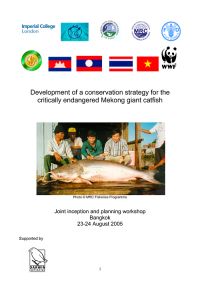
Development of a conservation strategy for the critically endangered Mekong giant catfish: Joint inception and planning workshop

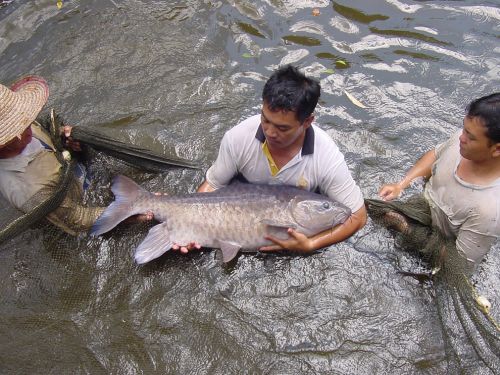
This is the report of an inception workshop for the Mekong Giant Catfish Working Group. The Mekong giant catfish Pangasianodon gigas is listed as critically endangered in the 2003 IUCN Red List. The purpose of the workshop was to exchange information on the current state of the Mekong giant catfish and the relevant conservation and research activities of key organisations, and to establish a joint planning process aimed at developing an overarching conservation strategy for the Mekong giant catfish.

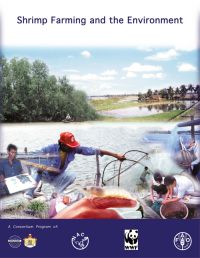
Shrimp Farming and the Environment: A Consortium Program to Analyse and Share Experiences on the Better Management of Shrimp Aquaculture in Coastal Areas

This report provides details of the activities and outcomes of work conducted under the World Bank, NACA, WWF and FAO consortium program on Shrimp Farming and the Environment. The report synthesises the major findings of the consortium program from 1999-2002. It includes the outcome from a stakeholder workshop that discussed the program findings, hosted by the World Bank in Washington DC, in March 2002.

Thematic review on coastal wetland habitats and shrimp aquaculture

This review documents the status of shrimp aquaculture in relation to mangrove forest ecosystems. The environmental, social and economic impacts of shrimp farming are discussed, with examples covering both the negative and positive aspects of the sector. The review considers interventions and other activities to improve the sustainability of shrimp farming in the context of coastal zone management and the protection of mangrove ecosystems. The effectiveness of these interventions is considered in the light of experience based on case studies.

Aquaculture Asia Magazine, January-March 2005

In this issue:

Freshwater prawn culture in China and its market prospects. Demise of wastewater-fed duckweed-based aquaculture in Bangladesh. Freshwater finfish biodiversity - an Asian perspective. Her farm is destroyed, how can we help? Women oyster vendors in Eastern Thailand. Farm-level feeds and feeding practices for marine finfish. ACIAR grouper grow-out feeds and CSIRO research. Feed development and application for juvenile grouper. Grouper growout feeds. Silver pomfret culture technology.