Livelihoods, gender and social issues

Aquaculture livelihoods and social issues in rural communities.

Creative Commons Attribution.

Related

Subject tags

A collection of subject tags relating to technical matters.

In this collection

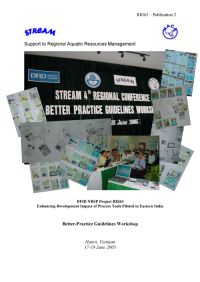
Report of the Better-Practice Guidelines Workshop, Hanoi, Vietnam, 17-18 June 2005

This workshop report is an output from an additional uptake and promotion activity of the DFID NRSP Project R8363 “Enhancing Development Impact of Process Tools Piloted in Eastern India”, which was extended to the end of August 2005. It describes a Better-Practice Guidelines (BPG) Workshop which was the latest project activity to share process tools for Building Social Capital (Self-Help Groups), Consensus-Building and Information Access Surveys. Since the project began, the BPG genre has expanded from the original three concepts shared, to currently twenty-five BPGs prepared not only by STREAM but also by farmers and fish producers. The genre has also been adopted by other organisations, including the DFID-funded Western Orissa Rural Livelihoods Project to share rural aquaculture techniques, and Stirling University to support the uptake and promotion of their work on Self-Recruiting Species and Local Resource User Groups.

The workshop was attended by STREAM National Coordinators and Communications Hub Managers from Cambodia, India, Indonesia, Myanmar, Nepal, Pakistan, Philippines, Sri Lanka and Vietnam, and STREAM Regional Office colleagues based in Thailand, Australia and India. The participants reviewed and assessed the BPGs and Policy Briefs in Bahasa Indonesia, Bengali, English, Hindi, Ilongo, Khmer, Myanmar, Nepali, Oriya, Sinhala, Urdu and Vietnamese. They also began to plan how the uptake and promotion of these tools may be specifically supported in each national context as well as planning the development of further BPG and PB topics.
STREAM Journal Volume 4, No. 3, July-September 2005

In this issue: One-stop aqua shops - an emerging phenomenon in eastern India. Ranchi One-stop Aqua Shop. Kaipara One-stop Aqua Shop. Bilenjore One-stop Aqua Shop. Patnagarh One-stop Aqua Shop. Using bar-coding in a one-stop aqua shop. About the STREAM Journal. About STREAM.

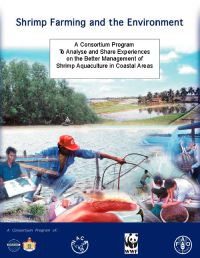
Shrimp Farming and the Environment: A Consortium Program to Analyse and Share Experiences on the Better Management of Shrimp Aquaculture in Coastal Areas

This report provides details of the activities and outcomes of work conducted under the World Bank, NACA, WWF and FAO consortium program on Shrimp Farming and the Environment. The report synthesises the major findings of the consortium program from 1999-2002. It includes the outcome from a stakeholder workshop that discussed the program findings, hosted by the World Bank in Washington DC, in March 2002.

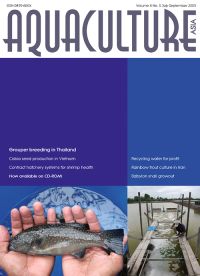
Aquaculture Asia Magazine, July-September 2005

In this issue:

Asian Development Bank study on aquaculture and poverty. The consequences of converting to organic shrimp farming. Recycling water and making money with Artemia. Advances in the seed production of cobia Rachycentron canadum in Vietnam. Australian success with barramundi cod Cromileptes altivelis. Recent grouper breeding developments in Thailand. Application of probiotics in rotifer production systems. Contract hatchery systems. Rainbow trout culture in Iran. Spotted babylon Babylonia areolata growout in earthern ponds.

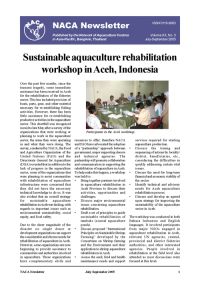
NACA Newsletter Volume XX, No. 3, July-September 2005

In this issue:

Sustainable aquaculture rehabilitation workshop in Aceh, Indonesia. STREAM policy briefs and better practice guidelines. 25 years of training in integrated fish farming. The Responsibilities of Leadership. A helping hand for those who needed it after the tsunami. An introduction to Mirza Koochek Khan Higher Fisheries Education & Training Centre, Iran. ACIAR funded regional project on shrimp health. Impact of aquatic animal health strategies. Farewell Sih Yang Sim. Welcome Koji Yamamoto.

Cultivo de Camarón y Medio Ambiente: Un programa en consorcio "Para analizar y compartir experiencias a fin de mejorar el manejo de la acuicultura de camarón en las áreas costeras"

Este reporte da detalles de las actividades y resultados del trabajo conducido bajo el Programa en Consorcio del Banco Mundial, NACA, WWF y FAO sobre “Cultivo de Camarón y el Medio Ambiente”. Este reporte sintetiza los resultados más importantes del programa del consorcio desde 1999 hasta marzo de 2002. Incluye los resultados de los talleres de usuarios que discutieron los resultados del programa, auspiciados por el Banco Mundial en Washington, DC, en marzo de 2002. 

Shrimp aquaculture, the people and the environment in coastal Mexico

This report reviews the state of shrimp aquaculture developent in Mexico, including its impact on employment, complexities surrounding coastal property rights, investment and health issues. Regulation and monitoring of the industry are still in their infancy, but SEMARNAP is putting in place a system that may be able to ensure that aquaculture will be sustainable. More effective involvement of the NGO community in the aquaculture sector may also help to monitor and ensure compliance with environmental regulations.

Economics of better management practices for semi-intensive shrimp farms in Honduras and shrimp cooperatives in Nicaragua

Several stakeholder groups have formulated and recommended the implementation of better management practices (BMPs)aimed at improving production efficiency and/or ameliorating impacts of shrimp farming on the environment. In this study, an economic optimisation model with an environmental component was used to evaluate the effects of five specific BMPs on the profitability, optimal selection of management strategies, and net quantities of nutrients discharged by semi-intensive shrimp farms in Honduras and small-scale operations in Honduras and Nicaragua.

Mahajal - the big fishing net: A street play performed at the Policy Review Workshop, Noida, Delhi, 24-25 April 2003

Mahajal – The Big Fishing Net was written by Mr Rakesh Raman, a playwright from Ranchi, Jharkhand, and performed by his theatre troupe. The play was written as an interpretation of the outcomes of the project case studies carried out in Jharkhand, Orissa and West Bengal. Act One sets the scene of fisherfolk’s livelihoods and the difficulties they face in a tribal village. Act Two places the project’s policy change recommendations within the context of their lives and aspirations.

Livelihoods and fisheries in the lower Mekong basin

People who manage fisheries in the lower Mekong are beginning to think of themselves as a community within a common river basin. This is a different way of thinking; managing fisheries is no longer seen as an isolated activity but as a part of the life of people who live along the river. Previously, fisheries managers might have thought of their job as safeguarding or increasing fish production, but now they must share in the effort to alleviate poverty.

Thematic review on coastal wetland habitats and shrimp aquaculture

This review documents the status of shrimp aquaculture in relation to mangrove forest ecosystems. The environmental, social and economic impacts of shrimp farming are discussed, with examples covering both the negative and positive aspects of the sector. The review considers interventions and other activities to improve the sustainability of shrimp farming in the context of coastal zone management and the protection of mangrove ecosystems. The effectiveness of these interventions is considered in the light of experience based on case studies.

The integration of mangrove and shrimp farming: A case study on the Caribbean coast of Colombia

Shrimp aquaculture has been accused of threatening mangrove forests worldwide. Mangrove and shrimp ponds are known to have mutually supportive functions. Mangrove wetlands can treat effluents from shrimp ponds effectively by removing suspended solids and nutrients. This activity can be expected, in turn, to enhance mangrove productivity. This report describes an integrated mangrove wetland–shrimp farm operating in Colombia since 1996. At this site, shrimp farm effluent is recirculated through an 120 ha mangrove area.

The adoption of good management practices by the shrimp industry on the Caribbean coast of Colombia

This report discusses the recent history of shrimp aquaculture along the Caribbean coast of Colombia, with a focus on effective management practices that have been implemented since the mid-1990s. While the primary reason for using different practices has been preventing outbreaks of shrimp diseases, many such practices provide environmental benefits as well. Examples include reducing the use of water and ensuring that effluent entering natural water bodies is at least as clean as the intake water.

Key management challenges for the development and growth of a shrimp farm in northeast Brazil: A case study of Camanor Produtos Marinhos Ltda.

This case study discusses the main lessons for management practices learned at the shrimp farm Camanor, in Rio Grande do Norte, Brazil. Since it was founded in 1982, the farm has yielded data that allow the lessons and insights to be drawn. This case documents the most important lessons learned by Camanor during the past 18 years. The most important challenges before the shrimp aquaculture industry involve developing better practices and implementing industry wide standards that are more sustainable.

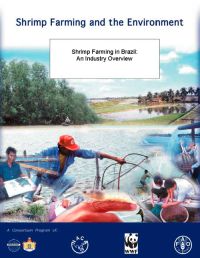
Shrimp farming in Brazil: An industry overview

The purpose of this study is to assess the development of the shrimp farming industry in Brazil, identifying past obstacles and key incentives for its expansion. The shrimp industry has taken longer to develop in Brazil than in other countries. Despite favorable conditions, it is only recently that successful efforts are consolidating. This report analyzes the main factors that have inhibited the development of the industry and describes the sector's current characteristics.

STREAM Journal Volume 4, No. 2, April-June 2005

In this issue: Changes in Jabarrah. Palu Hijau in the Banggai Islands  - using knowledge for change. Three stories from Nepal. Me and my work. Livelihoods approaches - skills learned, applied and shared. About the STREAM Journal. About STREAM. This edition is also available in Ilonggo and Vietnamese.

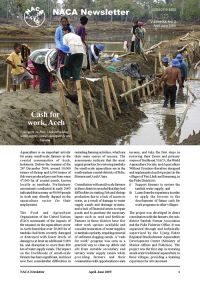
NACA Newsletter Volume XX, No. 2, April-June 2005

In this issue:

Cash for work, Aceh. HRH Chulabhorn opens new molecular genetics laboratory, Thailand. Aquatic epidemiology training. STREAM Regional Conference and BMP Workshop. Dr Modadugu V. Gupta awarded the 2005 World Food Prize. Study program on marine aquaculture and seafood markets in southern China, 2005. The third Regional Grouper Hatchery Production Training Course.

STREAM Journal Volume 4, No. 1, January-March 2005

In this issue: Young people taking bolder steps. Providing a venue for voices to be heard. Rehabilitation of a bundu pond - STREAM's initiative and DOF's action. Coastal resources utilisation and conservation issues in Cox's Bazar, Bangladesh. People, fish and reefs - a livelihoods learning curve. Understanding the marine ornamental trade and its impact on the livelihoods of poor stakeholders in the Philippines. About the STREAM Journal. About STREAM. This edition is also available in Ilonggo and Vietnamese.

Aquaculture Asia Magazine, January-March 2005

In this issue:

Freshwater prawn culture in China and its market prospects. Demise of wastewater-fed duckweed-based aquaculture in Bangladesh. Freshwater finfish biodiversity - an Asian perspective. Her farm is destroyed, how can we help? Women oyster vendors in Eastern Thailand. Farm-level feeds and feeding practices for marine finfish. ACIAR grouper grow-out feeds and CSIRO research. Feed development and application for juvenile grouper. Grouper growout feeds. Silver pomfret culture technology.

NACA Newsletter Volume XX, No. 1, January-March 2005

In this issue:

Tsunami: The long road to recovery. Special Program in Response to the Tsunami. Rebuilding cage aquaculture and eco-tourism at Koh Yao Noi, Thailand. Cash for work, Aceh Indonesia. Assessment of tsunami impacts in Thailand and Indonesia. Consortium to Restore Shattered Livelihoods in Tsunami-devastated Nations. Regional Workshop on Rehabilitation of Fisheries and Aquaculture in Coastal Communities of tsunami affected countries in Asia. Outcomes of Governing Council 16. New grouper feed and marine finfish hatchery guides. Towards a framework for a pro-poor regional strategy for sustainable aquatic resources management in Asia-Pacific. Artificial propagation of indigenous fish species in Sarawak, Malaysia. Inauguration of the National Advisory Committee on Aquatic Animal Health of Viet Nam. Supporting Viet Nam to make an informed decision towards Penaeus vannamei farming. Health group calls for improved surveillance and reporting. Training and study tours in Q1 2005-05-25. TVR 'Ramu' Pillay (1921-2005).