Water quality

Content related to water quality.

Creative Commons Attribution.

Related

Subject tags

A collection of subject tags relating to technical matters.

In this collection

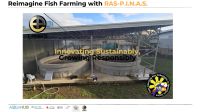
Reimagine Fish Farming with RAS-P.I.N.A.S

This presentation by Elisa Claire Sy of E-Primate, showcases how RAS-P.I.N.A.S - a closed-loop, water-efficient technology - enables high-density, land-based fish farming using biofiltration, aeration, and mechanical treatment strategies. Discover how RAS conserves water and land, minimises disease risk, and offers flexibility in farm siting, while recognising the trade-offs of energy demands and infrastructure costs. Learn why RAS is gaining momentum as a key innovation in Asia's sustainable aquaculture future.

Innovations on alternatives to antimicrobials in aquaculture

This video by Chokanan Prompichai, NACA, presents two promising innovations aimed at reducing antimicrobial use (AMU) in aquaculture, showcased as part of Thailand’s National Innovation and Investment Plan (NIIP) and via the IDRC-funded InnoVet-AMR 2.0 Project. NanoVac, developed by AIT, uses nanobubbles to deliver vaccines to tilapia, while ShrimpGuard, developed by BIOTEC and KU, is a bacteriophage-based solution for managing shrimp diseases. Both technologies offer potential to combat antimicrobial resistance (AMR) without leaving chemical residues. The presentation compares their readiness, challenges, and adoption, incorporating feedback from shrimp farmers across Thailand. It highlights the need for cost-effective, easy-to-use solutions that align with farmers' real-world needs and regulatory frameworks.
Inland saline aquaculture: Prospects and challenges

Salinity is a growing global challenge, affecting soil productivity, freshwater availability, and aquatic ecosystems. Inland saline aquaculture presents a sustainable opportunity to utilise salt-affected water resources for food production. This article examines the prospects and challenges of aquaculture in inland saline environments, focusing on soil and water characteristics, species tolerance, and mitigation strategies. It highlights the potential of using brackish groundwater for aquaculture, reducing pressure on freshwater supplies while making use of degraded lands. The study also discusses the physiological adaptations of fish to salinity stress, the role of key ions in aquaculture success, and the integration of saline aquaculture with traditional farming systems. Inland saline aquaculture could play a critical role in enhancing food security, optimising water resource use, and mitigating environmental degradation in semi-arid and arid regions.

Some practices and techniques in cost-effective small and medium-scale aquaculture in West Bengal

Small and medium-scale aquaculture in West Bengal has evolved to incorporate cost-effective, sustainable practices that reduce input costs while maintaining productivity. This article explores various low-cost aquaculture techniques used by rural fish farmers, emphasising farm-made feed formulations, pond fertilisation methods, and integrated farming systems. Farmers utilise non-conventional feed additives to enhance fish health and growth while reducing reliance on expensive commercial products. Fermented feed supplements and probiotic formulations have been successfully implemented to improve water quality and plankton production. Integrated fish farming, incorporating compost manure, vermicomposting, and polyculture with species like giant freshwater prawn, has increased productivity and economic returns.

14th Asian fisheries and Aquaculture Forum: Early bird closes 10 November

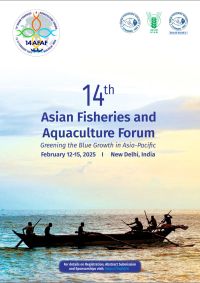
The 14th Asian Fisheries and Aquaculture Forum (14AFAF) will be held from 12-15 February 2025 in New Delhi, India. Submission of abstracts has been extended until 5 November, and early bird registration closes on 10 November, so get in quick!

The forum is a scientific meeting organised by the Asian Fisheries Society (AFS) once every three years to understand the global trends and address issues and challenges faced by the fisheries and aquaculture sector. The main purpose of this Forum is to provide an international platform for eminent scientists, young researchers, and other stakeholders across the globe to share their research experiences and innovative ideas. By facilitating the exchange of diverse range of knowledge and expertise, the Forum with the Theme ‘Greening the Blue Growth in Asia-Pacific’ aims to address key issues towards developing sustainable fisheries and aquaculture.

The Grass Carp Aquaculture Manual

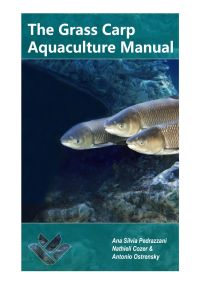
This manual covers everything from grass carp's natural distribution and reproductive behaviours to its biology and anatomy. This manual also explores diseases that can affect grass carp and emphasises the crucial connection between animal welfare and stress in fish. With a detailed discussion on cultivation systems, this manual includes pond structures and fish farming techniques in both polyculture and monoculture. It provides practical insights into important aspects such as water quality monitoring, feeding, nutrition, health checks and behaviour assessments at every stage of grass carp farming – from broodstock management to pre-slaughter and slaughter processes. The emphasis is on responsible harvesting techniques, transportation considerations and humane slaughter methods. This manual offers a comprehensive guide for both novice and experienced fish farmers, and enthusiasts interested in cultivating grass carp sustainably and ensuring optimal animal welfare.

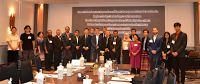
Expert Workshop on Aquaculture Effluent Management held in Bangkok

In 2023, FAO and NACA initiated a consultation process on aquaculture effluent management in Asia and the Pacific in collaboration with NACA member governments. Experts across the region gathered information to assess the state of governance, advancements in technology and innovation in aquaculture effluent management. The consultative process culminated in an expert workshop, convened from 14 to 15 November, funded by FAO, to share views and national experiences on aquaculture effluent management.

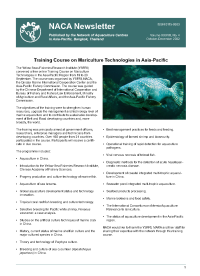
NACA Newsletter, Vol. XXXVII, October-December 2022

In this issue:

Training Course on Mariculture Technologies in Asia-Pacific; FAO/NACA Virtual Workshop on Aquaculture Transformation in Asia and the Pacific Region; Belt & Road Forum for International Freshwater Fishery Industry Innovation; 8th Global Conference on Gender in Aquaculture and Fisheries, 21-23 November; Reported Aquatic Animal Diseases in the Asia-Pacific Region during the First Quarter of 2022; International Training Course on Biology and Pathology of the Penaeid Shrimp 2022; Angkasa Putra inaugurated as first President of the South-East Asian Fisheries and Aquaculture Student Association; Artemia webinars: Video recordings of technical presentations available.

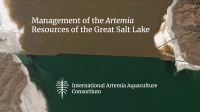
Videos: Webinar on management of Artemia resources of the Great Salt Lake, Utah USA

Video recordings and the report of the webinar are now available. The International Artemia Aquaculture Consortium (IAAC) hosted a webinar on Management of the Artemia Resources of the Great Salt Lake, 5 May 2022, at 14:00 UTC. The purpose of the webinar was to familiarise participants with recent international developments in Artemia research cooperation, and to examine the Great Salt Lake as a case study in successful management of Artemia resources in a multi-stakeholder environment.

Post-doctoral Scholarships for women in STEM at the University of Stirling

The University of Stirling has been awarded funds by the British Council to provide funding for four Early Academic Fellowships for Women in STEM. These fellowships will be 6-12 months in duration. The scholarships are available to women who are passport holders and permanent residents of India, Pakistan, Bangladesh, Nepal and Sri Lanka. For further information please visit the University of Stirling website. The deadline for submissions is 31 March 2022.

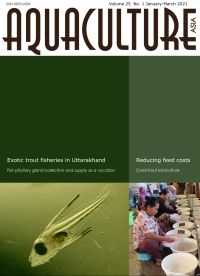
Aquaculture Asia Magazine, January-March 2021

In this issue:

Exotic trout fisheries resources and potentialities in Uttarakhand; Scenario of captive production of Clarias magur in India; Strategies to reduce feed cost by improving gut health and nutrient utilisation of fish in aquaculture; Fish pituitary gland collection and supply as a vocation in West Bengal, India; Coral trout Plectropomus leopardus aquaculture research and fingerling production in Indonesia; Smartphone app improving smallholder shrimp farming practices in Bangladesh; NACA Newsletter.

Coral trout Plectropomus leopardus aquaculture research and fingerling production in Indonesia

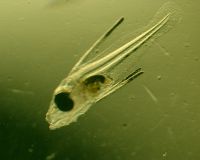
Coral trout Plectropomus leopardus is an emerging exported grouper commodity in Indonesia. The demand for coral trout fingerlings has been increasing and the value of this species is the highest among groupers. However, the rearing of coral trout larvae is notoriously more ‘difficult’ than other groupers. This article describes research on coral trout larval rearing protocols conducted by the Institute for Mariculture Research and Fisheries Extension, which has achieved a survival rate of 12%.

Aquaculture Asia Magazine, January-March 2020

In this issue:

Mahseer sanctuaries of Meghalaya: A conservation and recreational perspective; Impacts of climate change on aquaculture in Vietnam: A review of local knowledge; Simple means of water aeration adopted by progressive fish breeders in West Bengal, India; Breeding striped snakehead (Channa striata) using the concrete tank method in the Cangkringan Area, Special Region of Yogyakarta; NACA Newsletter.

Simple means of water aeration adopted by progressive fish breeders in West Bengal, India

In India, West Bengal is the leading state in hatchery-based seed production (spawn, fry, advanced fry) of major carps and other economically important freshwater fishes. Dissolved oxygen is the most critical parameter of water quality and basic necessity in fish hatcheries, nursery and grow-out ponds. Hatchery fish seed production can be limited by the dissolved oxygen content of circulating water. Progressive fish breeders in villages of West Bengal have overcome and eliminated this problem by designing simple but effective means of water aeration to improve dissolved oxygen in hatchery water supplies, maximising survival of fertilised eggs, hatchlings and spawn. This article describes some of the techniques that have been adopted using low-cost and recycled materials.

We need an aquaculture internet of things

We are at the beginning of a new revolution, the Internet of Things (IOT): Smart networked devices and sensors that collect information about their surroundings, communicate with people and machines, make decisions based on programming models and interact with the physical world through control of switches, motors and actuators. Many of these devices are low-cost, literally a few dollars and they are getting cheaper all the time. The IOT offers new opportunities for the aquaculture industry to improve on-farm efficiency.

Global fish passage forum to include first symposium on hydropower and fish, December, Australia

The American Fisheries Society and the Environmental and Water Resources Institute of the American Society of Civil Engineers are holding this year's annual Fish Passage conference in Australia in December in collaboration with hosts Charles Sturt University and the New South Wales Government. The International Conference on River Connectivity, to be held in Albury from December 10 to 14 includes the First International Symposium on Hydropower and Fish Management.

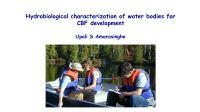
Hydrobiological characterisation of water bodies for CBF development

A presentation on assessment of the suitability of water bodies for culture-based fisheries development.

Giant Prawn 2017

The fourth major international event on giant freshwater prawns was organised by the Asian Institute of Technology from 20-24 March 2007. The conference, organised by Salin Krishna and Michael New, built on a series of highly successful events that trace back to the very beginnings of the industry. The first conference, Giant Prawn 1980 brought together all those involved in freshwater prawn research and farming for the first time and set many priorities for future research and development.

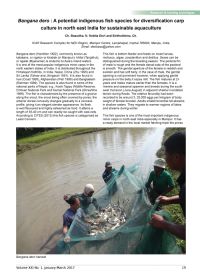
Bangana dero: A potential indigenous fish species for diversification of carp culture in north east India for sustainable aquaculture

Bangana dero is one of the most popular indigenous minor carps in the north eastern states of India, fetching triple the market prices of Indian major carps. B. dero is a bottom feeder and feeds on insect larvae, molluscs, algae, zooplankton and detritus. Over the last two decades the occurrence of wild juveniles of this fish in Indian rivers has fallen drastically. A protocol for induced breeding, larviculture, nursery rearing and growout including polyculture of B. dero is described.

Staff directory

Directory of NACA's staff members and their contact details.