An Artemia Session was held on 5 June at the World Aquaculture 2026 conference in Singapore. The session was facilitated by the International Artemia Aquaculture Consortium and covered the outcome of the World Bank PROBLUE Artemia Study Accelerating Brine Shrimp Artemia Aquaculture Production and Conservation for a Resilient Blue Economy.
The session featured case studies from China, Bangladesh, Thailand, Uzbekistan, Iran and Kenya. Presentations (PPTs and videos) from the session are available for download, and video presentations are available for viewing online.
NACA has scoured the internet and put together a Free Bookshelf page with links to all the free aquaculture manuals and technical publications that we could find. These include manuals by NACA and NACA Lead Centres such as SEAFDEC AQD, by FAO, and by other institutions from around the world.
The list can be filtered by topic, so it’s easy to find manuals relevant to your interest. But since they’re free, why not collect them all? In the coming days we may also add links to free magazines and podcasts that we feel are worthy of your attention.
7 August 2026Tienthavorn, N., Rongkanun, T., Sripaiboon, N. and Chumsinip, P. | 717 views
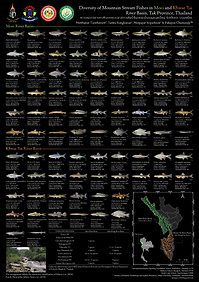
A beautiful PDF poster by Tienthavorn et. al on the "Diversity of Mountain stream fishes in Moei and Khwae Yai River Basin, Tak Province, Thailand" is available to download from the link below. According to the authors, "Fish surveys were conducted at 30 sampling stations, yielding at a total of 77 species belonging to 46 genera, 17 families and 9 orders. The Khwae Yai river basin contained 31 species representing 23 genera, 15 families, 8 orders. In contrast, the Moei river basin contained 54 species representing 42 genera, 14 families, and 8 orders."
31 July 2026World Bank | 2402 views | .pdf | 4.53 MB
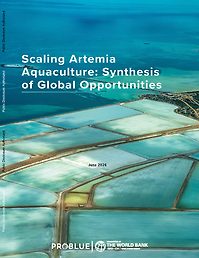
This synthesis report consolidates over half a year’s worth of technical research, market analysis, and country level value chain assessments to present a comprehensive investment overview of the brine shrimp - Artemia - aquabusiness. Developed as part of the World Bank’s PROBLUE initiative on sustainable aquaculture and blue economy development, the report draws together the findings of six assessments, covering Artemia production systems, governance frameworks, markets and trade, emerging use cases, inventories of innovators, and in-depth country value chain studies.
The purpose of this synthesis report is to:
Provide an integrated overview of the current state and future potential of farmed Artemia systems.
Present investor-ready intelligence on country contexts, production models, and enabling conditions.
Guide strategic decision-making across public, private, and donor stakeholders through a concise but data-driven road map for investment and scale.
31 July 2026World Bank | 285 Downloads | .pdf | 3.48 MB
Artemia, commonly known as brine shrimp, is a critical live feed ingredient in aquaculture, particularly for shrimp and marine finfish hatcheries. The global Artemia industry is experiencing increasing demand driven by expanding aquaculture production. This report provides an in-depth analysis of Artemia in five key countries where Artemia aquaculture is established or in early stages of development — Viet Nam, China, Thailand, Bangladesh, and Kenya. The studies highlight Artemia value chains and associated production systems, market potential, and investment needs.
The findings confirm that Artemia can be successfully, profitably, and sustainably produced through aquaculture as cyst or biomass products in hypersaline environments, across diverse systems, providing important and critical products for aquaculture, with potential for wider application and product development as aquafeed and human food.