Livelihoods, gender and social issues

Aquaculture livelihoods and social issues in rural communities.

Creative Commons Attribution.

Related

Subject tags

A collection of subject tags relating to technical matters.

In this collection

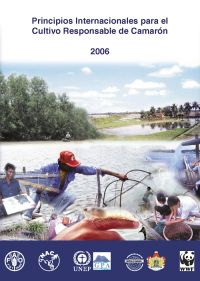
Principios Internacionales para el Cultivo Responsable de Camarón

El cultivo de camarón es uno de los sectores de la acuicultura de más rápido crecimiento y también uno de los más polémicos en muchas partes del mundo. La rápida expansión de este sector generó ingresos para muchos países, pero ha estado acompañada por preocupaciones crecientes relacionadas con sus impactos ambientales y sociales. Los Principios Internacionales para el Cultivo Responsable de Camarón proporcionan las bases sobre las cuales los diversos participantes pueden colaborar en pro de un desarrollo más sostenible de la camaronicultura.

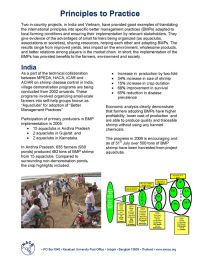
Principles to practice

Two in-country projects, in India and Vietnam, have provided good examples of translating the International Principles on Responsible Shrimp Farming into specific better management practices (BMPs) adapted to local farming conditions and ensuring their implementation by relevant stakeholders. The results range from improved yields, less impact on the environment, wholesome products, and better relations among players in the market chain. In short, the implementation of the BMPs has provided benefits to the farmers, environment and society.

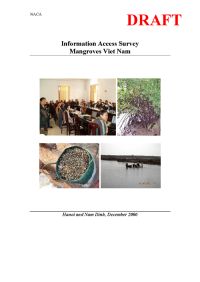
Information access survey on mangroves, Viet Nam

Viet Nam's mangrove forests have been severely impacted by human interventions, with a reduction in forestation from 408,000 ha in 1943 to a low of 150,000 ha in 2000. This study provides an overview of the information needs and communication issues surrounding people living in mangrove regions of Viet Nam. It is hoped that this study will help to raise the awareness of issues surrounding mangrove environments and improve the accessibility to information, for all stakeholders.

Capacity building on sustainable livelihoods analysis and participatory rural appraisal

The practical application of livelihoods approaches is still relatively new in development work and guidance is much sought by field teams. The concept aims to build a comprehensive picture of how people within communities live, rather than approaching development planning from a sectoral perspective such as agriculture, forestry or fisheries, to assist in planning interventions that will benefit present and future generations. This document discusses the concepts of livelihoods and sustainable livelihoods analyses with these objectives in mind.

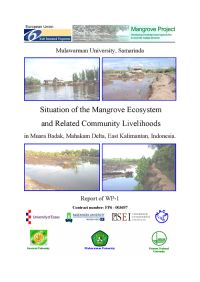
Situation of the mangrove ecosystem and related community livelihoods in Muara Badak, Mahakam Delta, East kalimantan, Indonesia

This reports describes the status of mangrove ecosystems and associated communities in the Mahakam Delta, Indonesia. It describes historical degradation of the mangrove ecosystems for shrimp farming and land speculation. The report describes the livelihoods of the local communities, their usage and connections with the mangrove forests and farming activities, and socio-economic factors impeding the restoration of mangrove habitats, which are in large part related to poverty. Attempts to replant areas are described.

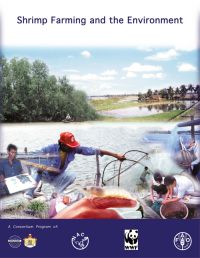
International Principles for Responsible Shrimp Farming

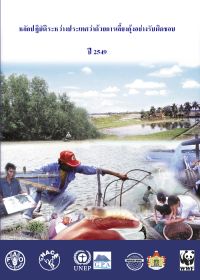
Shrimp farming is one of the fastest growing aquaculture sectors in many parts of the world and also one of the most controversial. Rapid expansion of this sector generated income fo many countries, but has been accompanied by rising concerns over environmental and social impacts. The International Principles for Responsible Shrimp Farming provide the basis upon which stakeholders can collaborate for a more sustainable development of shrimp farming.

หลักปฏิบัติระหว่างประเทศว่าด้วยการเลี้ยงกุ้งอย่างรับผิดชอบ

Shrimp farming is one of the fastest growing aquaculture sectors in many parts of the world and also one of the most controversial. Rapid expansion of this sector generated income fo many countries, but has been accompanied by rising concerns over environmental and social impacts. The International Principles for Responsible Shrimp Farming provide the basis upon which stakeholders can collaborate for a more sustainable development of shrimp farming.

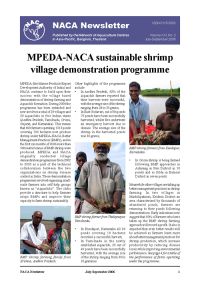
NACA Newsletter Volume XXI, No. 3, July-September 2006

In this issue:

MPEDA-NACA sustainable shrimp village demonstration programme. Inter-calibration of white spot syndrome virus (WSSV) PCR laboratories in India. Shrimp health management training. Rotary International/NACA meeting facility up at Koh Yao Noi. Tsunami-affected farmers train in marine cage aquaculture. Marine finfish aquaculture network at the APAN meeting in Singapore. Aquatic animal health policy workshops build consensus in ASEAN nations. Aquaculture Compendium released. Developments in establishing a conservation plan for the Mekong giant catfish. ROUNDTABLE: Exploring south-south cooperation opportunities in sustainable shrimp farming in West Africa, Conakry (Guinea). Technical missions to Cambodia and Lao PDR.

Regional review on livelihood opportunities related to mariculture development

This report examines the role mariculture could play in reducing poverty and providing alternative livelihood opportunities for people living in coastal areas. This includes a review of the current status of coastal poverty, coastal livelihoods and vulnerabilities within the Asia-Pacific region and the experiences and examples of sustainable economic development through mariculture. This review then identifies key follow-up actions and recommends strategies for future pro-poor mariculture development.

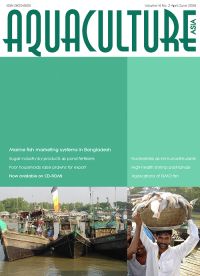
Aquaculture Asia Magazine, April-June 2006

In this issue:

High-health postlarvae a prerequisite for sustainability of the Indian shrimp industry. Broodstock and all-female scampi grow out ponds in south India. Genetically modified fish and potential applications. Rainbow trout farming in hill terraces of Nepal. Sugar industry by-products as plankton boosters and yield enhancers in carp culture. Growth and production of Penaeus monodon in low saline culture systems. Poor households raise prawns for export. Marine fish marketing in Bangladesh.

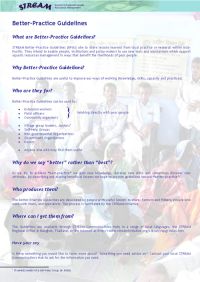
Better-practice guidelines: What are better practice guidelines?

Our better-practice guidelines are an attempt to share lessons that are learnt from local practice or from research, with many more people within Asia-Pacific and to enable people, institutions and policy-makers to use new tools and mechanisms which support aquatic resources management in ways that benefit the livelihoods of people who are poor. This publication is also available in Bahasa Indonesia, Bengali, Hindi, Ilonggo, Khmer, Myanmar, Nepali, Oriya, Sinhala, Urdu and Vietnamese.

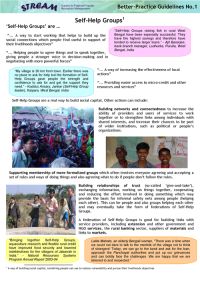
Better practice guidelines: Self-help groups

Self-help groups are a way to start working that helps to build up the social connections which people find useful in support of their livelihoods objectives, helping people to agree on things and to speak together, giving people a stronger voice in decision-making and in negotiating with more powerful forces. This publication is also available in Bahasa Indonesia, Bengali, Hindi, Ilonggo, Khmer, Myanmar, Nepali, Oriya, Sinhala, Urdu and Vietnamese.

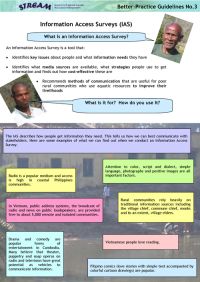
Better practice guidelines: Information access surveys

An information access survey is a tool that identifies key issues about people and what information needs they have, what media sources are available, what strategies people use to get information and how cost effective they are. It also provides guidance on methods of communication that are useful for poor rural communities that use aquatic resources to improve their livelihoods. This document is also available in Bahasa Indonesia, Bengali, Hindi, Ilonggo, Khmer, Myanmar, Nepal, Oriya, Sinhala, Urdu and Vietnamese.
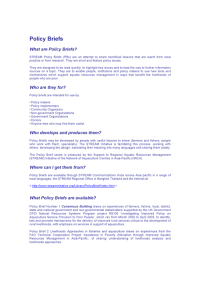
What are policy briefs?

Our policy briefs are an attempt to share beneficial lessons that are learnt from local practice or from research, to many more people within Asia-Pacific and to enable people, institutions and policy makers to use new tools and mechanisms which support aquatic resources management in ways that benefit the livelihoods of people who are poor. 

Policy brief: Livelihoods approaches in fisheries and aquaculture

In the Asia-Pacific region national government support to aquatic resources management has tended to focus mainly on research and technology development. However, as we accept an increasingly important role for national fisheries administrations in poverty alleviation, we need to consider the choices that people make, the resources they can command and the circumstances in which they can be woven into supporting livelihoods. This means understanding more about people's livelihoods, resources, context, vulnerabilities and objectives.

Policy brief: Building consensus

Consensus-building techniques are particularly appropriate when decision-making is required in a political or emotional environment, or when the decisions affect strong factions with opposing preferences. It can work formally or informally, in large or small group contexts, assisting in reaching agreement on policy change proposals, involving people that are recipients of policy, implementers of policy, shapers of policy and policy makers in defined roles with a process to give people a voice.

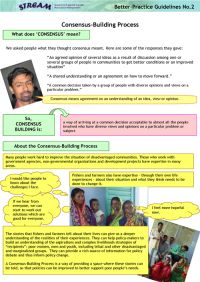
Better practice guidelines: Consensus-building process

The stories that fishers and farmers tell us about their lives can give us a deeper understanding of the realities of their experiences. They can help policy-makers to build an understanding of the aspirations and complex livelihood strategies of poor people and disadvantaged or marginalised groups. A consensus-building process is a way of providing a space where people can tell their stories, so that policies can be improved to better support poor people's needs.

Policy brief: Development and management of aquaculture-based fisheries enhancements

This policy brief aims to promote better management of aquaculture-based fisheries enhancements (stocking of hatchery fish to improve fisheries) through integrated analysis of enhancement systems and quantitative assessment of management practices through use of the EnhanceFish decision tool.

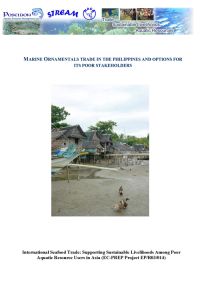
The international seafood trade: Marine ornamentals trade in the Philippines and options for its poor stakeholders

This report provides insight into the status of the marine ornamental fish trade in the Philippines, including policy environment, collection, distribution channels, markets and constraints. The report also reviews the livelihoods of poor stakeholders in market chains including economic and financial aspects, natural and physical resources, livelihood patterns, social structures. The report provides recommendations for policy makers and stakeholders in improving the livelihoods of poor stakeholders in marine ornamental fish collection and market chains and resource management.

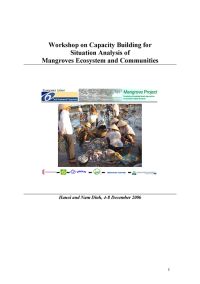
Workshop on capacity building for situation analysis of mangroves ecosystem and communities

These are the proceedings of two Workshops on Capacity Building for Situation Analysis of Mangroves Ecosystem and Communities, held in Hanoi and Nam Dinh, 4-8 December 2006. The workshop focused on developing the knowledge and skills of the VNU team in Sustainable Livelihoods Analysis through the application of Participatory Rural Appraisal (PRA) techniques. The workshops were funded under the European Union Mangrove Project (2005-2008) in preparation for commencement of field-based activities and situation analysis.