Shrimp

Information relating to the aquaculture of marine shrimp.

Creative Commons Attribution.

Related

Species / commodity tags

Major farmed commodity or species groups.

In this collection

Case studies of Ecuadorian shrimp farming (abstract)

This case study review shrimp aquaculture development in Ecuador. The prevailing farming systems and practices are described. Most farms are extensive or semi-intensive and the industry is shifting to hatchery-reared PL rather than wild due to unpredictability in wild PL supply and disease outbreaks. A survey of water quality intake and outfall from farms is reported on with suggestions for farm design to reduce nutrient load in outfall is discussed. Health issues and mangrove degredation are discussed. 

Mixed shrimp farming-mangrove forestry models in the Mekong Delta: Termination report

The goal of this project was to optimise the economic yield from mixed shrimp aquaculture-mangrove forestry farming systems in Ca Mau Province, Vietnam, in a sustainable manner. Specific objectives were to investigate factors controlling the yields of shrimp and wood from shrimp farming-mangrove systems, experiment with shrimp pond and mangrove forest management to evaluate different culture options, identify improved practices and assist government to transfer the results of the project to the wider coastal farming community.

Shrimp Farming and the Environment (article prepared for InterCoast #39)

This article describes the international Consortium Programme on Shrimp Farming and the Environment, which was formed based on the recommendations of the World Bank review on shrimp aquaculture and the environment (1998), a 1999 NACA/WWF meeting in Bangkok, Thailand on shrimp management practices, and an FAO Bangkok technical consultation on policies for sustainable shrimp aquaculture (12/1997). The article was prepared for publication in InterCoast Issue #39, Cross Portfolio Learning for Enhancing Integrated Coastal Management.

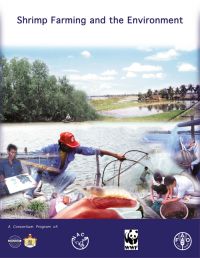
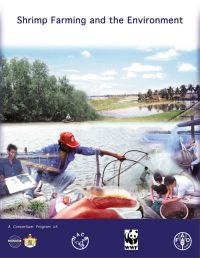
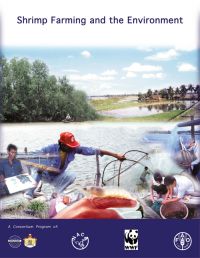
Shrimp Farming and the Environment

This collection of publications originates from the International Consortium Program on Shrimp Farming and the Environment, which was implemented by the World Bank, the Network of Aquaculture Centres in Asia-Pacific (NACA), the World Wildlife Fund (WWF), the Food and Agriculture Organization of the United Nations (FAO), and the United Nations Environment Programme (UNEP). The consortium supported 35 complementary case studies prepared by more than 100 researchers in more than 20 shrimp farming countries.

Manual of procedures for the implementation of the Asia Regional Technical Guidelines on Health Management for the Responsible Movement of Live Aquatic Animals

The Manual of Procedures for the Implementation of the Asia Regional Technical Guidelines on Health Management for the Responsible Movement of Live Aquatic Animals provides background material and detailed technical procedures to assist countries and territories in the Asia Region in implementing the Asia Regional Technical Guidelines on Health Management for the Responsible Movement of Live Aquatic Animals. The Technical Guidelines were initiated due to increased recognition that disease emergence is often linked to live aquatic animal movements.

Asia Regional Technical Guidelines on Health Management for the Responsible Movement of Live Aquatic Animals

The Asia Regional Technical Guidelines on Health Management for the Responsible Movement of Live Aquatic Animals and their associated implementation plan, the Beijing Consensus and Implementation Strategy provide expert guidance for national and regional efforts in reducing the risks of disease due to trans-boundary movement of live aquatic animals. The Technical Guidelines were initiated due to increased recognition that disease emergence is often linked to live aquatic animal movements and causes significant socio-economic losses.

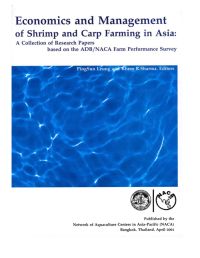
Economics and Management of Shrimp and Carp Farming in Asia

The sixteen papers in this volume were largely based on the data from a survey of more than 5,000 shrimp and close to 6,000 carp farms in sixteen countries and territories in the Asia-Pacific region. They provide an economic and technical efficiency of production analysis for Asian shrimp and carp farming systems. This survey was conducted under the ADB/NACA regional study and workshop on aquaculture sustainability and the environment (RETA 5534).

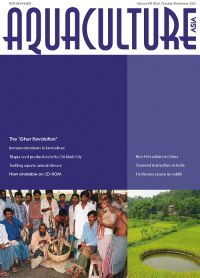
Aquaculture Asia Magazine, October-December 2003

In this issue:

Freshwater prawn Macrobrachium nobilii for rural nutrition. Snapshots of a socially responsible farm in Sri Lanka. Introduction of rainbow trout in Nepal. Tilapia seed production in Ho Chi Minh City, Vietnam. Seaweed mariculture - scope and potential in India. Growth enhancement of carp and prawn through dietary suppliementation with salt. Fertilisation and water quality management in small ponds. The "Gher Revolution". Exercising responsibilities to tackle aquatic animal disease. Immunostimulants in aquaculture.

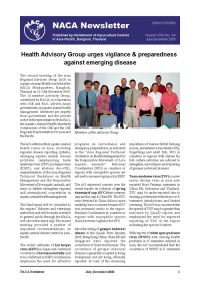
NACA Newsletter Volume XVIII, No. 3-4, July-December 2003

In this issue:

Health Advisory Group urges vigilance and preparedness against emerging disease. New Zealand farmer helps train Asian aquaculturists. Mr Junaidi Che Ayub. Global Aquaculture Discussion Forum, Dhaka, Bangladesh. STREAM Conducts Livelihood Capacity-building in the Philippines, India. MPEDA/NACA shrimp farmer workshop held in Andhra Pradesh, India. Learning by Doing - Fisheries and Adaptive Learning. NACA cooperation expanded to shrimp health management in Vietnam. 150 people trained in Q3-Q4, 2003. International Symposium on Freshwater Prawns Held at Kochi, India. Developing an online aquaculture community for NACA.

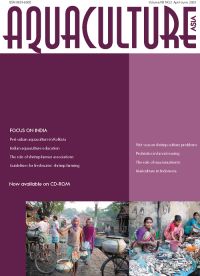
Aquaculture Asia Magazine, April-June 2003

In this issue:

Peri-urban aquaculture in Kolkata. Diffusion and adoption of shrimp farming technologies. Aquaculture education in India. Information system on fish germplasm resources in China. Freshwater crustacean aquaculture in China. The role of macronutrients. Innovations by Bengal farmers. Scientific guidelines for freshwater prawn farmers in India. Status of mariculture in Indonesia. Use of probiotics in larval rearing. Problems in shrimp culture during the wet season.

NACA Newsletter Volume XVIII, No. 2, April-June 2003

In this issue:

Recommendations of the Aquamarkets Consultation 2003. EC-funded project targets seafood trade and poverty. Shrimp disease control and coastal management. Fisheries and Adaptive Learning project. Shrimp aquaculture certification: Request for information & advice on a new web site. Workshop on control and responsible use of alien species. MPEDA/NACA Technical Assistance on Shrimp Health and Coastal Management. Changes to the regional list of aquatic animal diseases. STREAM SAPA Stakeholder Workshop in Hanoi. Regional Training Course on Grouper Hatchery Production. Review on low food chain species for marine fish culture. NACA/Deakin University to visit Indonesia 2-7 April 2003.

Aquaculture Asia Magazine, January-March 2003

In this issue:

Fertilisation, soil and water quality management. Commercialisation of giant freshwater prawn culture in India. Aquaculture in reservoir-fed canal systems. Production of black-lip pearl oyster Pinctada margaritifera. Hybridisation hassles. Breeding sea cucumber Holothuria scabra in Vietnam. Use of palm kernel meal in feeds. Getting the most out of your feed. Marine finfish aquaculture in Myanmar. Penaeus monodon culture in low-salinity areas. Fisheries and aquaculture in Nepal.

NACA Newsletter Volume XVIII, No. 1, January-March 2003

In this issue:

14th NACA Governing Council, Myanmar. Welcome to NACA's first Associate Member. NACA Alumni notes - U Minn Thame. Australian Youth Ambassador. Assisting in the Development of Recirculating Shrimp Farm Technologies. Nepal to join STREAM Initiative. NACA Joins Thai IT for Agriculture Forum. Indigenous Australian aquaculture group visits Thailand. Bangladesh Fisheries Training and Extension Project tour. Ugandan farmers train on catfish breeding and culture.

Report of the first meeting of the Asia Regional Advisory Group on Aquatic Animal Health, 6-8 November 2002

The Asia Regional Advisory Group on Aquatic Animal Health meets annually to discuss regional health issues including emerging disease threats. This report includes a review of regional disease status circa 2002, global and regional disease reporting arrangements, global issues and standards, progress in implementation of the Regional Technical Guidelines on Health management for the Responsible Movement of Live Aquatic Animals, identification and designation of regional aquatic animal health resources and regional and international cooperation.

Aquaculture Asia Magazine, July-September 2002

In this issue:

Aquaculture for poverty alleviation and food security. Shrimp pond waste management. Properties of liming materials. Seed production of mud crab Scylla spp. The dilemmas of strain selection. Seed production of the crucifix crab Charybdis feriatus. A general approach to disease treatment and control. Breeding and seed production of mangrove snapper Lutjanus argentimaculatus. Responsible use of antibiotics in shrimp farming. Health management for cultured marine fishes. Molecular methods for rapid detection of pathogens in seafood.

Aquaculture Asia Magazine, April-June 2002

In this issue:

Prawn farm energy audits. Freshwater fish farming and poverty alleviation in Bangladesh. Artificial propagation for conservation of endangered species. Sewerage-fed aquaculture systems of Kolkata. Rice-fish farming in India. The use of lime, gypsum, alum and potassium permanganate in water quality management. Fish gene technology research in China. Low-salinity shrimp farms. Seed production of Clarius batrachus. Supplying good-quality seed for sustainable aquaculture and more.

NACA Newsletter Volume XVII, No. 2, April-June 2002

In this issue:

Roll-out of national aquatic animal health strategies continues. STREAM concludes inception phase of 'Improved Policy on Aquaculture Service Provision to Poor People' Project in India. Expert consultation on rapid diagnosis of shrimp viral diseases held in Chennai, India. ACIAR/NACA Workshop on Feeds and Feeding Constraints in Inland Aquaculture: Research and Extension Priorities. NACA supports health management in Indian shrimp farming. Marine Finfish Aquaculture aquaculture programme gears up for workshop. Launch of Trans-Himalayan Coldwater Fisheries Network Website. NACA Organises Emergency Assistance to Indonesia in the Control of a Serious Koi and Common Carp Disease.

Aquaculture Asia Magazine, January-March 2002

In this issue:

Chemical residues. Live reef fish trade in Hong Kong. Barramundi farming in Australia. Freshwater pearl and prawn production in China. Status of common carp varieties under culture in China. Induced spawning of Pangasius sutchi. Cambodian farmers innovate cost-effective variations on Chinese hatcheries. Genes and fish. Improving rural livelihoods in Cambodia, Vietnam, Nepal and the Philippines through the STREAM Initiative. Marine finfish news, book reviews and more.

NACA Newsletter Volume XVII, No. 1, January-March 2002

In this issue:

Governing Council 13 / AFBiS Seminar. US Consultation sets work agenda for the WB-NACA-WWF-FAO. Consortium on Shrimp Farming and the Environment. Conclusions and Recommendations of the Joint meeting of AFBiS 2002 and the 13th NACA Governing Council. FAO/NACA Expert Consultation Focusing on Aquaculture and Small-scale Aquatic Resource Management for Poverty Alleviation. Myanmar Fishery and Livestock Fair 2002 a huge success. Nepal develops national strategy on aquatic animal health management. Shrimp Farming & the Environment Case Studies now available on the web. NACA implements APEC project on Import Risk Analysis. MOU on project to prevent disease losses on prawn farms. Andhra Pradesh Fisheries Minister studies Thai & Malaysian aquaculture systems. Vietnamese mission evaluates new high value Chinese species.

Proceedings of the Conference on Aquaculture in the Third Millennium

This volume, the third major publication arising from the Conference on Aquaculture in the Third Millennium, contains the information essential to conduct well-informed discussion of sustainable aquaculture development - both at the Conference, as well as after. The information provide basic reference points on the progress, direction and magnitude of aquaculture changes, and the factors associated with these changes, within global, regional, sectoral, thematic and technical perspectives.