NACA member governments are: Australia, Bangladesh, Cambodia, China, Hong Kong SAR, India, Indonesia, I.R. Iran, Kingdom of Saudi Arabia, Korea (DPR), Lao PDR, Malaysia, Maldives, Myanmar, Nepal, Pakistan, Philippines, Sri Lanka, Thailand and Vietnam.
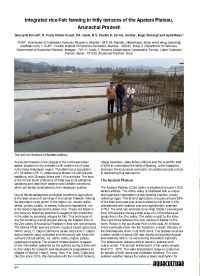
Rice-fish farming is a popular activity amongst the Apatani tribe of the Ziro valley, conducted in their wet rice terraces. The strains of fish cultured include mirror carp Cyprinus carpio specularis, scale carp C. carpio communis and leather carp C. carpio nudus, cultivated synchronously with local rice cultivars (Oryza sativa), viz. eamo, ampu, mipya, pyapu, pyaping and eylang. This article describes the integrated farming practices and socio-economic circumstances of the Apatani in the Yachuli, Hapoli, Hong, Hari, Hija, Bula, Dutta and Old Ziro villages.
Fifty fellowships are available for young scientists and researchers under the ASEAN-India Research Training Fellowship Scheme (AIRTF), to study at Indian academic and R&D institutions. The fellowships are for a period of up to six months and include travel and financial support. The fellowships are intended to build capacity among young ASEAN researchers in science and technology and to further strengthen the bond between India and ASEAN member states.
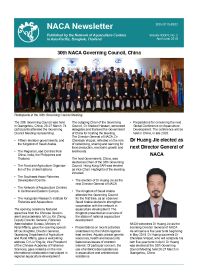
30th NACA Governing Council Meeting, China; Dr Huang Jie elected as the next Director General of NACA; Expert Consultation on Genetically Responsible Aquaculture; Launch of AGRISI: Aquatic Genetic Resource System of India; Aquatic animal epidemiology training course held at NBFGR; Asia-Pacific Laboratory Proficiency Testing Workshop; Proceedings of the FishAdapt Conference; Quarterly Aquatic Animal Disease Report, July-September 2018; Centex Shrimp International Training Course on Biology and Pathology of Penaeid Shrimp; INFOFISH World Shrimp Trade Conference and Exposition.
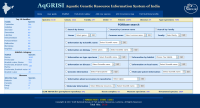
AGRISI, a new information system on aquatic genetic resources of India, has been launched by the National Bureau of Fish Genetic Resources. AGRISI is a unique platform presently covering 3138 native fish species of India. The system provides information on systematics, biology, distribution, nutrition, nutrition, and other characteristics. AGRISI includes information on museum specimens, and accessions from different NBFGR repositories. These include data on germplasm, cell lines and links to other molecular resources developed under the National Agricultural Bioinformatics Grid such as the Fish Barcode Information System.
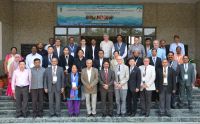
The ICAR-NACA School on Aquatic Epidemiology and Disease Surveillance was held at the ICAR National Bureau of Fish Genetic Resources (NBFGR) from 1-6 March. The school was a collaboration between the Indian Council of Agricultural Research and NACA. The school covered:
Concepts and principles of epidemiology.
Use of epidemiological principles in design and implementation of surveillance programmes.
Sampling considerations for surveillance programmes.
Population surveys.
Estimation of sensitivity and specificity of diagnostic tests.
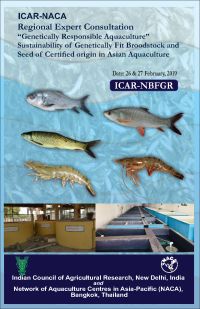
A Regional Expert Consultation on Genetically Responsible Aquaculture was convened by the ICAR National Bureau of Fish Genetic Resources and NACA, from 26-27 February. The immediate objective of the consultation was to discuss mechanisms for establishing quality seed production systems to improve hatchery and on-farm genetic diversity. A long-range objective is to establish networks of registered broodstock holdings. Linked via IT systems, such networks will form a virtual global aquaculture gene pool that can, collectively, sustain high genetic diversity and adaptive capacity, while checking inbreeding depression.
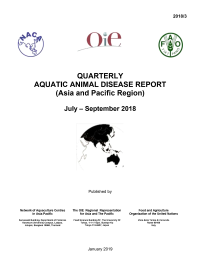
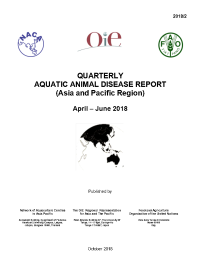
The 79th edition of the Quarterly Aquatic Animal Disease report contains information from eleven governments. The foreword discusses the outcomes of the 17th Meeting of the Asia Regional Advisory Group on Aquatic Animal Health, held in Bangkok, 13-14 November 2018.
The ICAR-National Bureau of Fish Genetic Resources, Lucknow, India is conducting a School on Aquatic Animal Epidemiology and Disease Surveillance from 1-6 March, 2019. Five seats are available in the school for researchers from NACA member countries (outside of India) on first-come first-served basis. Participants should be nominated by research centres participating in NACA or by member governments. Accommodation, hospitality and meals will be provided for the duration of the training. Travel grants are not available. Please apply / express interest by 13 February 2019.
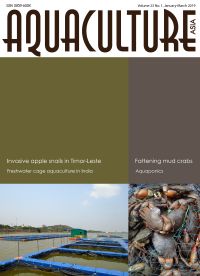
Current status of freshwater cage aquaculture in India; Fattening of mud crab Scylla serrata in estuarine region of south-eastern West Bengal; Aquaponics - sustainable farming method in the fight against hunger; aquatic invasive apple snails (Pomacea spp.) in Timore-Leste - current status, spread and management in rice fields; NACA Newsletter.
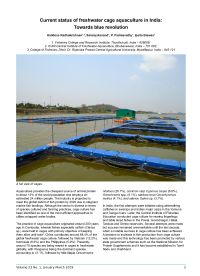
Initial attempts to develop freshwater cage aquaculture in India focussed on air breathing catfish and Indian major carps in the Yamuna and Ganga rivers, with later efforts in several large reservoirs. Cage-based aquaculture in inland waters is currently being promoted by some state governments with a view to enhancing fish production. This article examines the history of cage aquaculture in India and some of the factors to be considered in cage design and site selection.
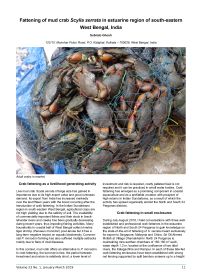
Live mud crab has a high export value and good overseas demand. Over the past fifteen years exports from India have increased, with the introduction of crab fattening practices. Wild-caught seed are held in pens constructed of bamboo screens for several weeks and fed to increase their body weight and hence value. Fattened crabs are onsold to traders exporters, who may air lift them to Singapore and other regional markets for the live restaurant trade.
Aquaponics is a closed-loop system in which the waste water produced from a tank of fish is used as fertiliser to feed a bed of vegetation. In turn, the plant life filters the water through its roots and the cleaned water is returned to the fish tank for reuse. Aquaponics is a form of integrated food production system in which the wastes from one production compartment are used as inputs for others.
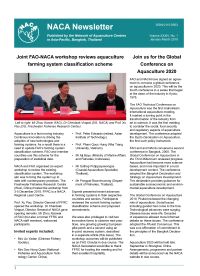
Joint FAO-NACA workshop reviews aquaculture farming system classification scheme; Join us for the Global Conference on Aquaculture 2020; Expert Consultation on Genetically Responsible Aquaculture; Strengthening governance in aquaculture; Pike perch and in-pond raceways; Quarterly Aquatic Animal Disease Report, April-June 2018.
The Indian Council of Agricultural Research (ICAR) and NACA will convene the consultation from 26-27 February 2019. The consultation will be hosted by the ICAR National Bureau of Fish Genetic Resources (NBFGR) in Lucknow, India. The aim of the consultation is to find ways to assure genetic quality in seed production systems. Experts will discuss broodstock management and mechanisms to verify seed origin and quality. The goal is to empower farmers and monitoring agencies with provision of quantifiable standards.
The 78th edition of the Quarterly Aquatic Animal Disease Report contains information from twelve governments in the Asia-Pacific region. The foreword discusses three recent aquatic animal health consultations: The ASEAN Regional Technical Consultation on Aquatic Emergency Preparedness and Response Systems for Effective Management of Transboundary Disease Outbreaks in Southeast Asia; the Regional Consultation and Related Study on Antimicrobial Resistance Risk to Aquaculture in Asia; and the Preliminary Consultation on Monitoring of Antimicrobial Resistance in Bacterial Pathogens in Aquaculture.
An Expert Consultation on Invasive Alien Fish Species: Need for a Risk Benefit Assessment and Management Framework for Healthy Freshwater Systems will be organised on 19 December 2018 in New Delhi, India. The consultation will flag the need for an equilibrium between access to non-native germplasm and the minimisation of risk to ecosystems and native fish diversity from such introductions. As a major outcome, an objective tool is expected to be developed, which can be used to evaluate prospective introductions and support decision making.
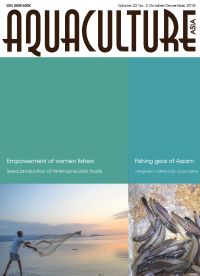
Concept of seed production of Heteropneustes fossilis in farmers' fields in West Bengal, India; Fishing gear and practices in flood waters of Assam; Fisherwomen empowerment: Shedding light on the invisible gender; Integrated multi-trophic aquaculture systems: A solution of sustainability.
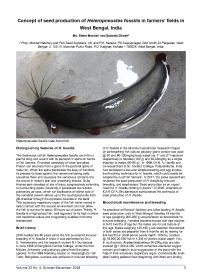
The freshwater catfish Heteropneustes fossilis is a high-priced fish, well regarded in India for its nutritional and medicinal properties. The first successful induced breeding of this fish was in 1956 at Bangalore Central College (under the then Mysore University), although seed production was not standardised until 2000, at ICAR-CIFA, Bhubaneswar. This article describes broodstock maintenance, induced breeding techniques and the nursing of H. fossilis larvae in small ponds for sale in fish seed markets.
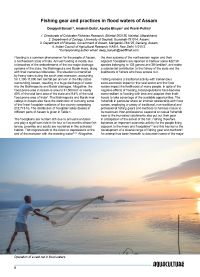
Annual flooding of the Brahmaputra and Barak rivers provides Assam with some of the finest floodplain wetlands in India. Local people have adapted their livelihoods to the flood cycle and fishing remains a traditional activity of tremendous importance in rural communities, with a diverse range of fishing gear and methods developed. This article documents some of the major fishing gears of Assam, with reference to their efficacy and targeted fish species.
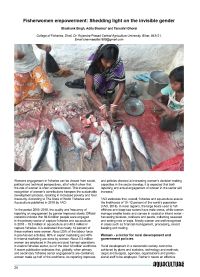
Women's engagement in fisheries can be viewed from social, political and technical perspectives, all of which show that the role of women is often underestimated. In the fisheries sector participation by women may only become visible after the landing of the catch. The inadequate recognition of women's contributions hampers development, slowing progress in reduction of poverty and food insecurity. This article examines the diversity of women's involvement in fisheries and aquaculture and highlights opportunities to increase the participation of women.